


Good evening. Some news:
FP Journe and Chanel have acquired a 95% stake in Ebel, with Pierre Jacques as CEO (former CEO of De Bethune). Here’s the official release from Movado Group.
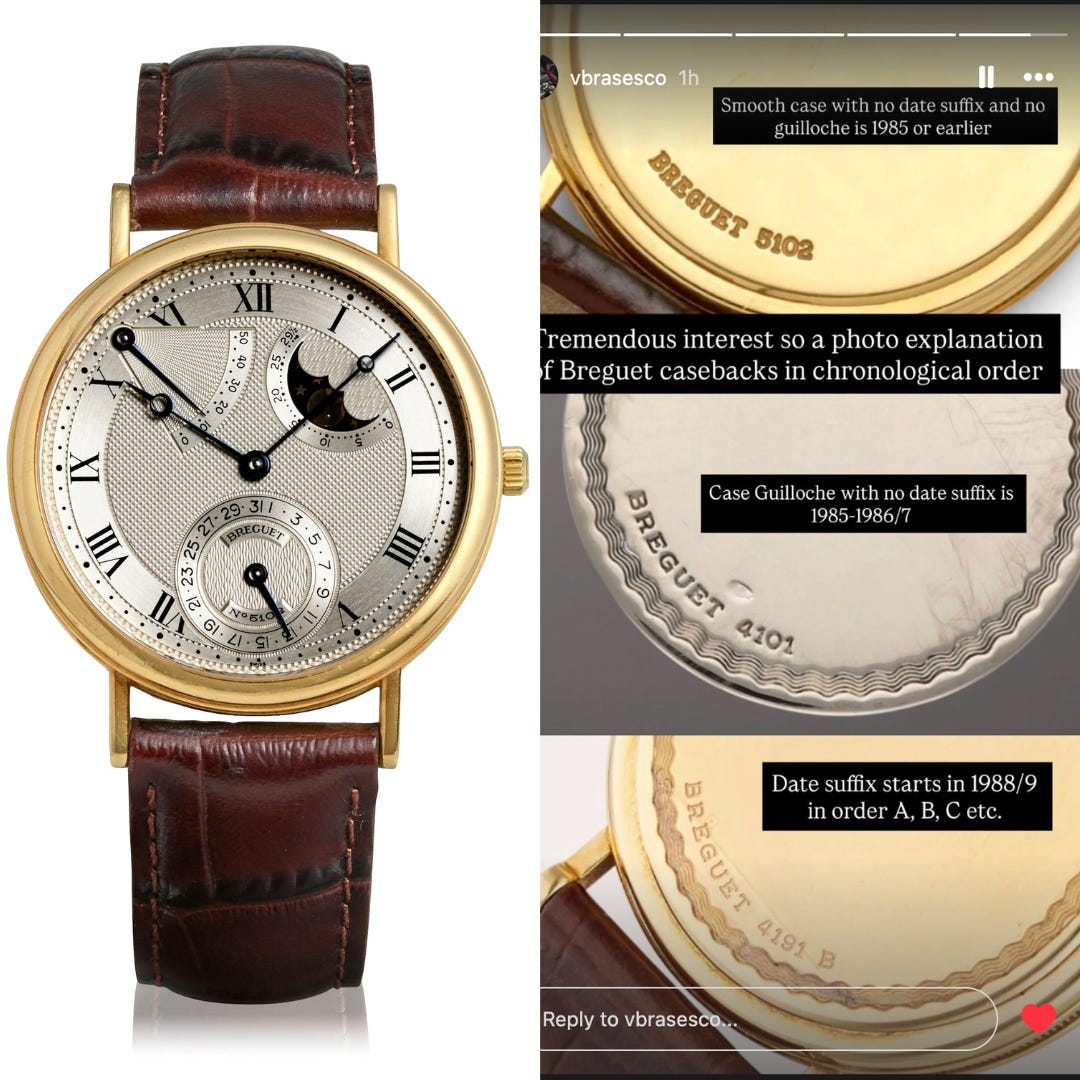
This morning I watched an early Breguet ref. 3130 sell at Bonhams NY for $53k. It probably would’ve sold for one-third that a year ago. At first glance, it’s a lot for a simple moonphase + power reserve. Bonhams initially miscataloged it as a later example from the 1990s, but at least a few bidders figured out this was actually a super-early 3130 from the 80s, when Daniel Roth was still with Breguet. Roth left by 1988 after Investcorp acquired the brand. A Story from Vincent Brasesco, president of Breguet in the U.S., illustrates the different caseback eras of neovintage Breguet:
I was traveling most of last week and heard two different versions of the same rumor: Watchbox is buying up neovintage Breguets. 1916 Company (neé Watchbox) has been known to get involved in select secondary markets, most famously with Journe a few years ago. Neovintage Breguet is already hot, and not many are listed on 1916’s site now, but WATCH OUT!
PRESENTED BY THE COCONUT GROVE WATCH & JEWELRY SHOW
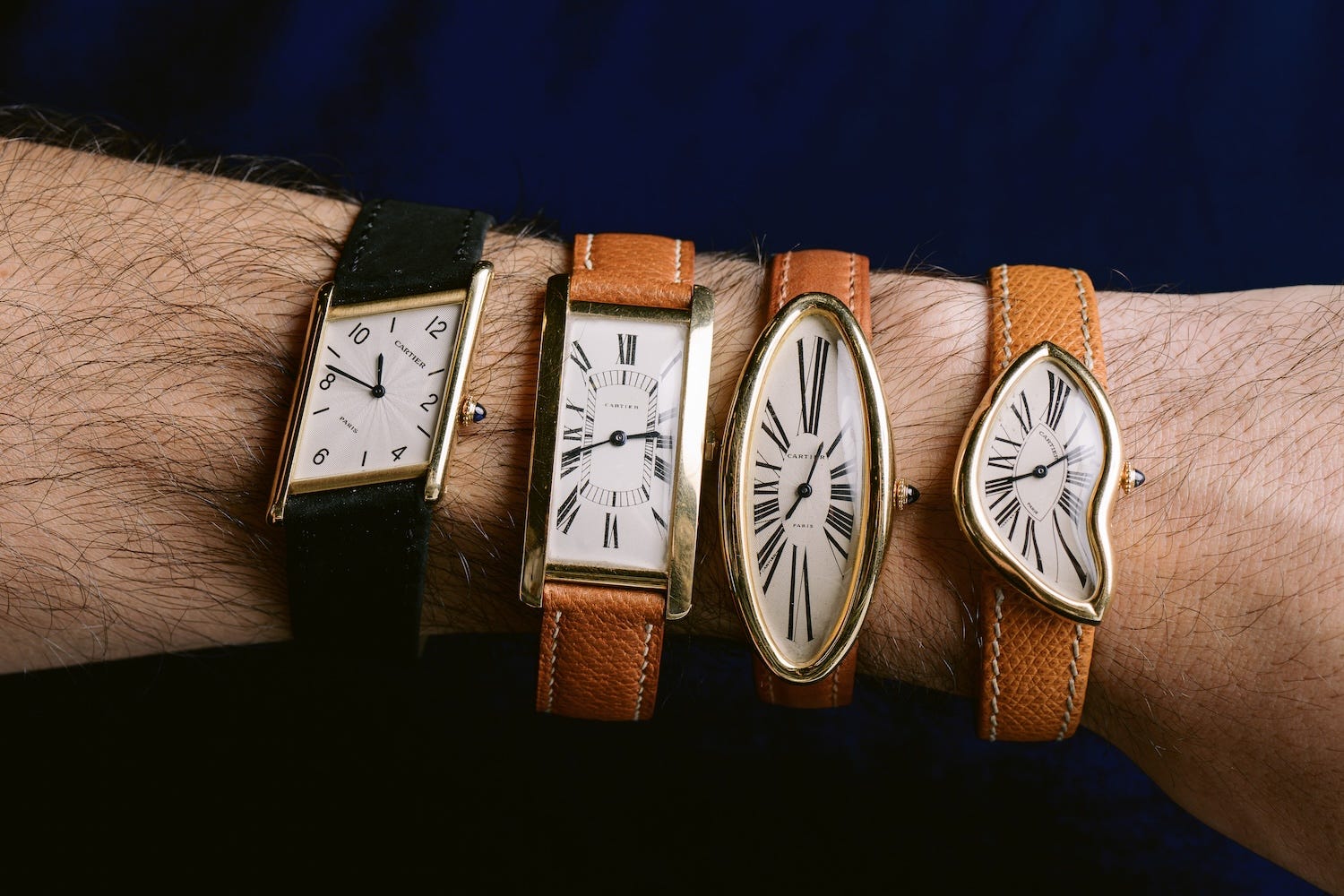
The Coconut Grove Watch & Jewelry Show is back for its second year, November 13–15 at The Hangar at Regatta Harbor. Same team behind the Original Miami Beach Antique Show—one of my favorite vintage shows every year—with a global roster of antique, vintage, and estate dealers.
Tickets are free when you use promo code UNPOLISHED at checkout:
10 fun facts about Lange & Söhne (for collectors)
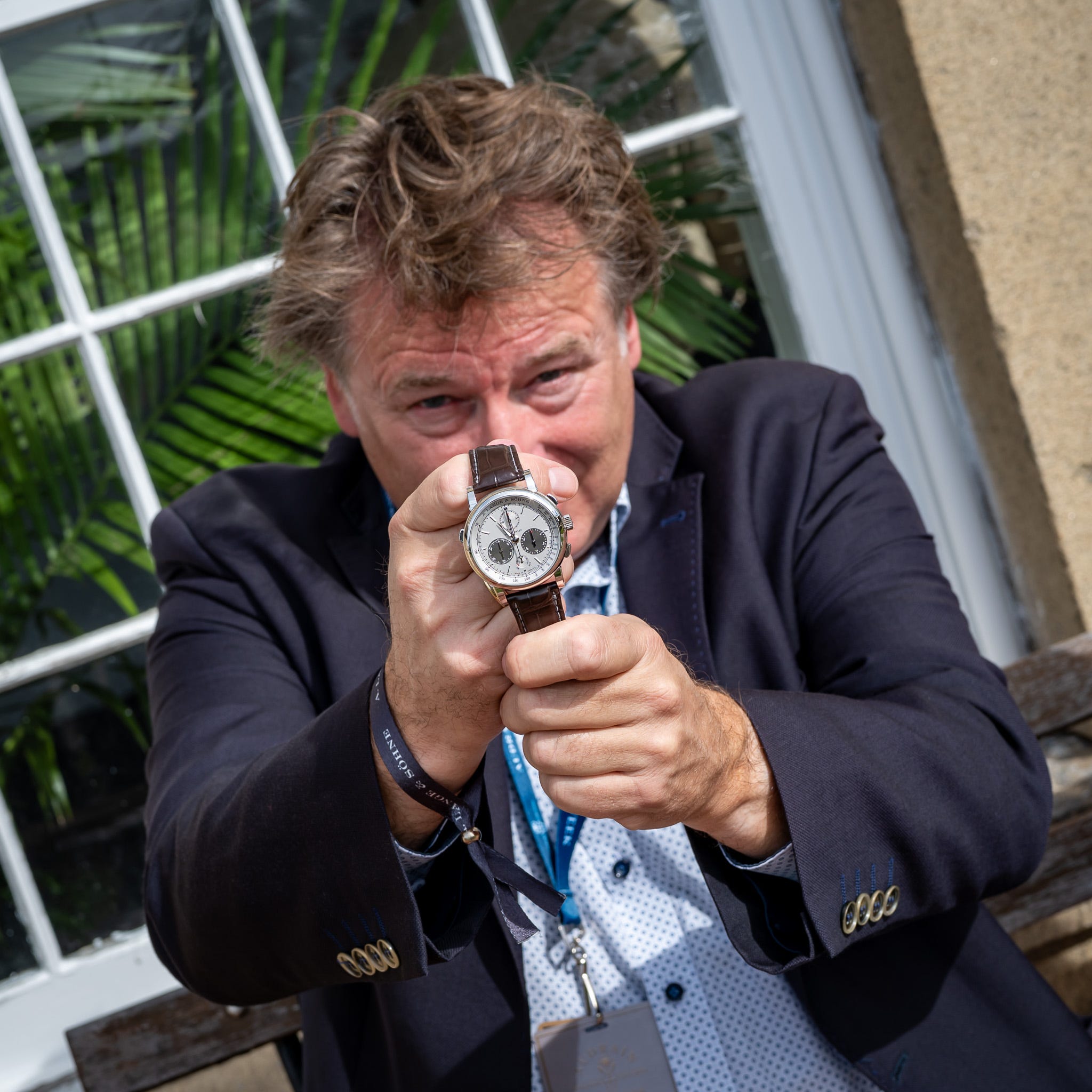
Earlier this week, I put together a photo report for GQ from a fancy car show in Newport, Rhode Island. Lange & Söhne sponsors the Audrain Concours d’Elegance, so CEO Wilhelm Schmid and long-time director of product development Tony de Haas were both there. Schmid is about as straight-shooting a watch exec as I’ve come across, while de Haas is a jovial and gregarious Dutchman. They’re great interviews, so I took the opportunity to chat with both.
Each gave me plenty of good stories you’ll enjoy that didn’t quite fit my photo report, which is mostly pictures of pretty cars and watches.
1/ Melting Wellendorff bracelets
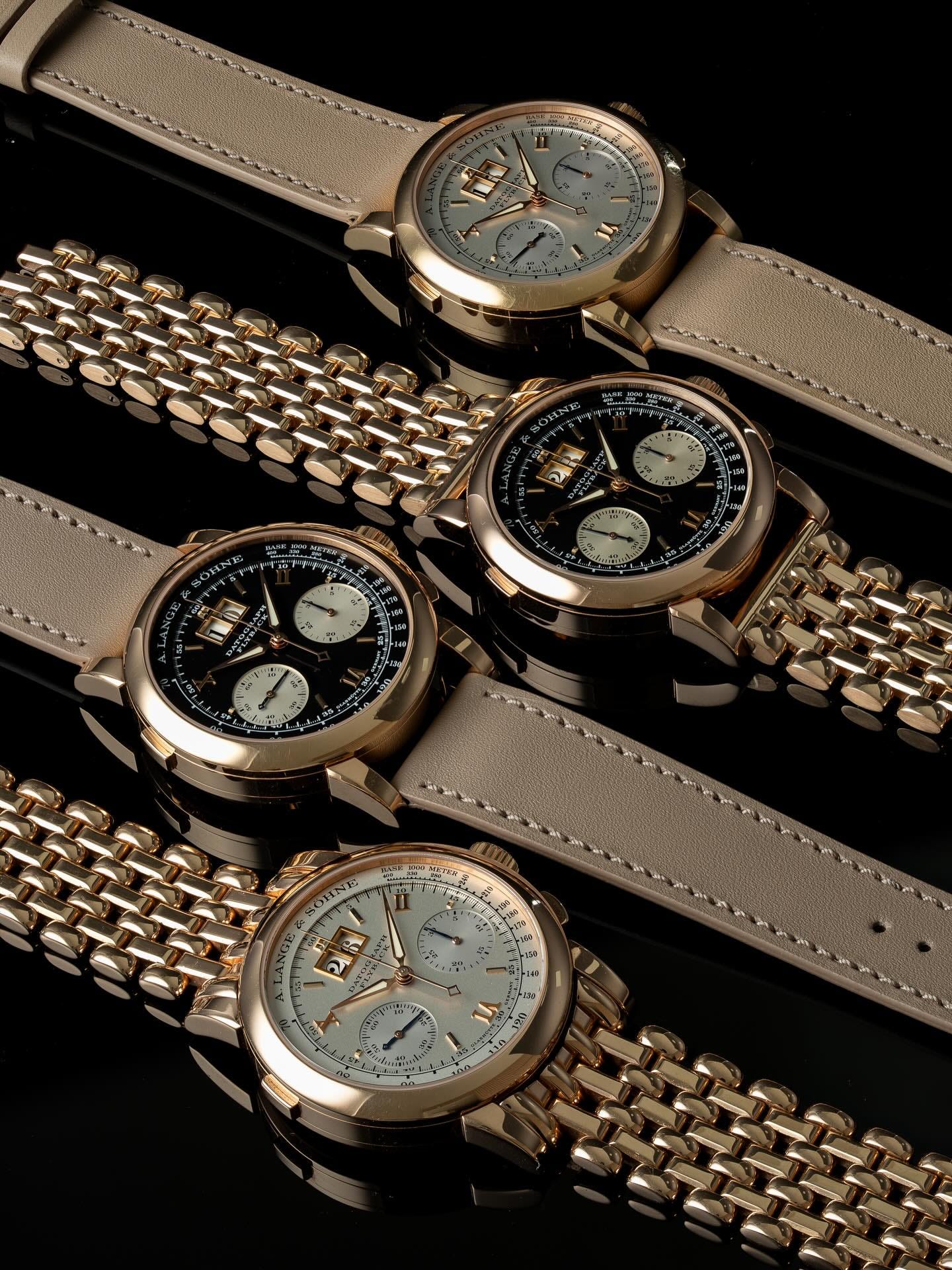
The Lange market has been very hot for the last year-ish. And anything with a Wellendorff bracelet, made by the German jewelry company, is scorching—the bracelets alone regularly sell for six figures. But that was hardly the case when Schmid became CEO in January 2011.
Back then, Langes on matching precious-metal Wellendorff bracelets were expensive. I have a catalog from 2009-10 that shows the following prices:
Platinum Datograph on strap: $65.3k
Platinum Datograph on bracelet: $106.4k
At nearly 2x the price, Wellendorffs weren’t exactly flying off the shelf.
Schmid said shortly after he joined, Lange decided to melt down a big stock of Wellendorff bracelets to salvage the gold and platinum.
“If you have excess stock and you don’t know what to do with it, and it’s precious metal you need for cases, hands, dials, and buckles, you make a decision…back then, there was no reason to keep it,” Schmid said.
In 2011, it would’ve been almost impossible to predict these bracelets would become what they are now—catnip that collectors pay sometimes crazy money for.
I asked Schmid how it feels to see Wellendorff bracelets for $100k+ 15 years later. First, he said he doesn’t regret the decision one bit (nor should he!).
“It gives you a good idea of how passionate our customers are, how much they’re into details,” he added.
2/ Melting paper for the fusée and chain
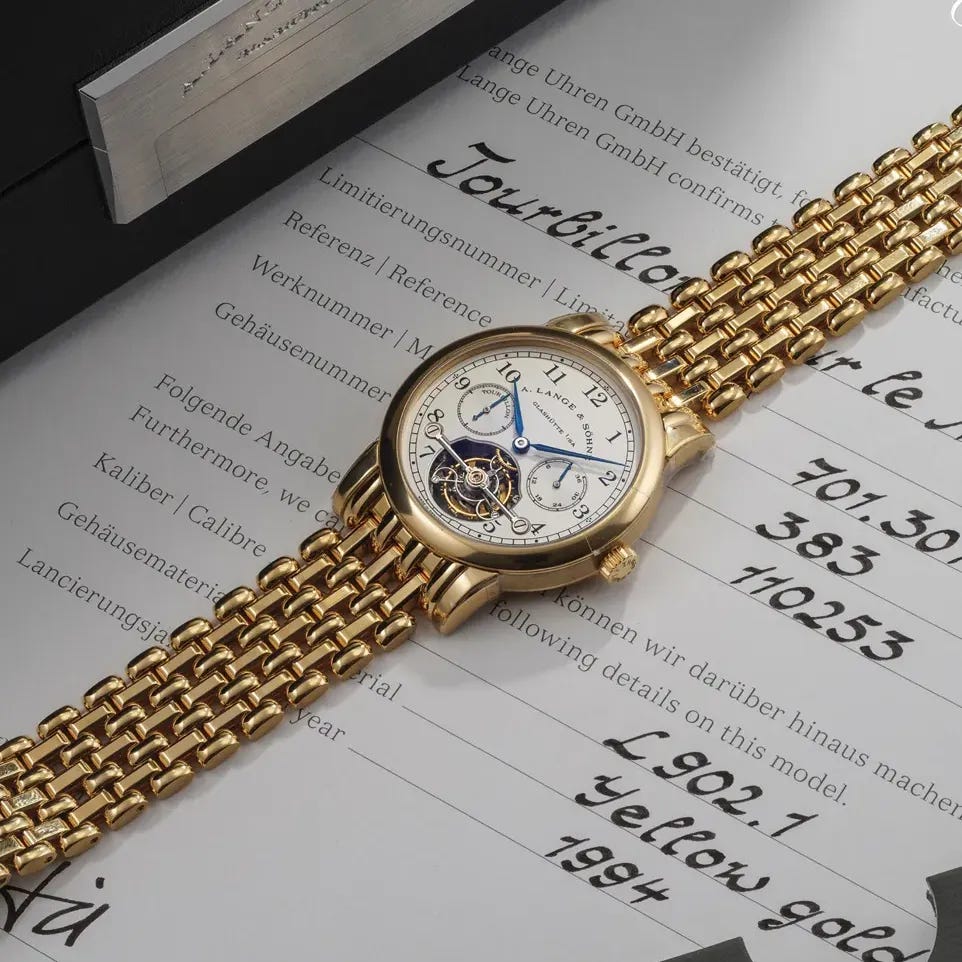
Of the four watches Lange introduced at its 1994 relaunch, the Pour le Mérite was its flagship. It was the first wristwatch with a fusée and chain, a tiny, long chain designed to deliver steady power as the mainspring unwinds.
De Haas didn’t join Lange until 2004, but before that he worked at Renaud & Papi, the complications maker that assisted with the PLM’s development (now owned by AP). There’s a famous story about how the team built the chain that I wanted to hear from de Haas.
The problem: Imagine the challenge of assembling a nearly microscopic chain. Lange’s version has 636 parts, and each link’s opening is just 0.4mm.
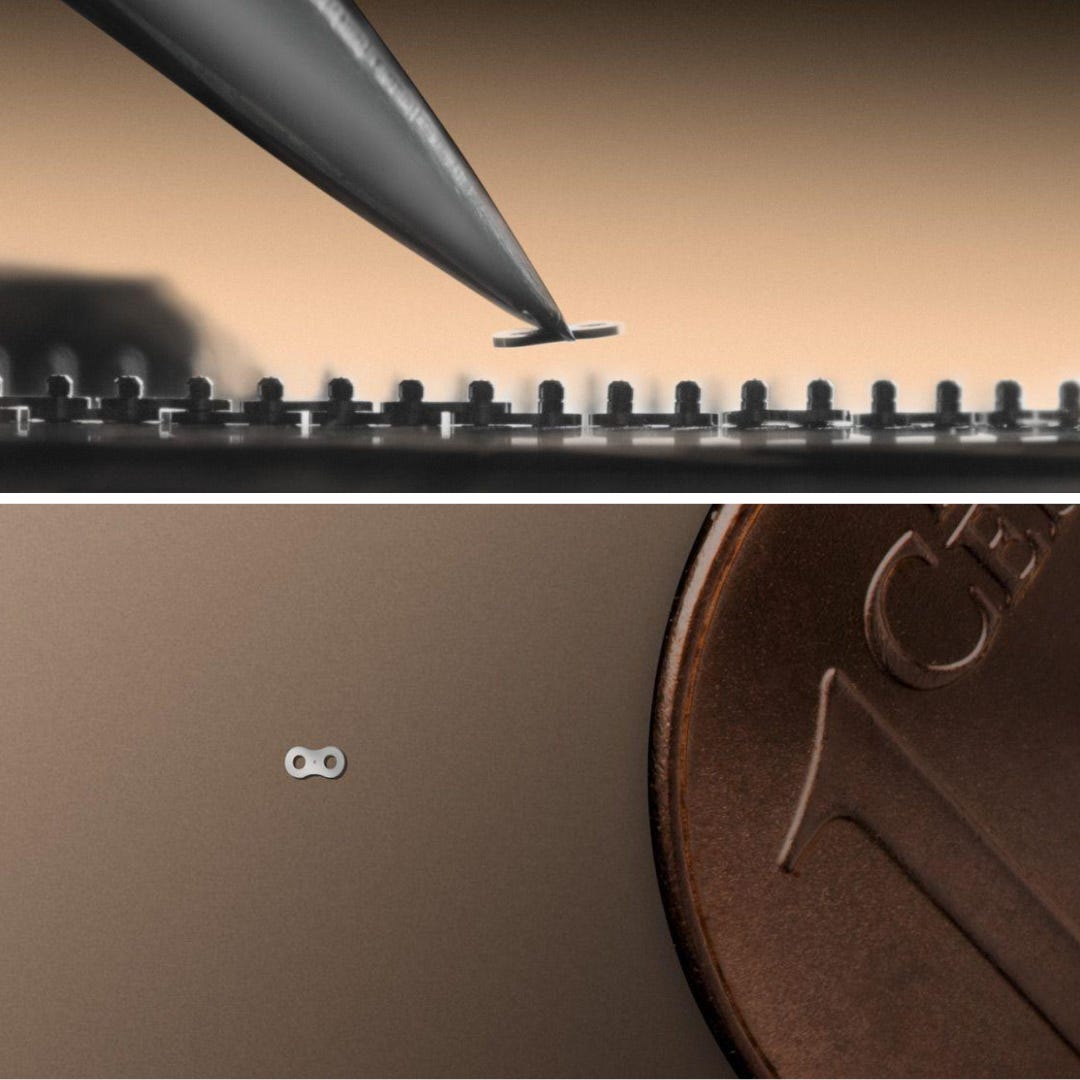
“We went to an old watchmaker,” de Haas told me, “who restored old deck watches, which have a chain and fusée, but on a bigger scale. He used this technique where he inserted tiny pieces of paper between each chain link to keep them in place during assembly.”
Lange and de Haas adapted this technique for the PLM’s assembly. They decided to use silk paper because when you light it, it melts away instead of burning.
“We don’t do that today—we have other tricks,” de Haas said.
3/ The magic of 70 SKUs
Schmid said Lange’s production was around 4-5,000 watches when he joined, and remains that today. Capacity has increased significantly, as Lange is making more complicated watches (and with more complications), but total volume hasn’t gone up. It’s also doing a lot more in-house, like the enamel dial on last year’s Minute Repeater Perpetual.
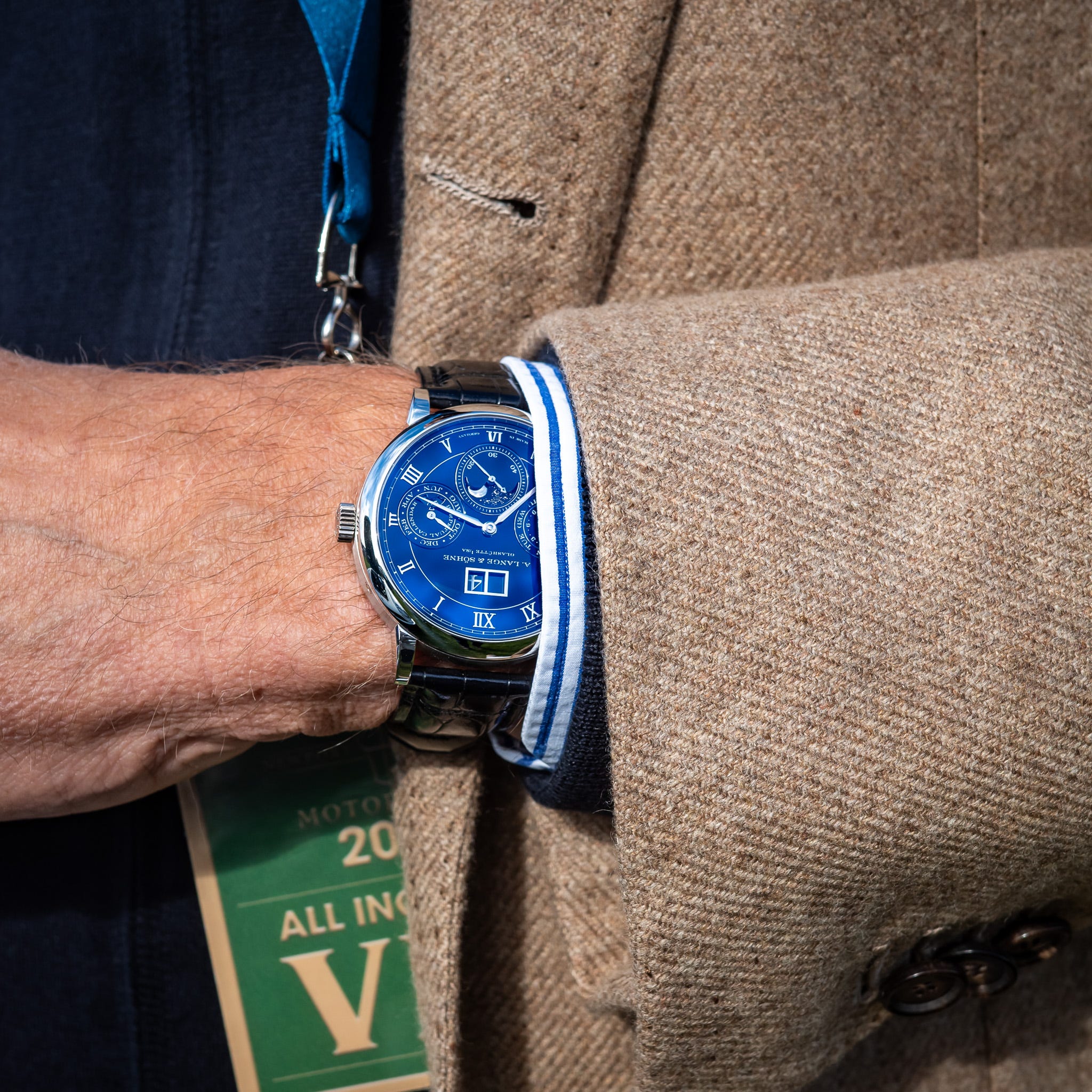
Schmid said that Lange targets having about 70 SKUs (or references) in its catalog at any given time. Here’s what he said when I asked him about that magic number:
“We have six families [Saxonia, 1815, Lange 1, Richard Lange, Zeitwerk, Odysseus], so that number’s a good representation for each family. We have limited editions that come and go, but we focus on those six families, and we don’t want to start making watches that are too close together. Sometimes I look at other novelties and wonder how it’s different from what’s already in the collection, but that’s what happens if you keep too many [in your collection.]”
Lange’s website currently lists 99 references, but that includes several extremely limited high comps and Handwerkskunst models. I doubt all 99 are currently in production.
4/ Service dials and the Blue Series
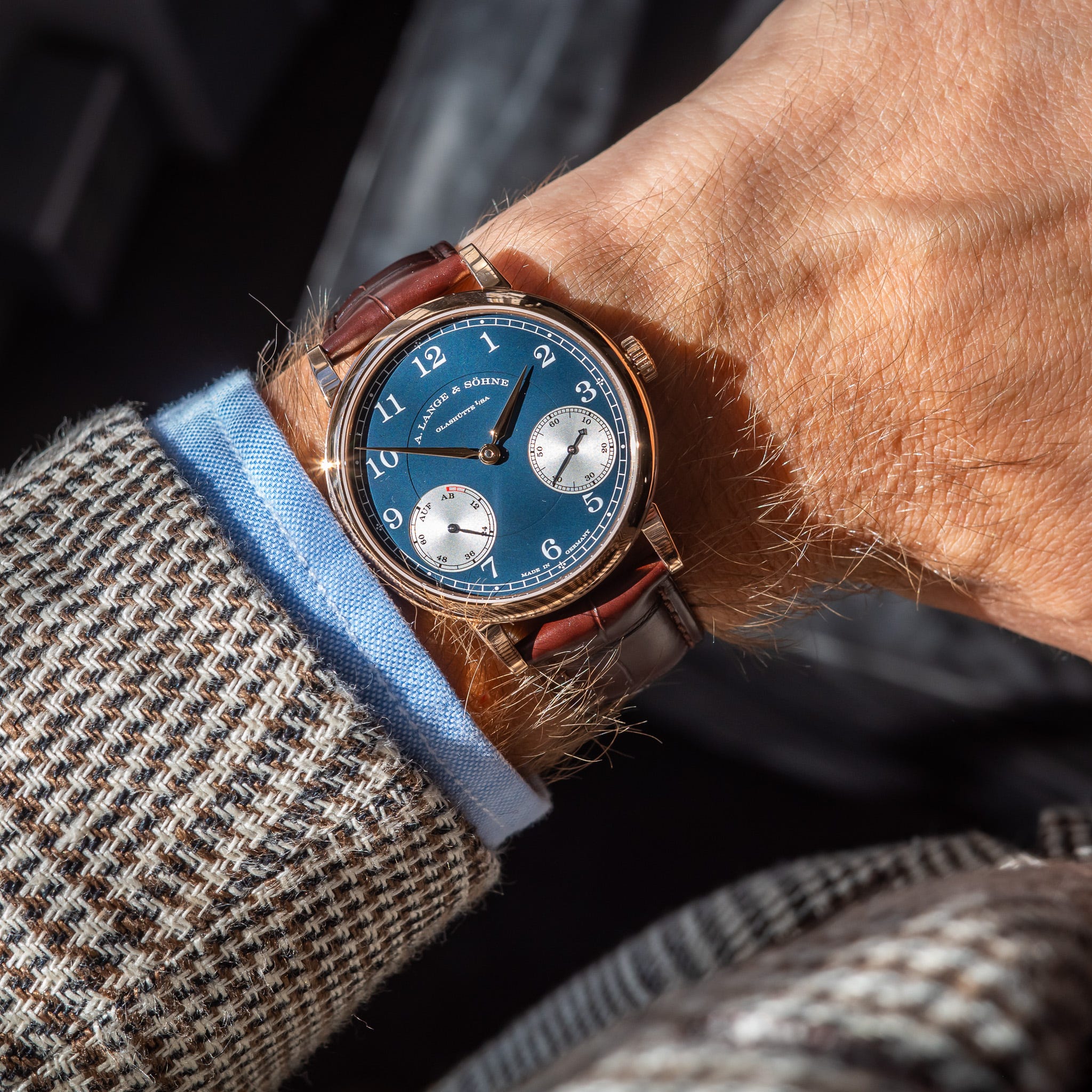
I’m fascinated by Lange’s blue dials, from the early “Blue Series” of the 1990s-2000s to 2017’s Blue Series to the recent 1815 34mm and Up/Down.
According to de Haas, those original 90s/00s blue dials were made using a galvanic bath and PVD process. By the mid-2000s, EU regulations strictly limited or banned certain chemicals commonly used in these galvanic processes.
Below the paywall: a stockpile of “old blue” dials, how Lange rebuilt the early “Made in Germany” font, why de Haas won’t touch silicon, and how many Datographs Lange actually delivers.