


The first “nice watch” I ever bought for myself was a Nomos Tangente. I wanted something to wear for my wedding, and Nomos looked cool. The design felt familiar in that 2010s millennial-minimalism sort of way, without the vapidness.
Nomos Glashütte says it makes 95% of its own movements. You don’t get to that by polishing a few bridges, so when I visited Glashütte, Germany, last year, I was excited to see what that actually looks like.
Nomos has about 300 employees, most of whom work across three buildings in Saxony: (1) manufacturing; (2) watchmaking; and (3) admin.1 Its in-house production breaks down neatly across the two facilities:
Manufacturing in Schlottwitz
About 10 minutes outside Glashütte in rural Saxony, where Nomos makes the components for its movements
Watchmaking in Glashütte
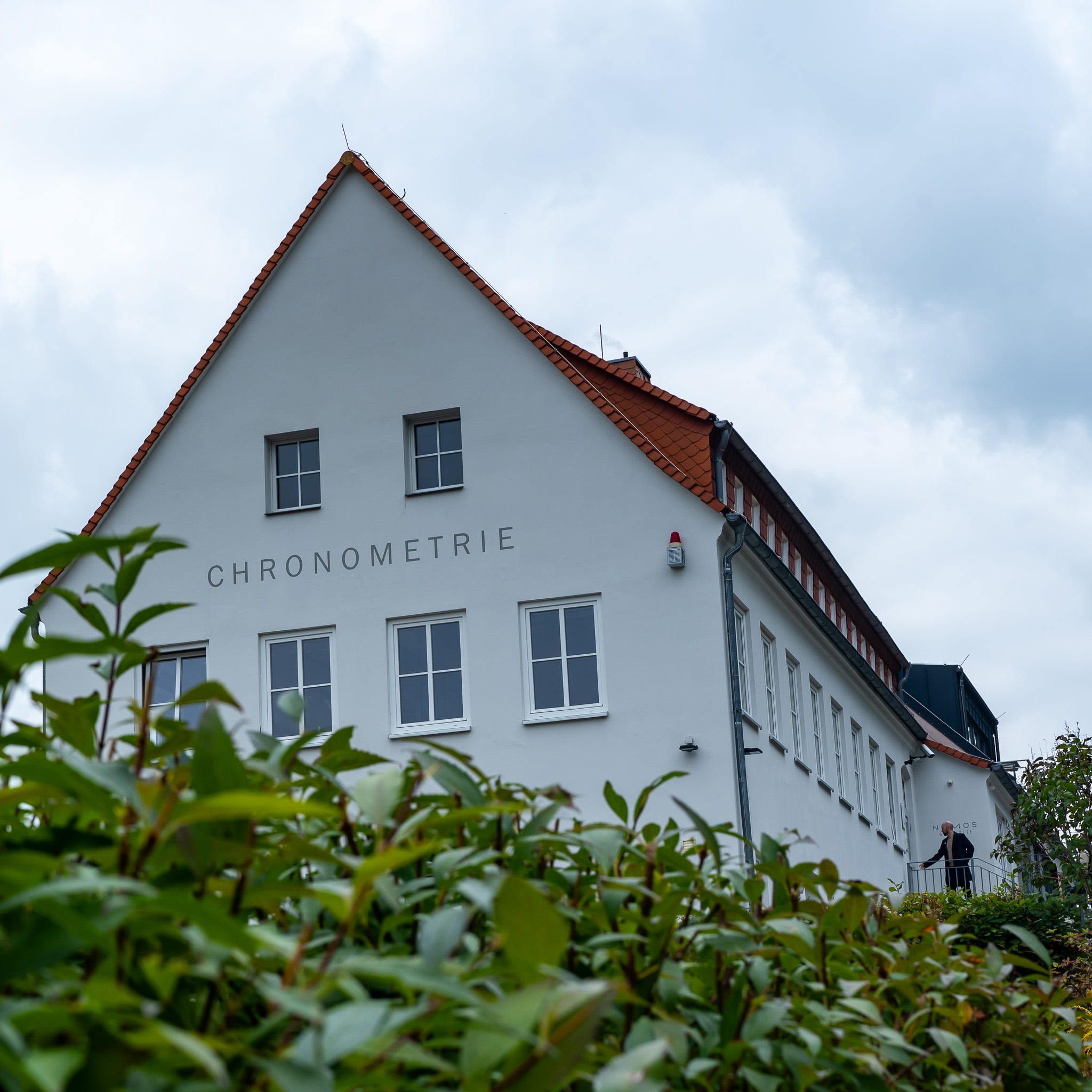
In the Chronometrie building on a hilltop above Glashütte, where watchmakers assemble and test movements
This division is a useful way to think about what a watch company is. I’ve visited many “workshops,” from the Vallée de Joux to Old Town Geneva to Chicago, and these can more or less replicate (2), the watchmaking in Glashütte. Each workshop has its own flair—perhaps an emphasis on high-end finishing or perfect anglage, but the bones are there.
There are far fewer factories manufacturing their own parts. This is typically reserved for the outskirts of Geneva, or industrial towns like La Chaux-de-Fonds or Bienne, where all those CNC machines aren’t a nuisance to the rest of us quietly minding our own business.
What Nomos outsources: Case, dial, hands, strap, buckles (i.e., the habillage, or exterior components).


The manufacturing in (1) is certainly less sexy. It turns raw steel or brass into tiny components. But turn a few knobs, and you can see how they might just as well be making medical supplies or self-driving somethings.
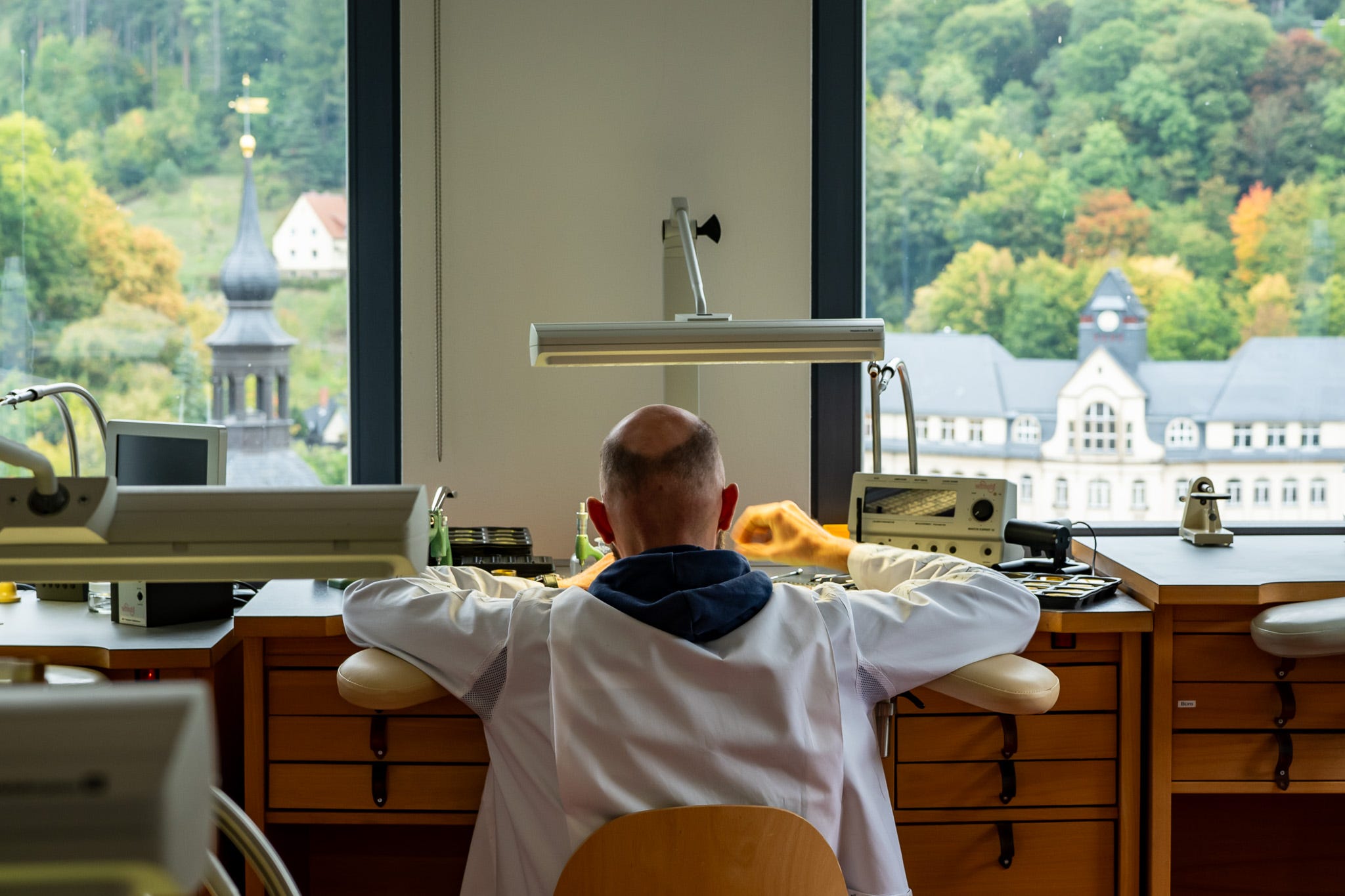
Walk around both Nomos facilities, and it takes fewer people to do the manufacturing. More machines, more robots, less to romanticize. This isn’t the way Ferdinand A. Lange was doing it in this valley in 1845. There aren’t any white coats hunched over a watchmaker’s bench turning screws or assembling movements.
But this is also the hard part. It’s why Nomos, founded in 1990, didn’t introduce its own in-house Alpha movement until 2005, and its own Swing System escapement until 2015. Today, Nomos produces about 20,000 watches per year.2
While visiting Saxony, I toured both the manufacturing site in Schlottwitz and the watchmaking in Glashütte on a misty, gray fall day.
Part I: Manufacturing in Schlottwitz
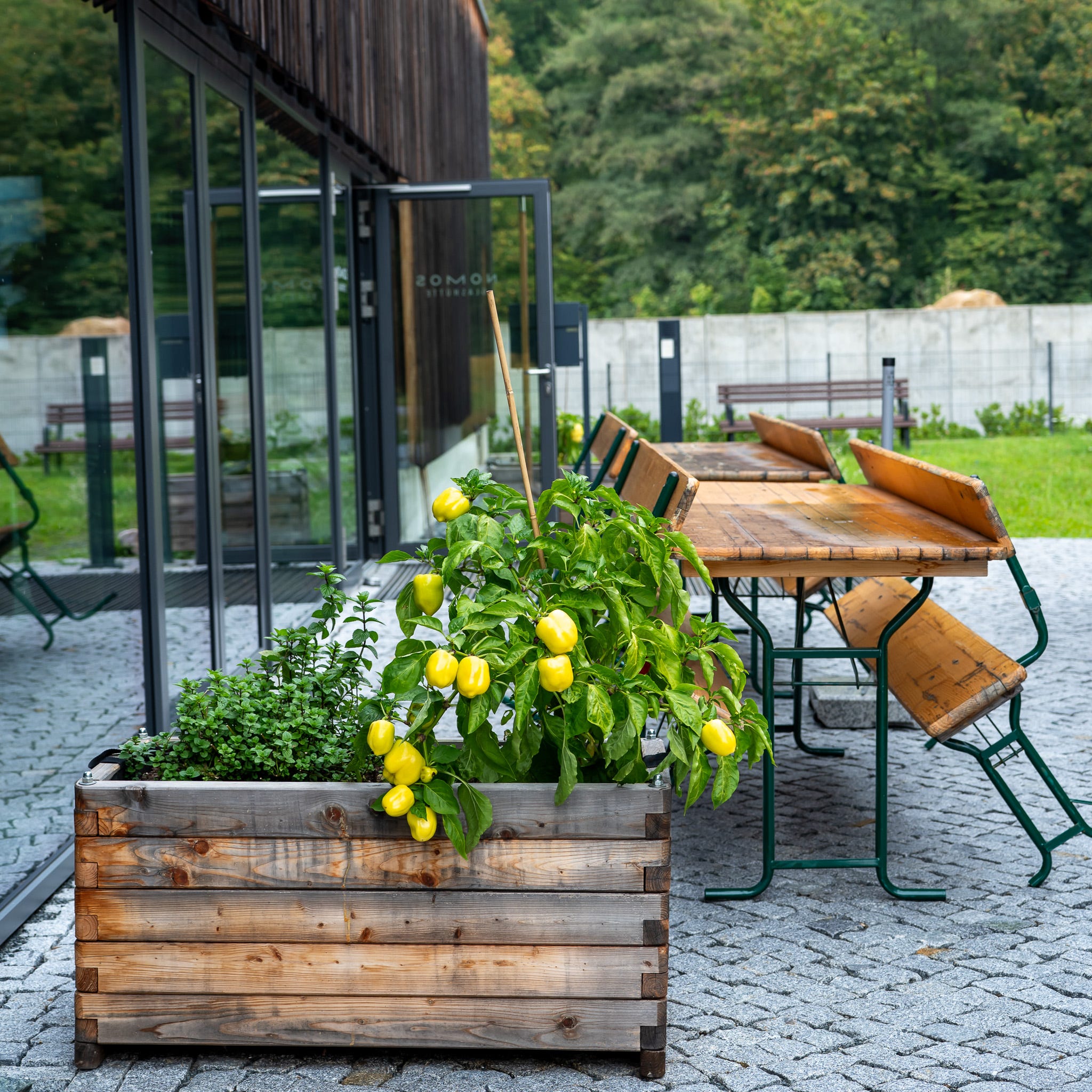
Nomos opened its Schlottwitz facility in 2017, a rural village about 10 miles north of Glashütte’s center on a sparsely populated two-lane road.
This is where metal is shaped into all the components that go into an in-house Nomos movement—gears, wheels, pinions, whatchamacallits.
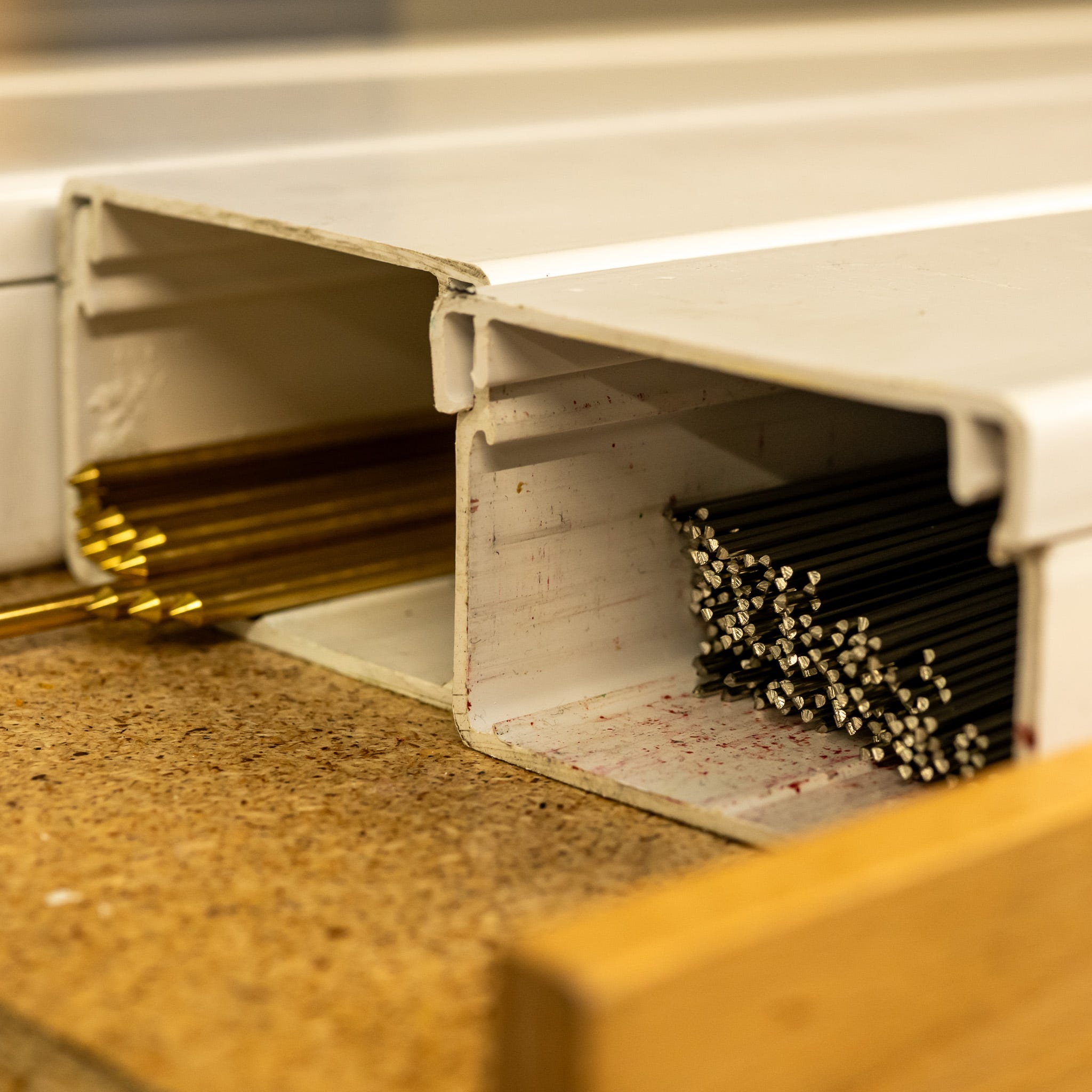


Raw materials. Nomos has an entire room with five of these turning machines, which spin raw steel or brass rods (above) into watch components. Different tools, lathes, or drills are used to make various parts. While they can eventually spit out metal pieces that look something like a gear or pinion, they’re still far from ready to be assembled into a movement.
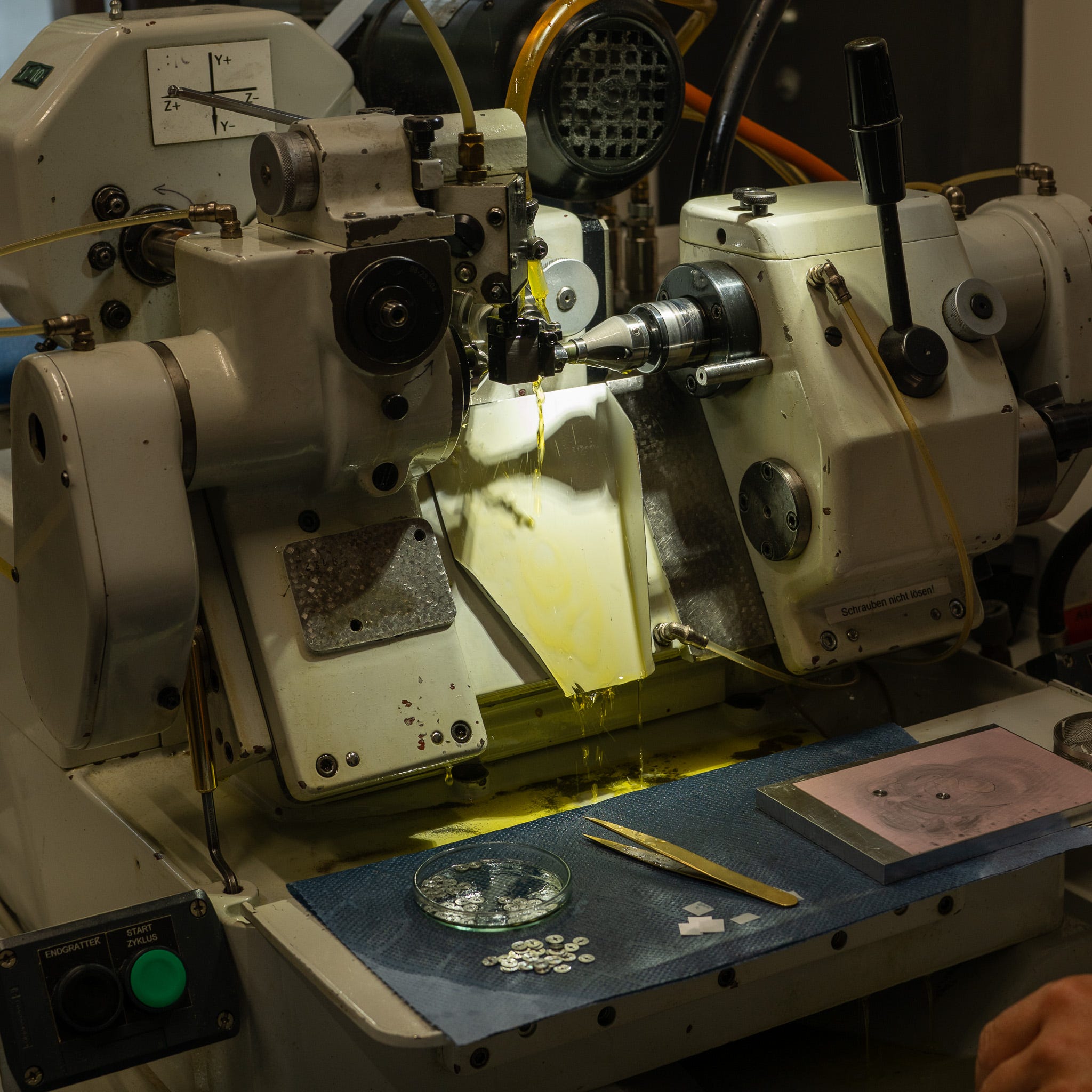
For example, those first machines make wheels, but they don’t have any teeth when they come out—those are applied by this second machine (above), which requires human operation since it’s a more delicate process. Here’s what the wheels look like before and after:


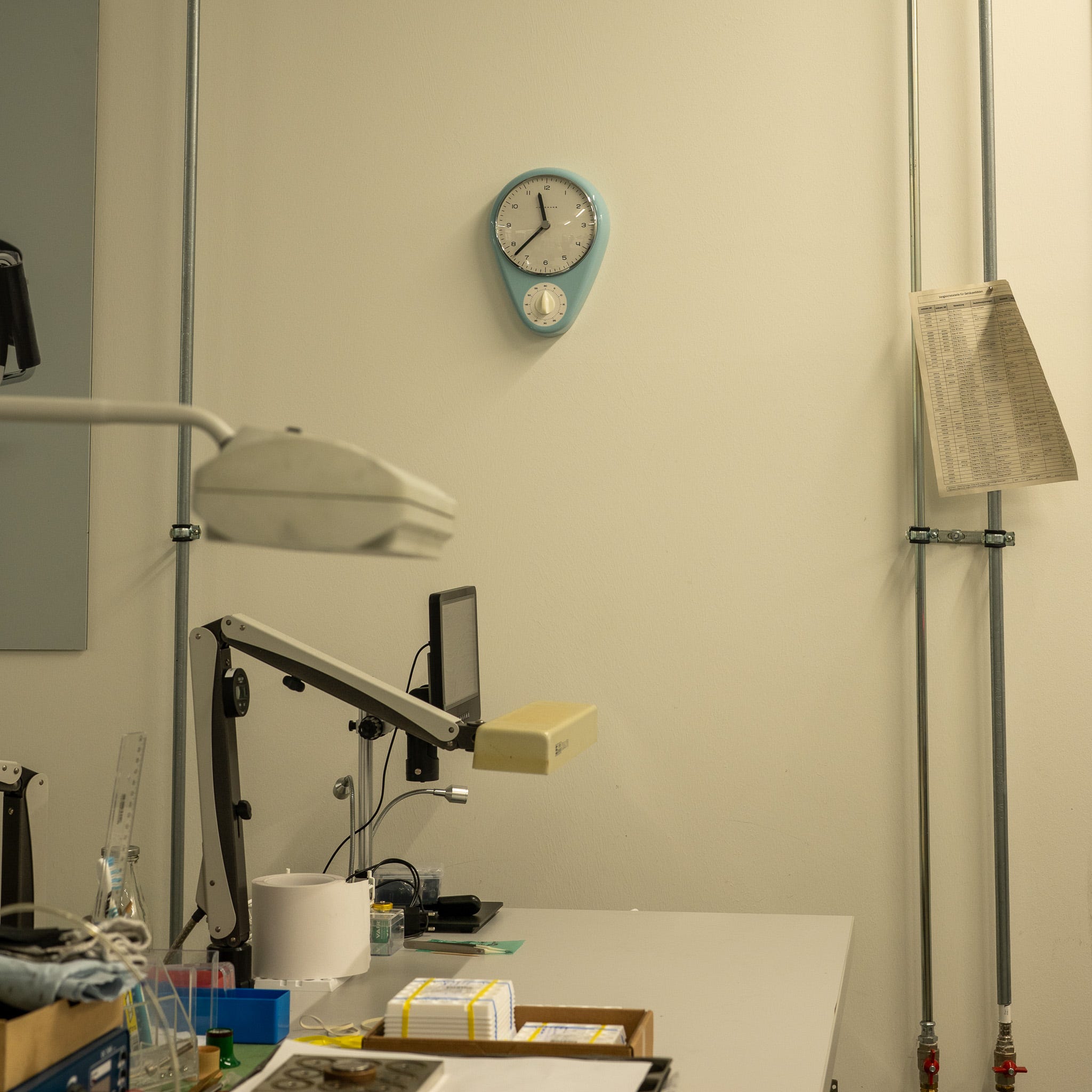
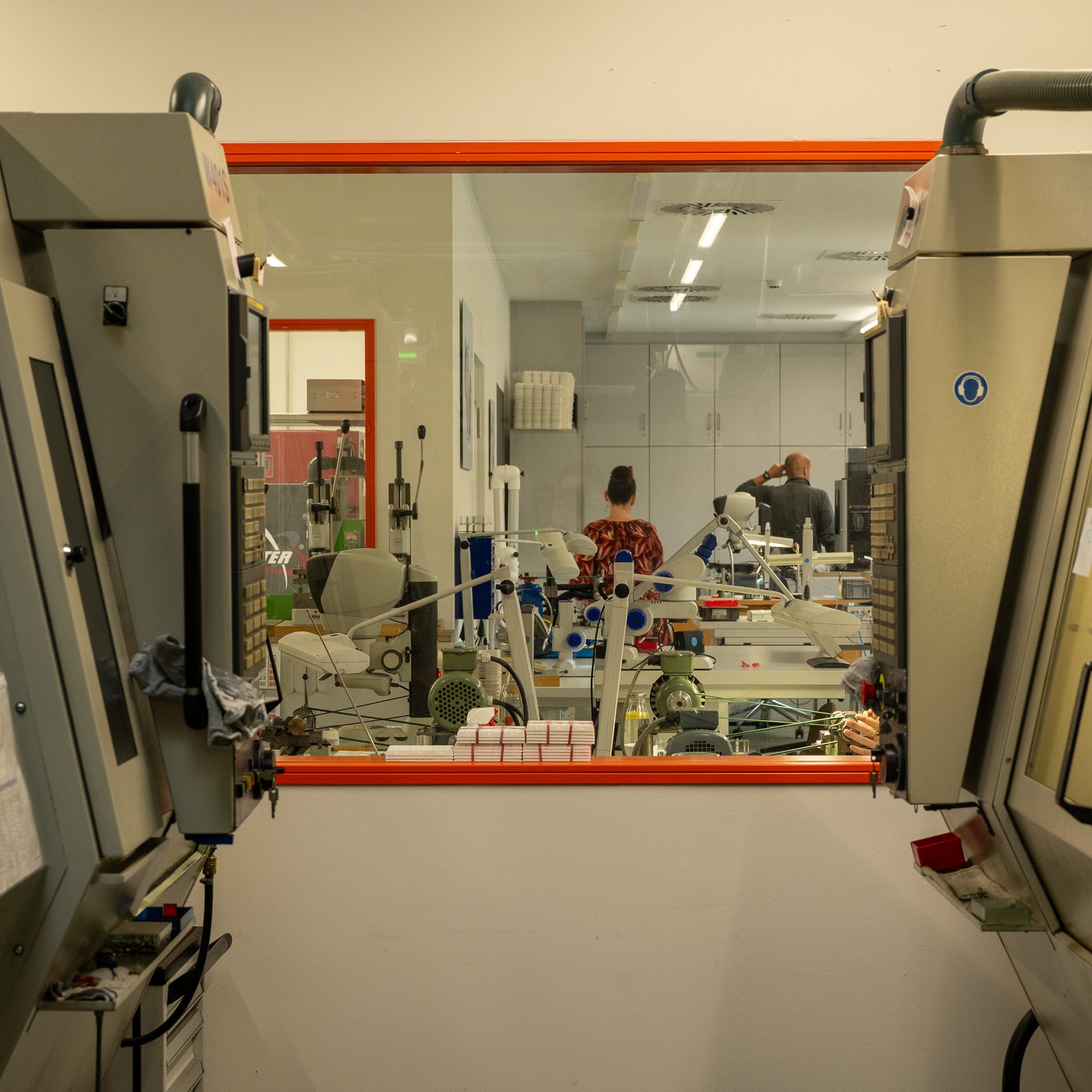
Machining. Nomos has a few latest-and-greatest CNC machines that can operate for days at a time without human intervention. Newer 5-axis machines have three linear axes and two rotation axes, allowing them to cut a part from five sides. This means they can cut multi-sided geometries in a single setup, removing the need for human operators to manually stop, recalibrate, and reposition parts.3
But Nomos doesn’t get rid of its older 3-axis machines. They’re still used for simpler cuts—think cutting holes from a mainplate on a single plane.
This machinery is the most substantial investment for many watch companies: a modern 5-axis machine can easily run into the mid-six figures.4 For Nomos to make just movement parts for its 20k watches/year, it has a room of a dozen or so CNC machines. And it’s not even making the larger external parts like cases.
When Rolex CEO Jean-Frederic Dufour said Rolex invests CHF 100m annually in its machinery, this is the kind of thing he meant.
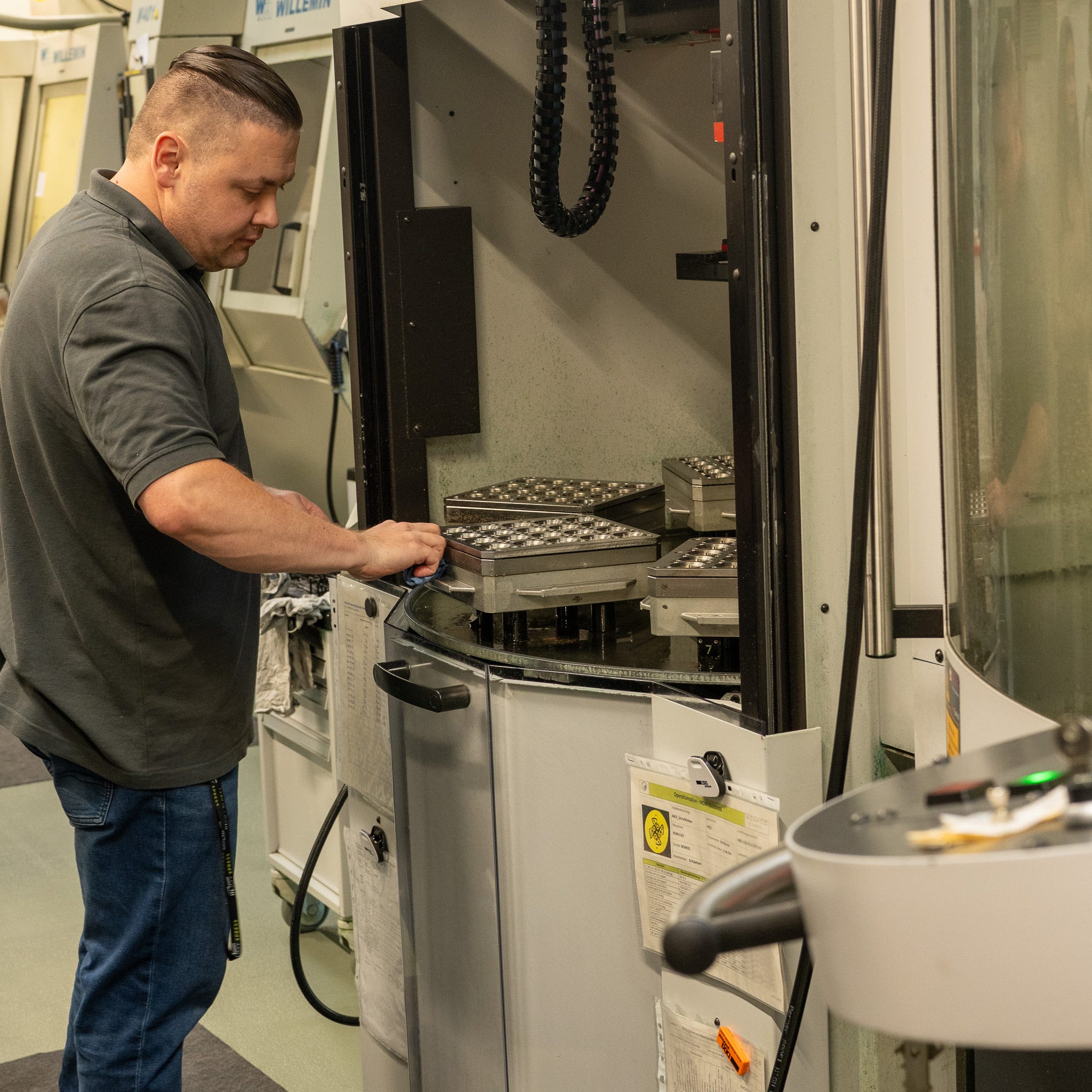
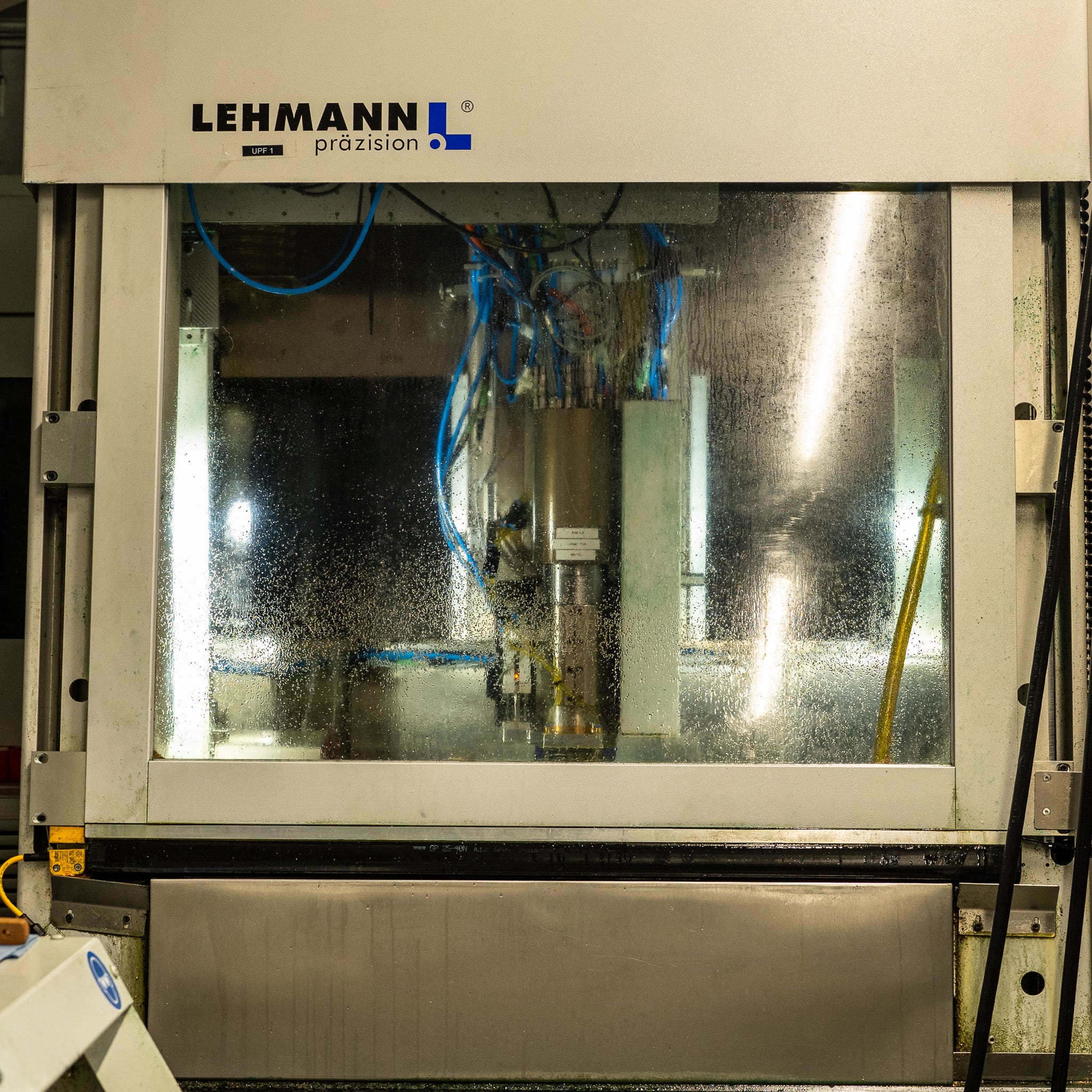
Each machine has hundreds of tools inside and can machine the mainplates for any of Nomos’ in-house calibers, getting them ready for the next step of assembly.


Quality Control. Alongside component production, there’s also QC. For example, the machine below has a tray that shakes components around. A camera above can detect and analyze size down to the micron and instruct that robotic arm, blurred in motion below, which ones to pick up for the next step of assembly:
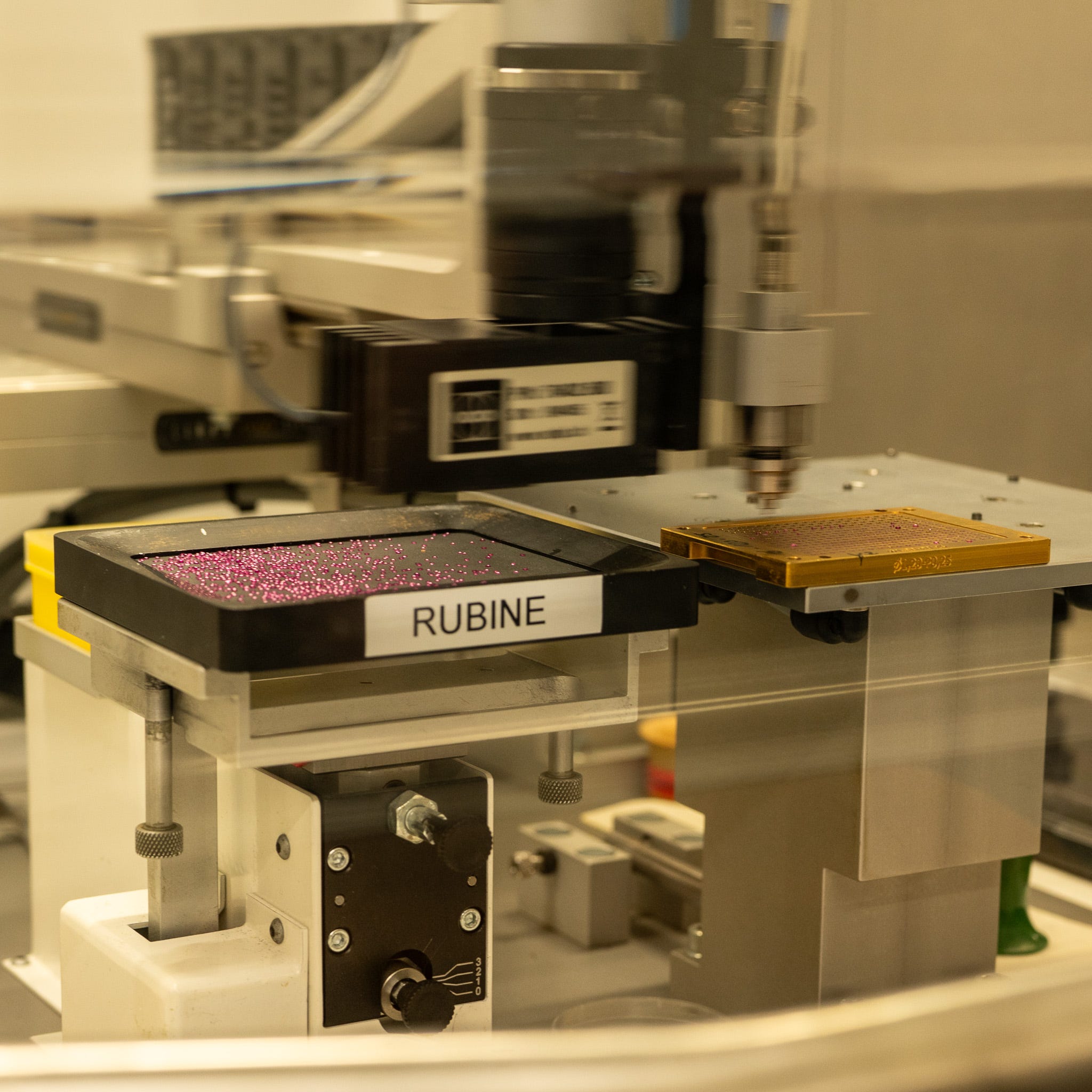
The next robot can then take those rubies and add them to the machined three-quarter plates:


This is basically machines doing the easier parts of assembly so the human hands down in Glashütte can assemble the more delicate components.
Finishing
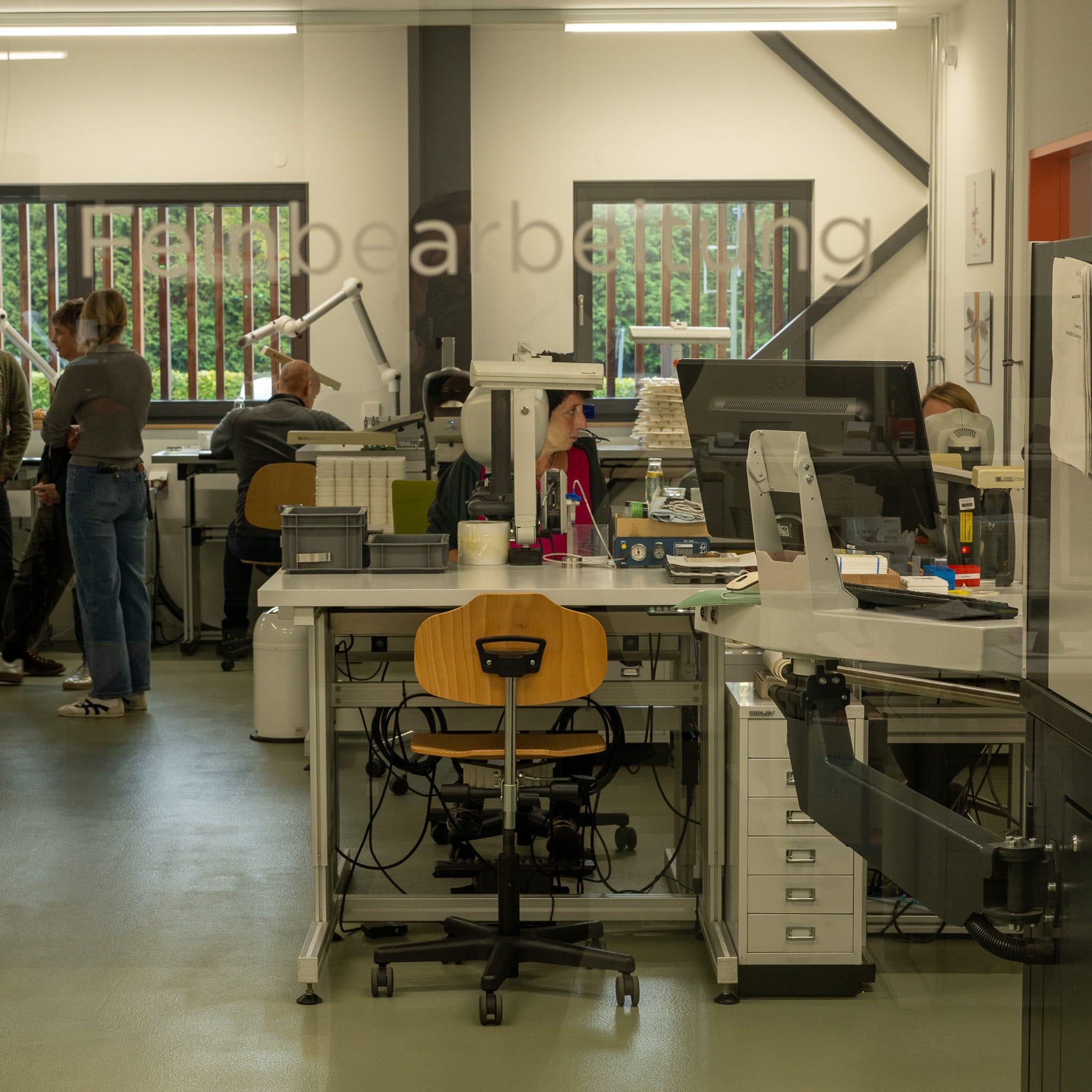
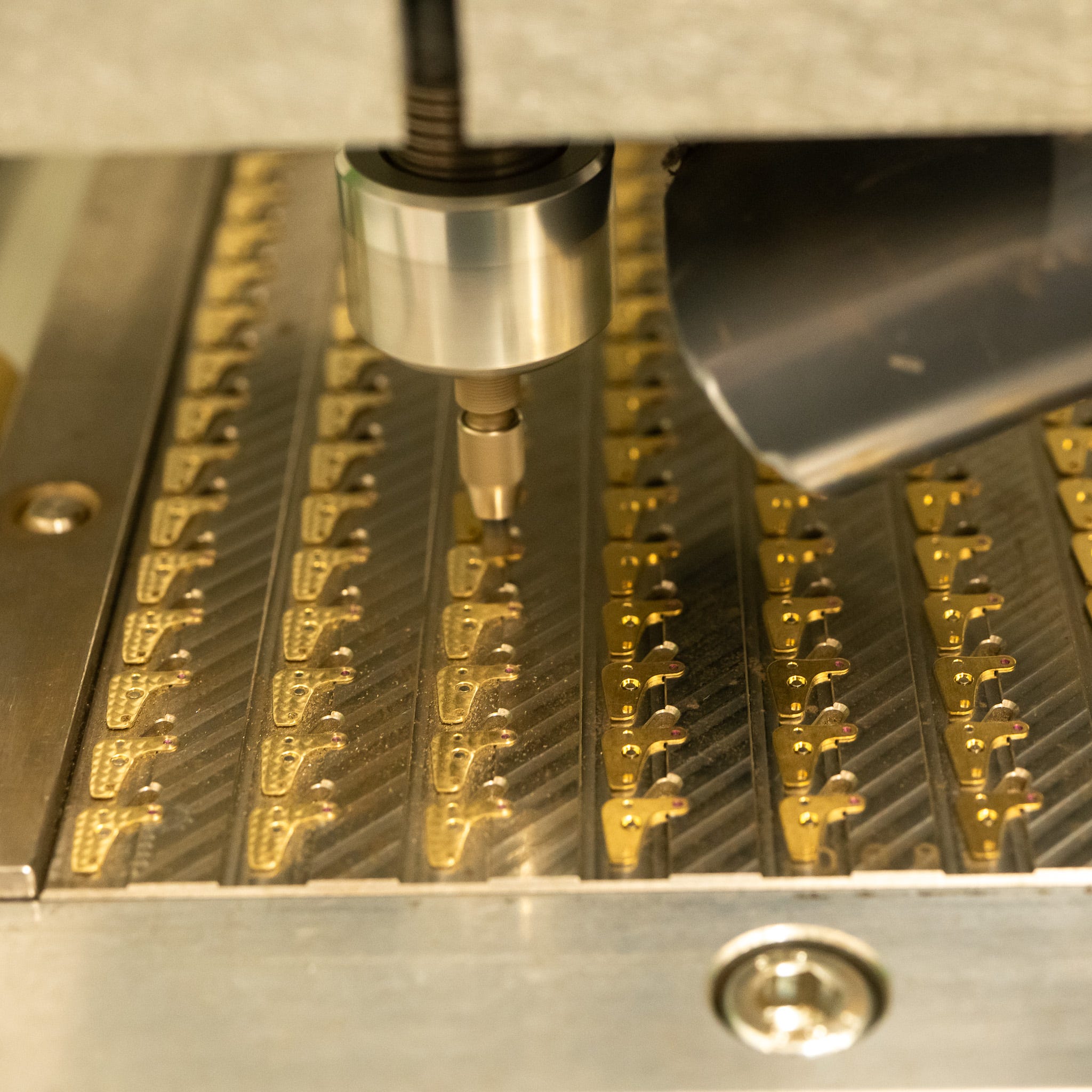
The final step in Schlottwitz. Finishing happens in another room. Finishing can be practical or aesthetic, applied by machine or human. For example, here’s perlage being applied by a machine:
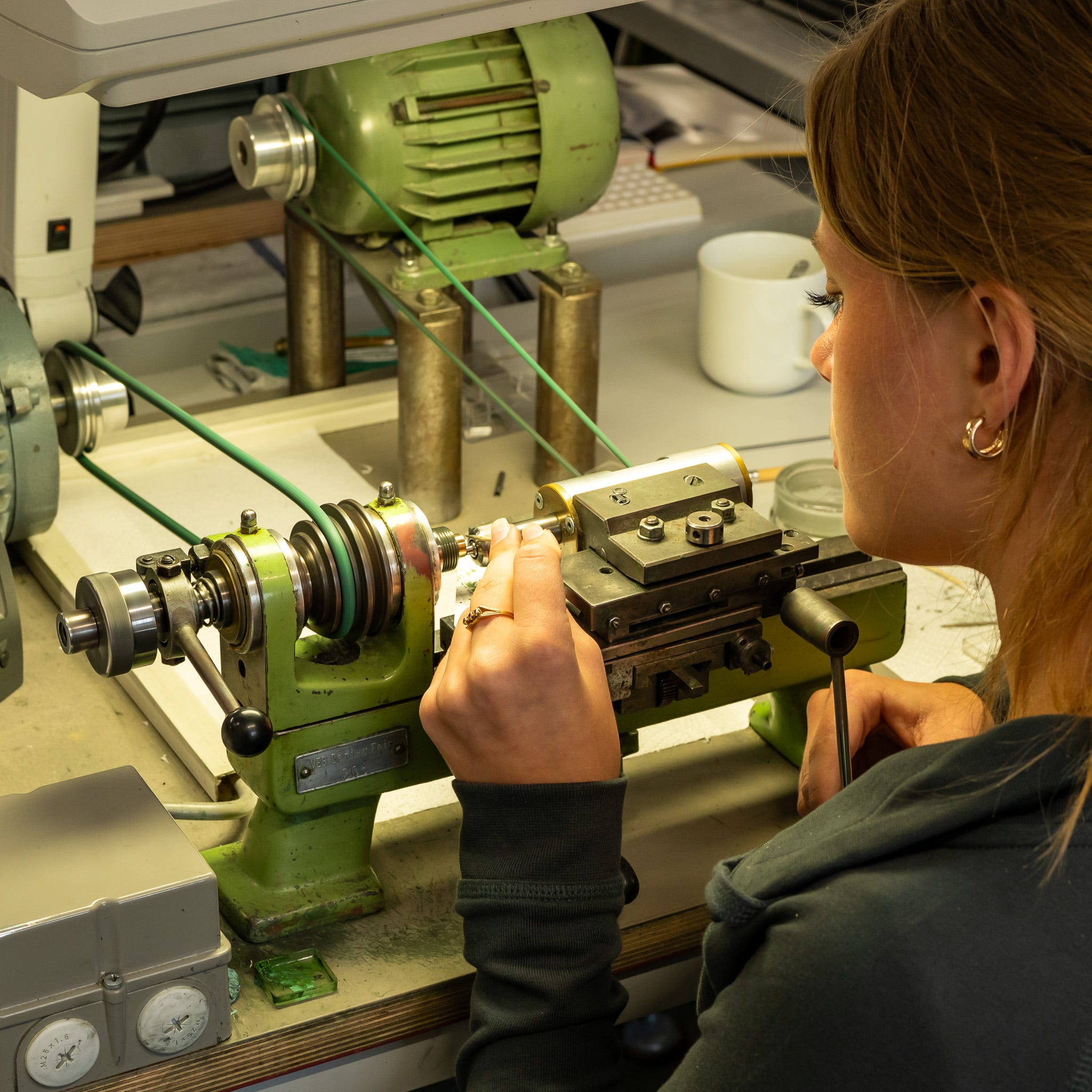
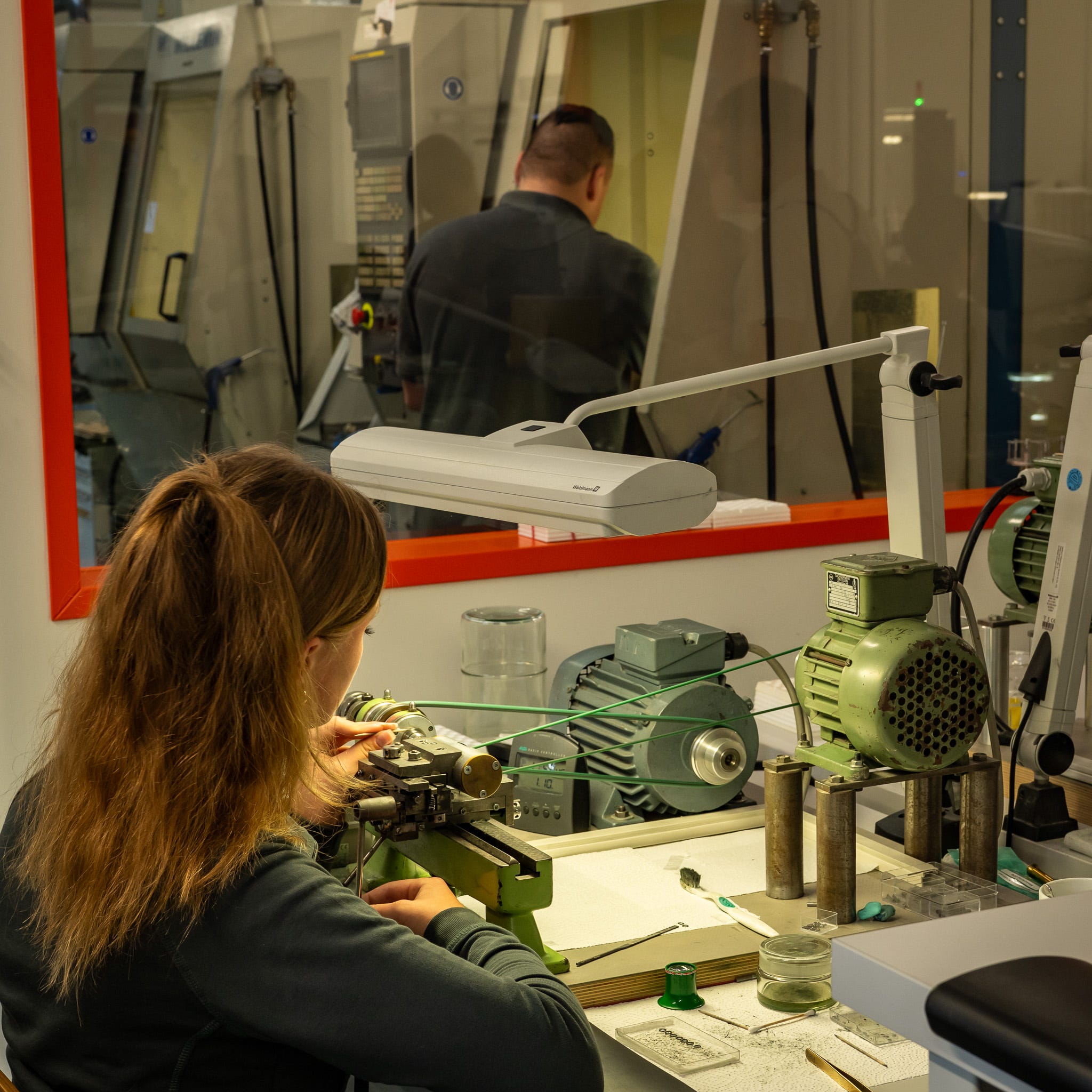
And here’s a woman applying the sunburst pattern to the ratchet and crown wheels by hand. She applies a dab of paste to the machine, and then places the wheel on the chuck. She then slowly applies the exact amount of pressure to get the perfect finish.
Part II: Watchmaking in Glasütte
Silver ore was found in the Ore Mountains in the 15th century, and nearby Glashütte became an early mining town. By the mid-1800s, the deposits had been largely depleted, and the local economy was struggling. In 1845, Ferdinand Adolph Lange brought watchmaking to Glashütte. Like the Swiss valleys known for watchmaking, its natural isolation helped foster a specialized economy that thrived until World War II. East Germany nationalized watch manufacturing after the War, stunting its growth until the fall of the Berlin Wall in 1989.


Even today, the town of Glashütte is really just the confluence of two roads in a valley. At their intersection, watchmakers: Lange, Glashütte Original, and SUG, a casemaker for many brands. Ten in all. Nomos’ administrative offices are in the old train station.
Nomos’ watchmaking sits in the Chronometrie building, a 15-minute hike up a long and winding road to the top of Glashütte. The Chronometrie building was repurposed during the GDR era, before Nomos acquired it in 2000. Today, it’s where assembly and final checks happen for every Nomos.
Pre-assembly
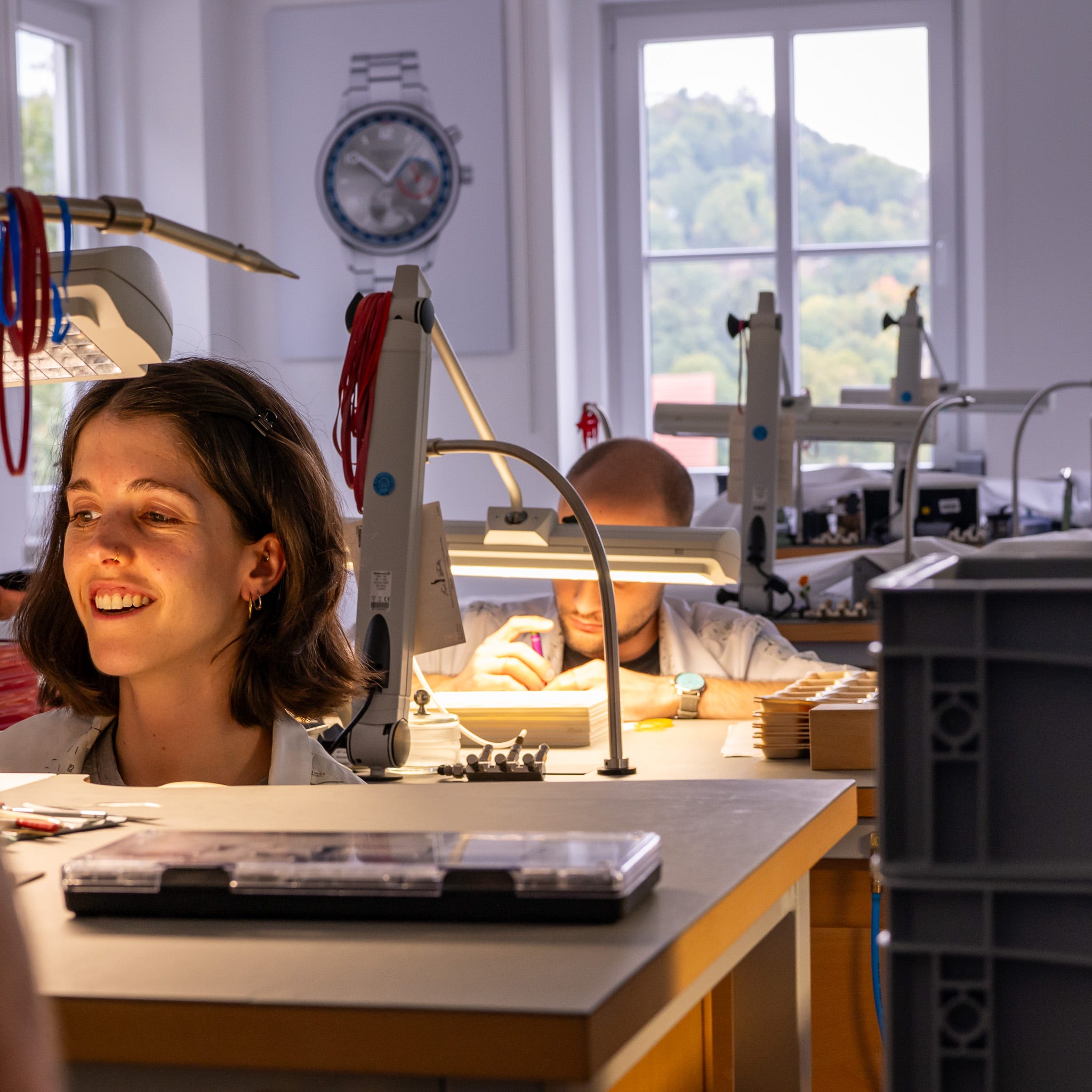
After all the parts have been produced in Schlottwitz, movements are ready for assembly. First comes the pre-assembly room, where movements start to come together. Mainspring barrels are installed, date wheels are added, and wheels are riveted—the exact functions change depending on whatever’s needed that day:


Swing System


In the next room, watchmakers test and assemble the components for Nomos’ Swing System. Introduced in 2015, this is its own version of the Swiss lever escapement. When Nomos launched in the 1990s, it used an outsourced ETA/Peseux 7001 (from Swatch Group), but with its own customizations inspired by Glashütte watchmaking. In 2005, Nomos officially became a manufacture with the introduction of its Alpha caliber. While the Alpha shares dimensions and structure with the 7001, it didn’t use any major ETA parts—Nomos made its own plates, bridges, and gears. But Nomos still sourced its escapement from the monopoly Nivarox, also owned by Swatch Group.
That changed with the introduction of its Swing System, making Nomos a truly independent movement manufacture. This is when its new calibers began carrying the designation DUW, or Deutsche Uhrenwerke (Germany watch movements), denoting them as made in Germany.
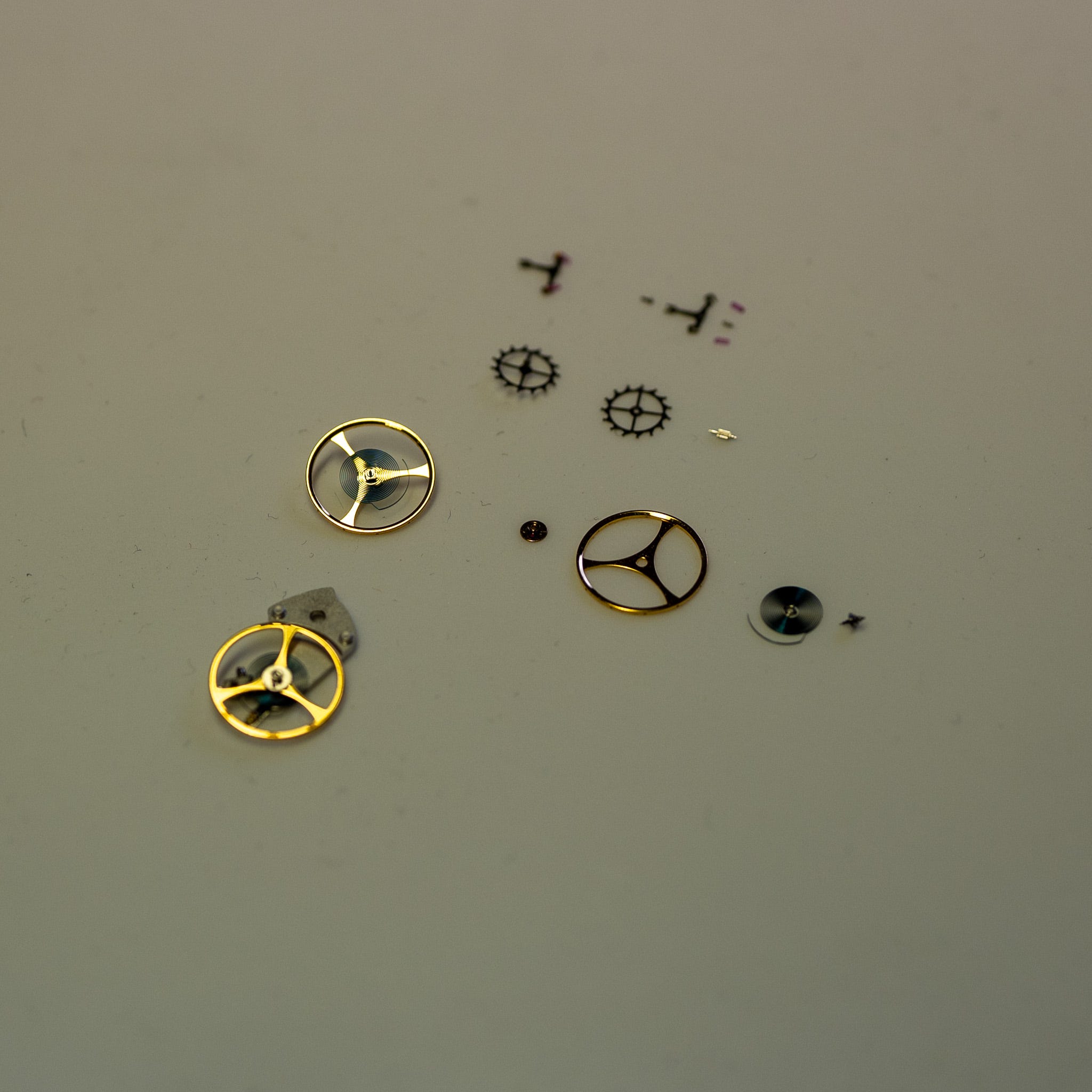
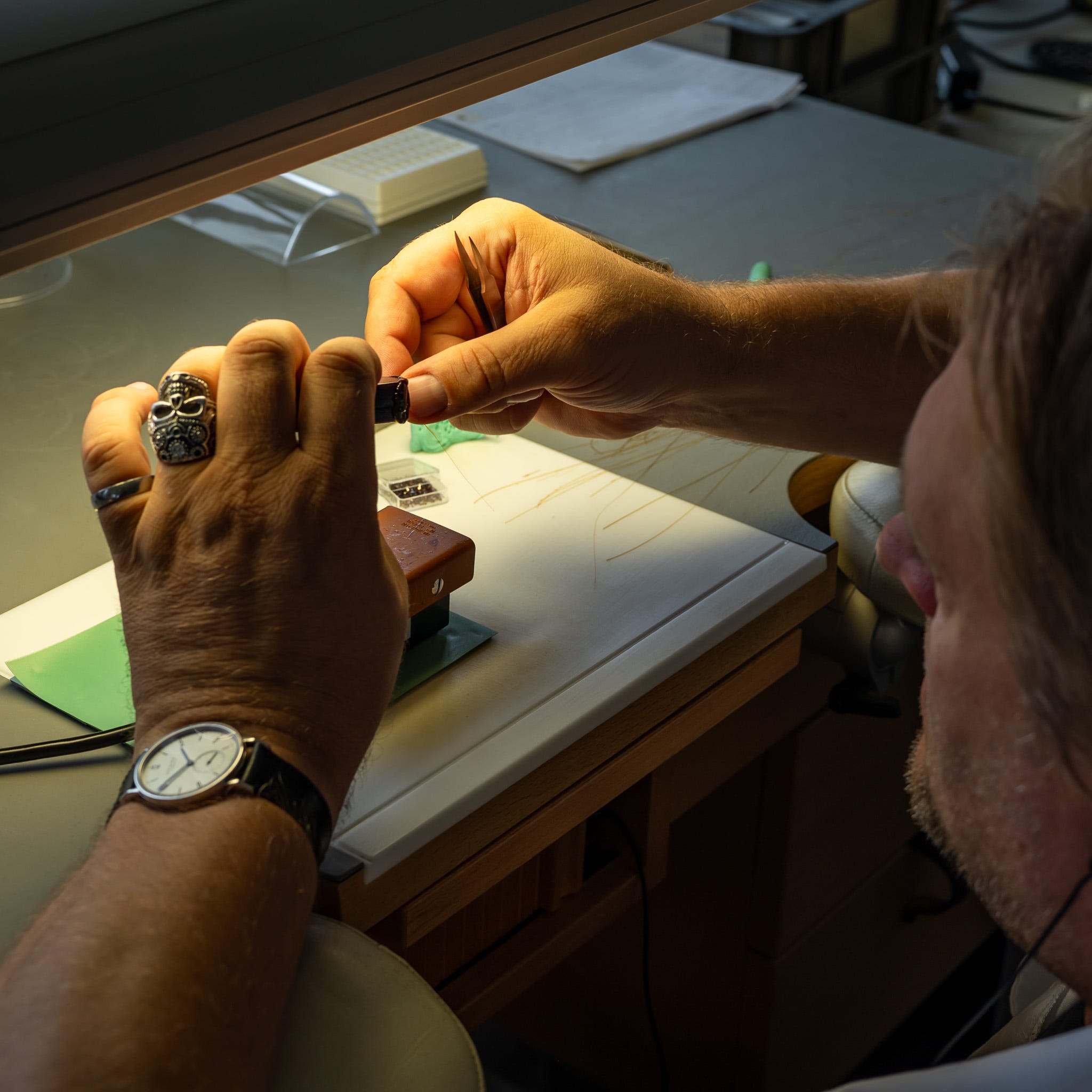
Making your own escapement also means doing all the little things. Below, a watchmaker is making shellac, the natural resin used as an adhesive to attach pallets to the fork. It requires stretching the sticky shellac into long, thin strings, and then cutting those into tiny pieces to be used in escapement assembly:
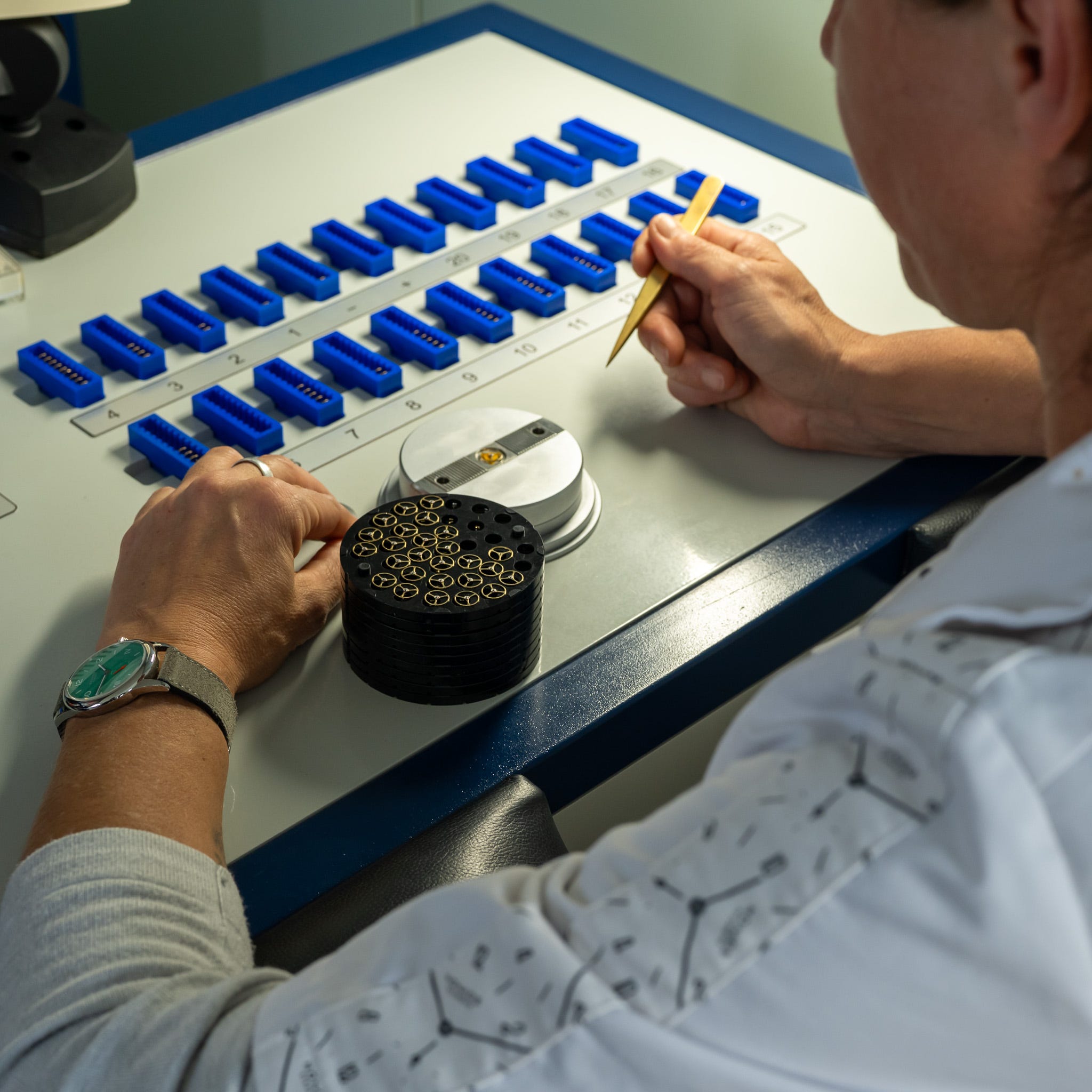
This woman is using a machine that rotates the balance wheels while a macro lens calculates their weight, so they can be balanced during hairspring assembly. While they all look the same to the naked eye, they have slight differences that need to be adjusted for. After testing, she places each wheel in a different category by weight, as indicated by the numbers below those blue trays:
Final assembly
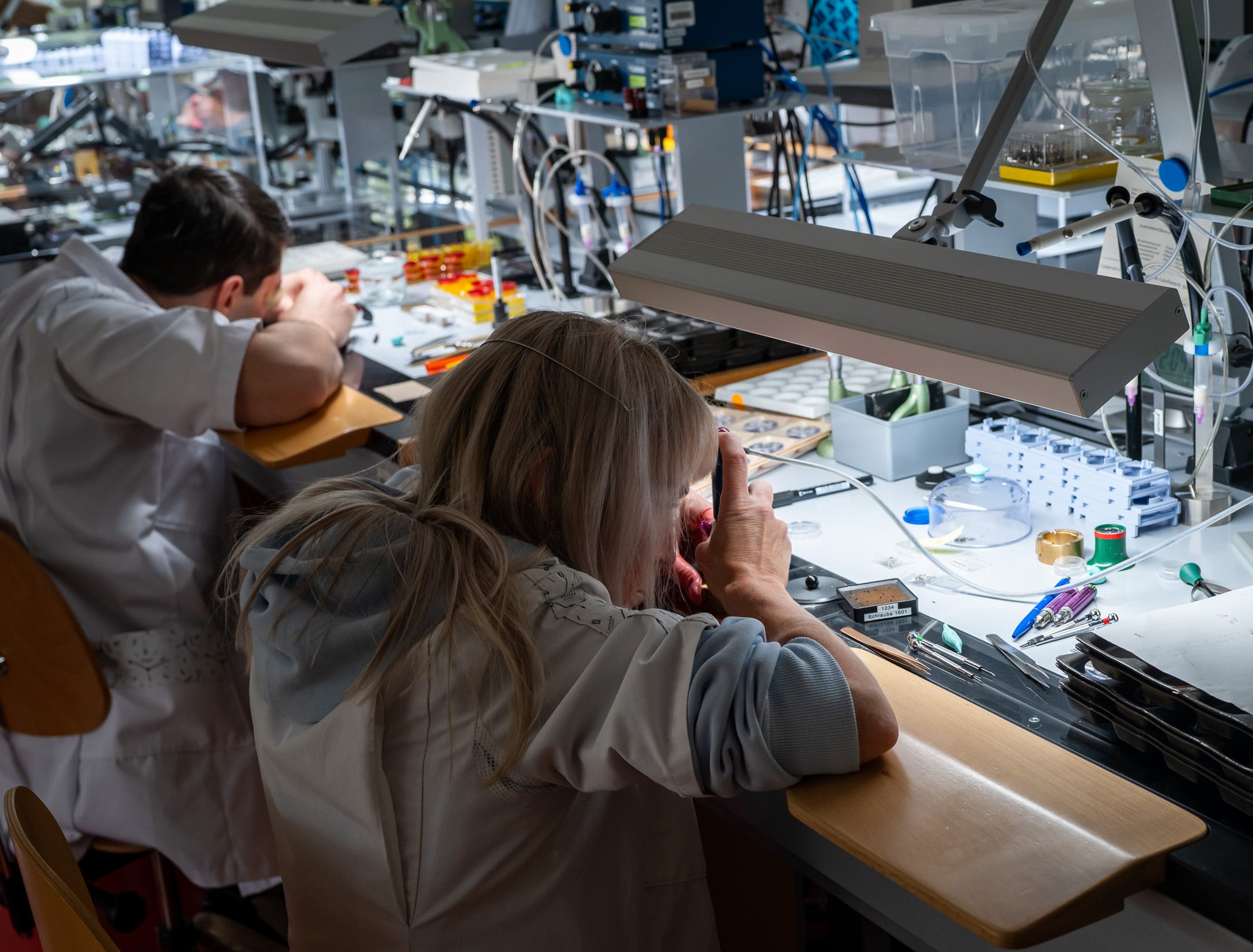
After pre-assembly and escapement assembly, the movements are ready for final assembly. This is where a movement comes to life for the first time, with the mainspring, gears, and escapement all coming together to give it its first tick.
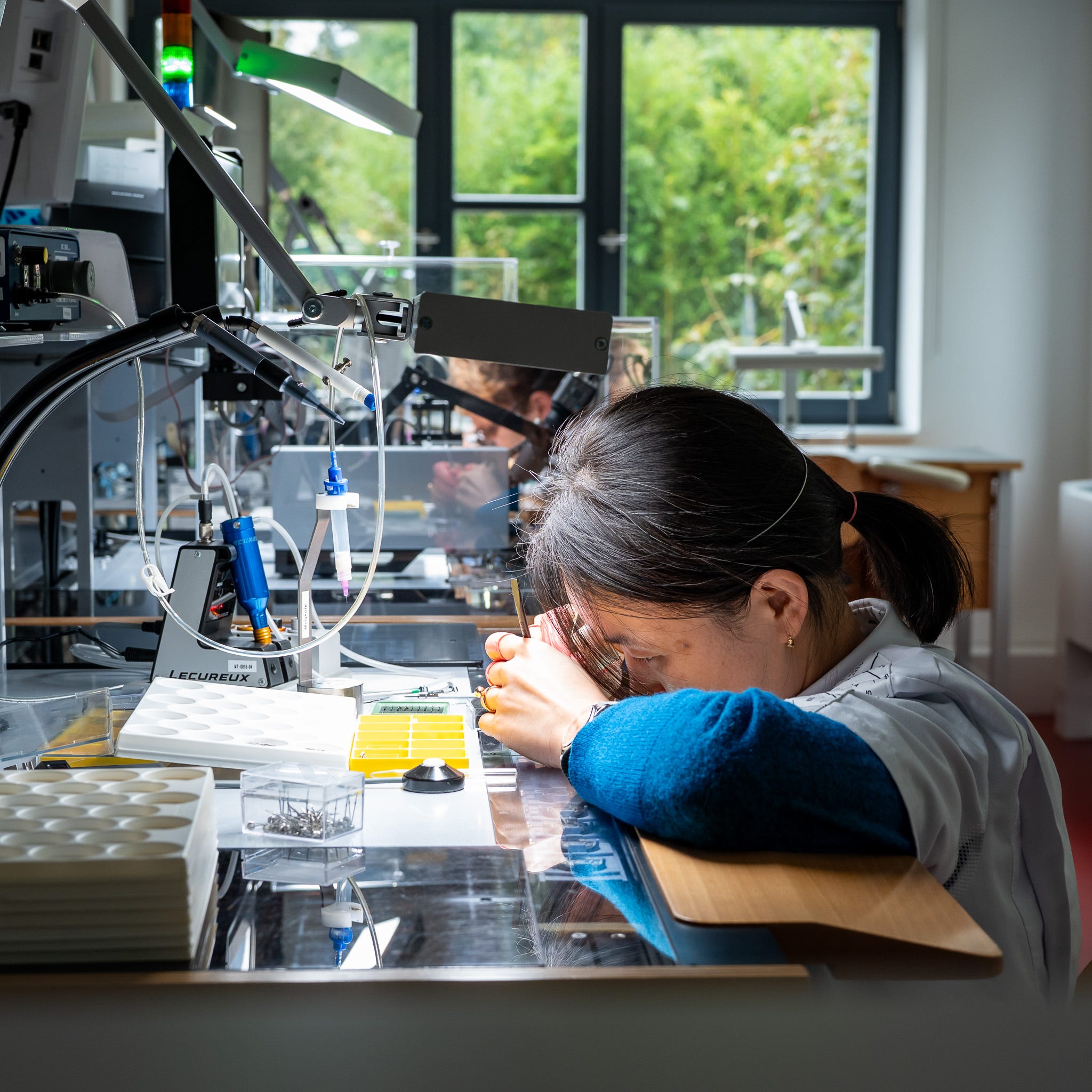
It’s also where robots and watchmakers work together most noticeably. A human watchmaker starts the process, putting together parts from a tray. Then it’s handed off to a robot, which applies the perfect amount of lubrication, also providing QC measurements to make sure everything is right. The caliber then goes back to the human watchmaker for final adjustments.
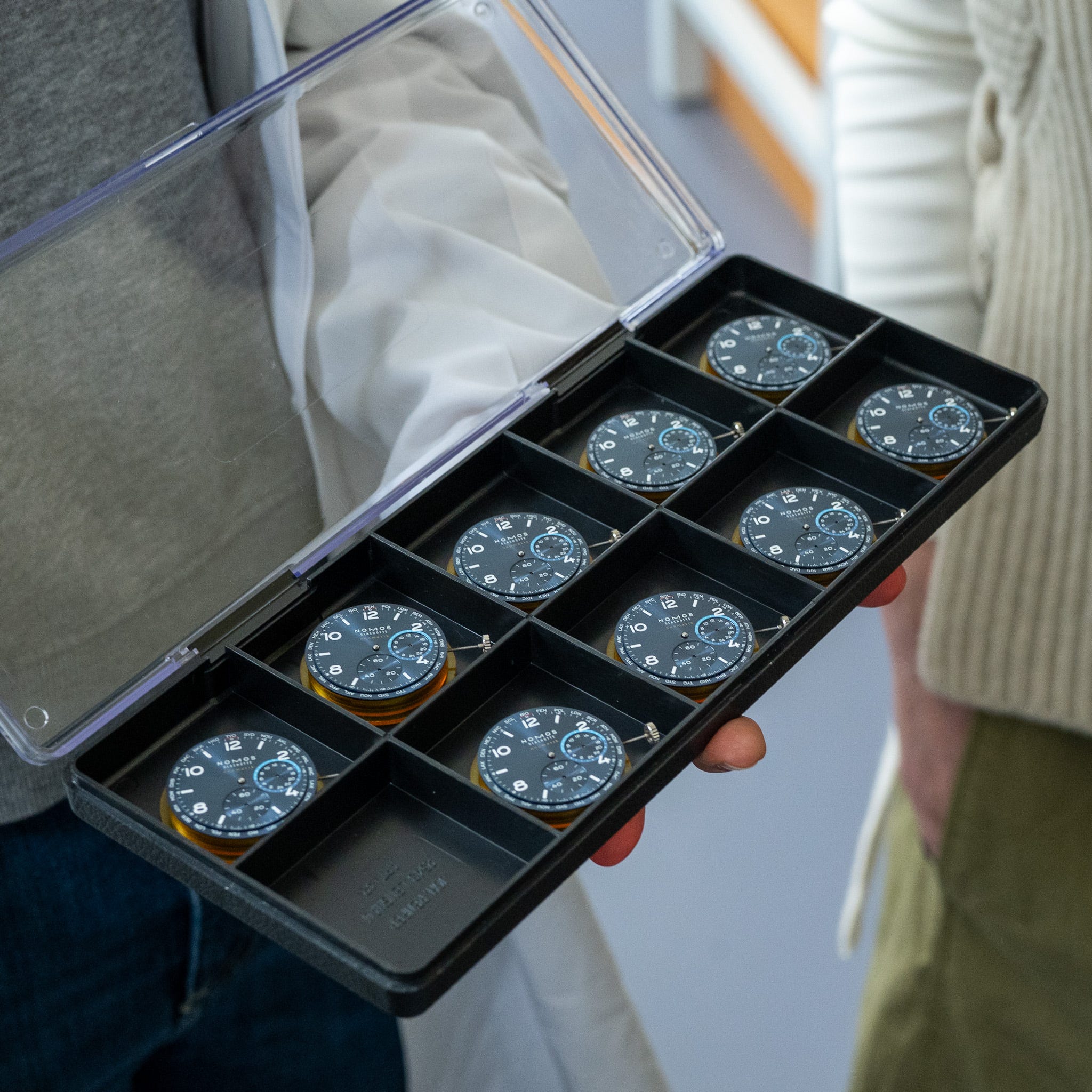
After a movement leaves this room, it’s ready for its hands, dial, and case.


Nomos sources the dials and other external components from third-party suppliers.5 They’re brought to Glashütte, where watchmakers assemble the final watches.
Goodbye from Glashütte
All Nomos employees are given a Tangente when they start, which becomes theirs after six months of employment. I saw a lot of Tangentes while walking around, but also almost every other Nomos model on the wrists of watchmakers, machinists, and engineers.


Nomos is impressive because it did the hard part, the part that’s not all sexy designs and stone dials. It slowly, methodically laddered up from outsourced movements to customizations to its own calibers, before finally developing its own escapement. While its designs are consistently, sometimes frustratingly Bauhaus, last year’s Club Sport Worldtimer feels like the first time it’s successfully adapted its distinct aesthetic to a modern sports watch that feels different while still being totally Nomos.
Nomos is, I hope, what some of the latest generation of “microbrands” aspire to. Not just making trendy watches that look fun at a watch fair, but building something truly separate from and independent of the legacy manufacturers.
More from Glashütte:

It also has an in-house creative and design agency in Berlin, Berlinerblau, with another ~40 employees.
For reference, that’s around the same as Blancpain’s or Piaget’s estimated output.
A 5-axis CNC machine uses three linear axes (x, y, and z) and two rotational axes to cut a part from five sides in a single setup. A 3-axis machine has just three linear axes.
When I spoke to American machinist/watchmaker Zach Smith, he told me he acquired his last KERN CNC machine for $300k—and it was broken.
The dial supplier is based in Germany’s Black Forest region, as I recall; I’m not sure about the others.
Love this - more like this please! I had to look down after every couple paragraphs at the movement of my CSN Worldtimer, and it's so cool to see how it was made from a firsthand account. I'll pay them a visit someday, but thanks for taking us along for the ride
Thank you for this, great pix and write up. Really helps the rest of us who are not as privileged obtain access to the manufacture and see how the watches we may purchase are made.