


I’m not really a Speedmaster guy. I can get behind straight lug cases like the newish First Omega in Space, and the modern “Ed White” with a caliber 321 is scrumptious. But the Speedmaster Professional just doesn’t sit right on my wrist.
This is too bad for me, as even the Mothership has said, “Come on, how can you call yourself a watch guy and not own a Speedmaster?” Oops!
Perhaps giving into a deep-seated need to feel accepted, early in my journey, I stumbled upon the mid-century Omega Seamaster Chronographs as my “they don’t know” Speedmaster alternative. From the late 50s until the mid-60s, Omega used the cal. 321 in a range of Seamaster chronos. A common fresh-faced enthusiast mistake is to reduce a watch to only its movement, so off I went.
I’ve learned more since, if only a bit, but I still love these Seamaster Chronographs—simple, dressy, and they happen to use one of the best chronograph movements ever. Some dealers and collectors have told me these used to be harvested or used as parts donors for Speedmasters. I don’t if that’s still the case since vintage Speedmasters have fallen off. But if it is: Please, my poor Seamaster Chronos deserve better!
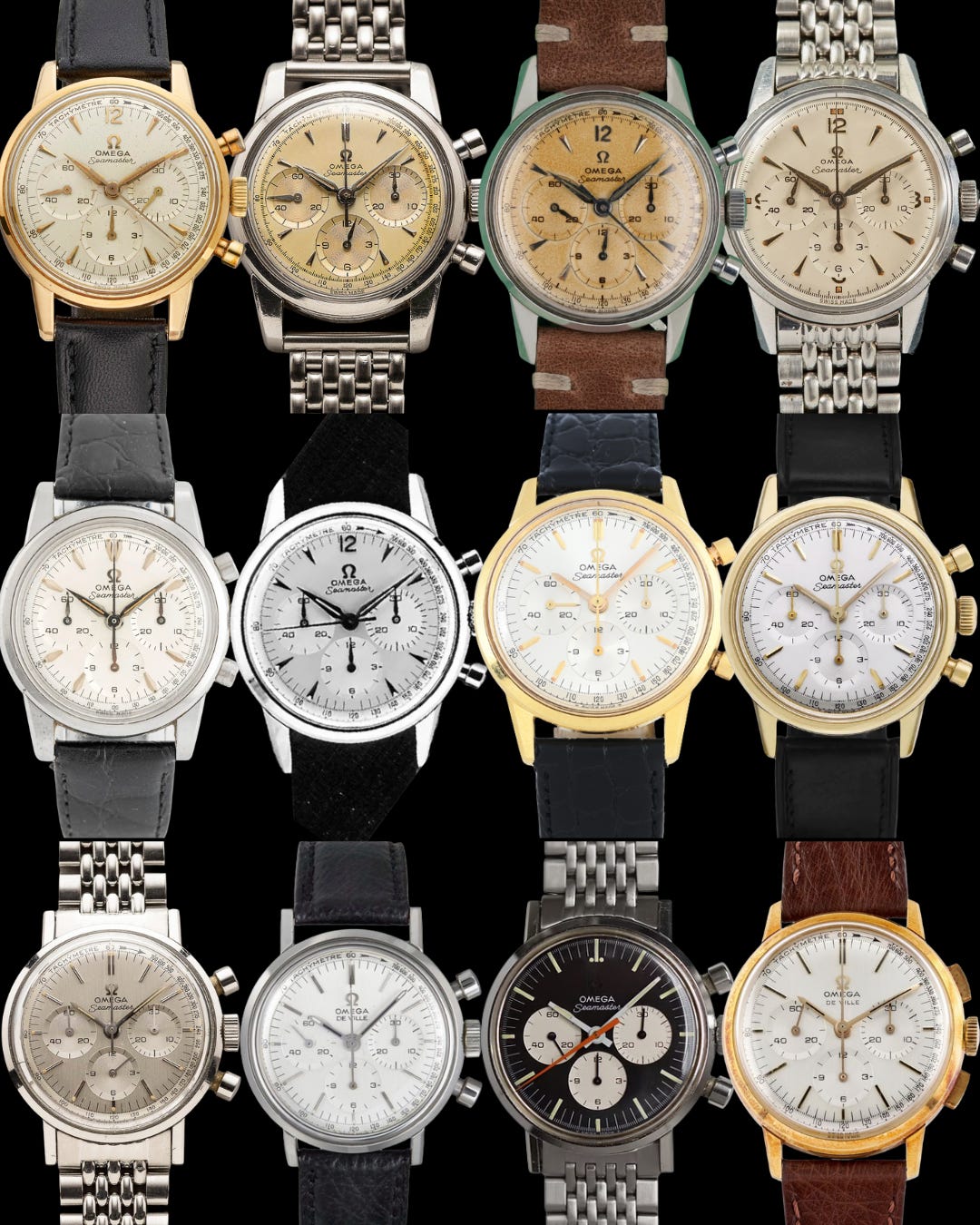
I found 11 Seamaster Chronograph references that use the caliber 321. All measure ~34-36mm, but wear differently because of the various case and lug shapes. I couldn’t find a good guide to all of them, so started making my own. I cleaned it up to publish here (this is how the first Rescapement/Unpolished articles came to be around 2019).
This isn’t a comprehensive guide, but a starting point. A few more notes:
I’ve noted some De Ville dials on watches that are probably too early to make sense. Omega officially introduced the De Ville collection in 1967, though it put the name on dials before that. Some De Ville references certainly used the cal. 321 (you’ll see them at the end), but in some instances these could be swapped dials. It’s hard to know for sure. Seamaster De Ville chronographs using the successor cal. 861 became more common in the late 60s.
You’ll also start to notice other patterns: Early alpha hands (my preference) transition to batons; coffin or arrow markers turn into sticks; radium changes to tritium; and so on.
That tachymeter arrow at 12 o’clock has to be one of my favorite details on any vintage watch.
Given what I said about these being “parts donors,” I’d bet a lot are put together, especially when it comes to special or rare dials. Most of the time, “period correct” is good enough for me.
Note: I didn’t include the chunky Seamaster chronographs like ref. 145.006, which also use the cal. 321.

Pre-Seamasters
Before we get to the Seamaster Chronographs, you can see the foundation of these in earlier “pre-Seamaster” chronographs. These use the caliber 27 CHRO C12, which became the caliber 321. References include: CK 2886 (below), OJ 2439, OT 2439, OT 2451, and OT 2468.
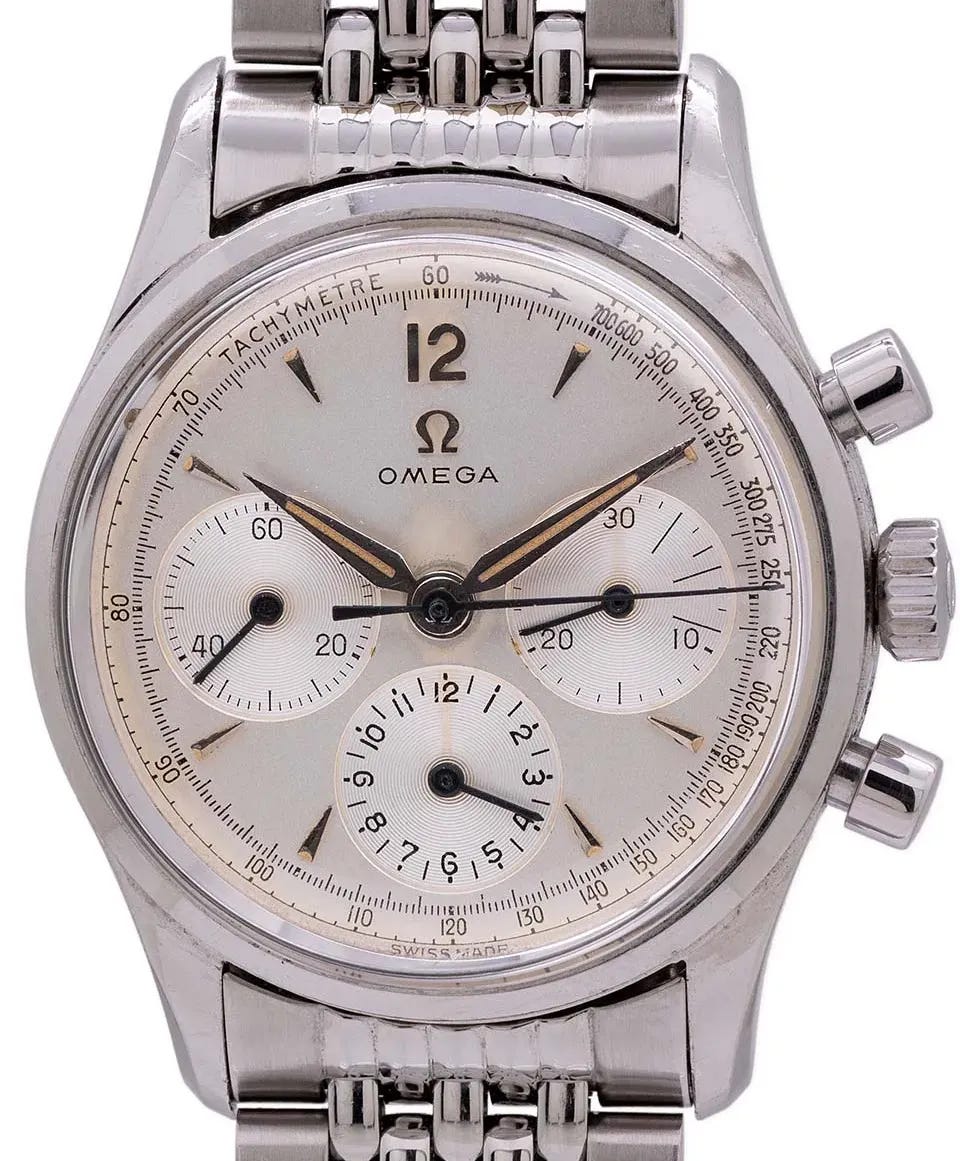
OT 2884 (1957)
In Omega references, “OT” denotes solid 18kt gold. Introduced in 1957 according to Omega’s website. Simple lugs, clean dial—kinda like Omega’s version of a Heuer Carrera.
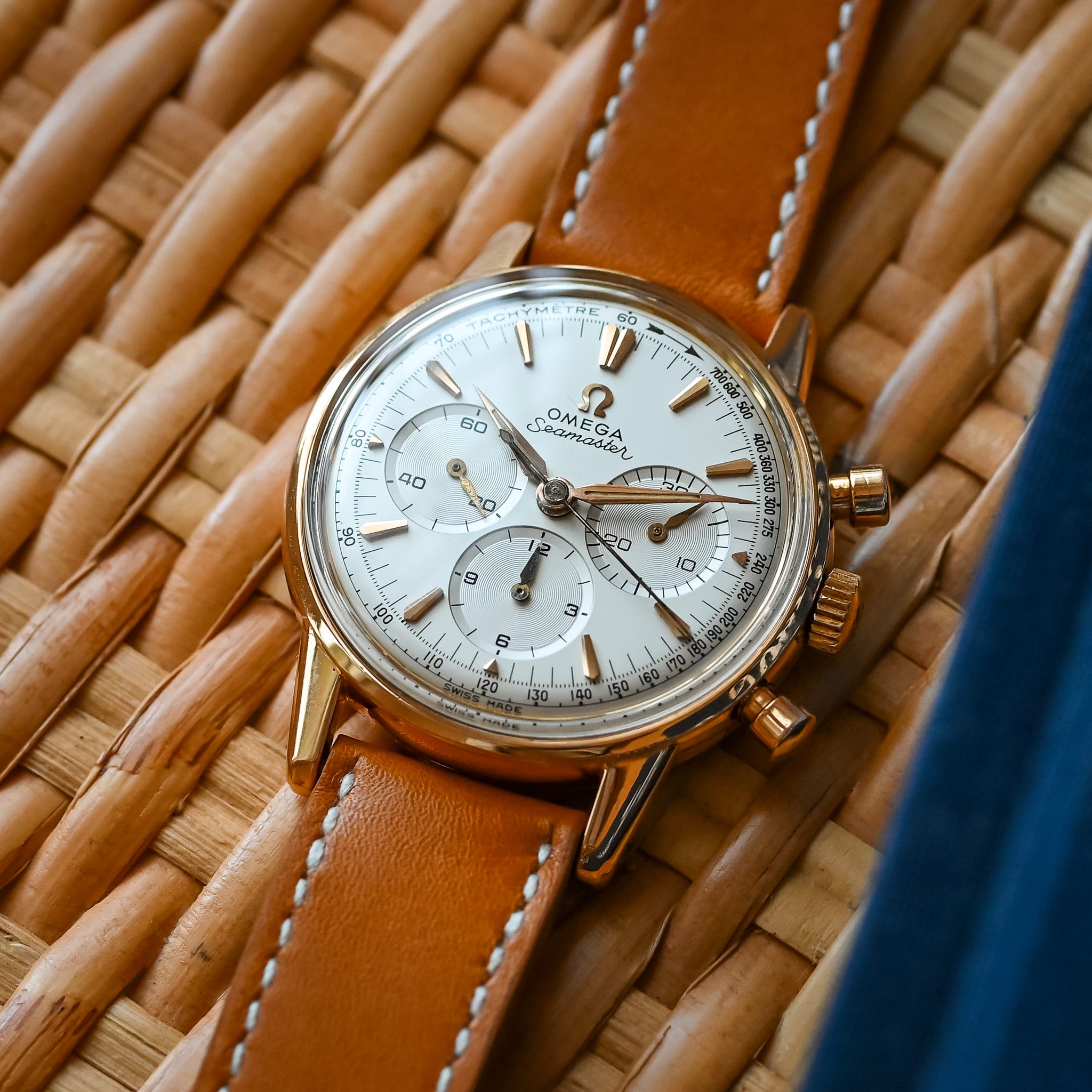
2907 (1958)
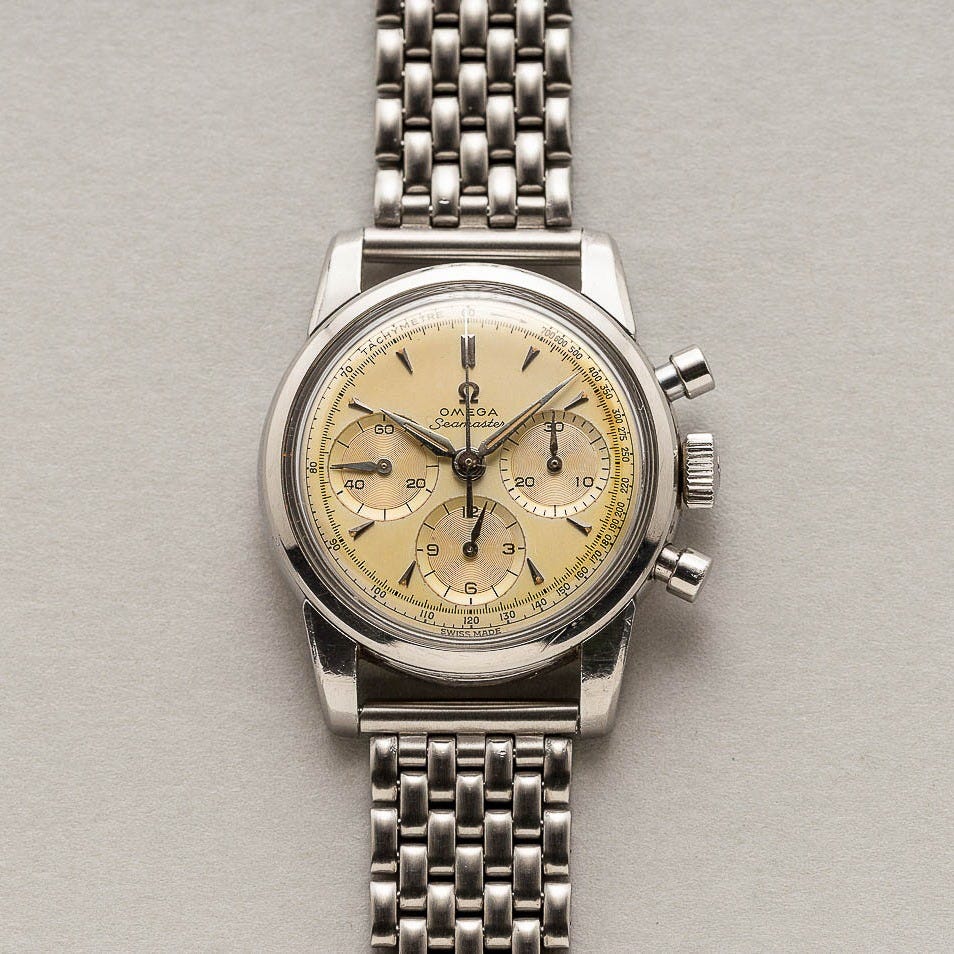
Beefy lugs, alpha hands. Introduced in 1958 according to Omega.
Can be found in stainless steel (ref. CK 2907) and gold-capped (ref. KO 2907).
CK 2947 (1958)
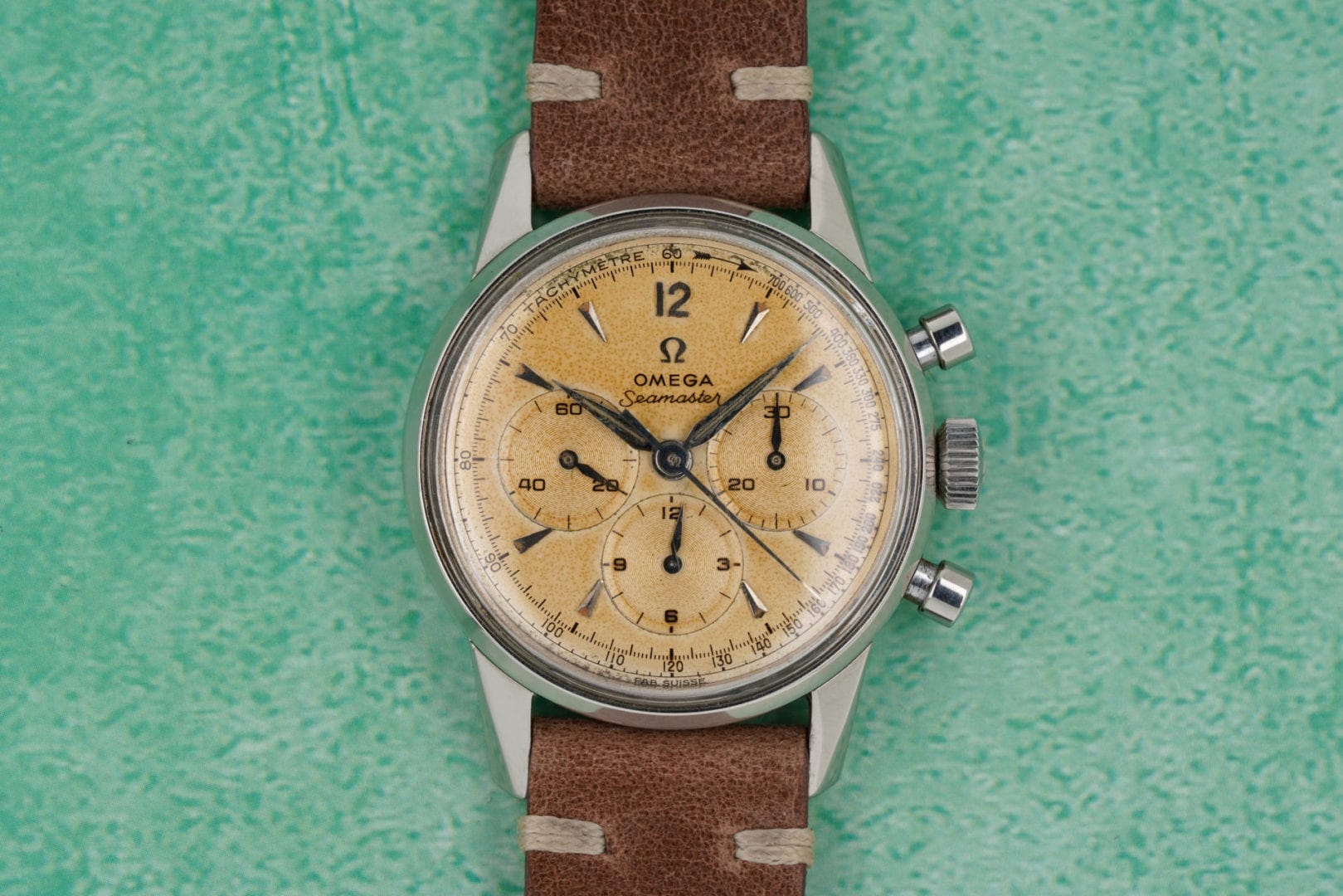
Stainless steel case with faceted lugs
CK 14364 (1959)
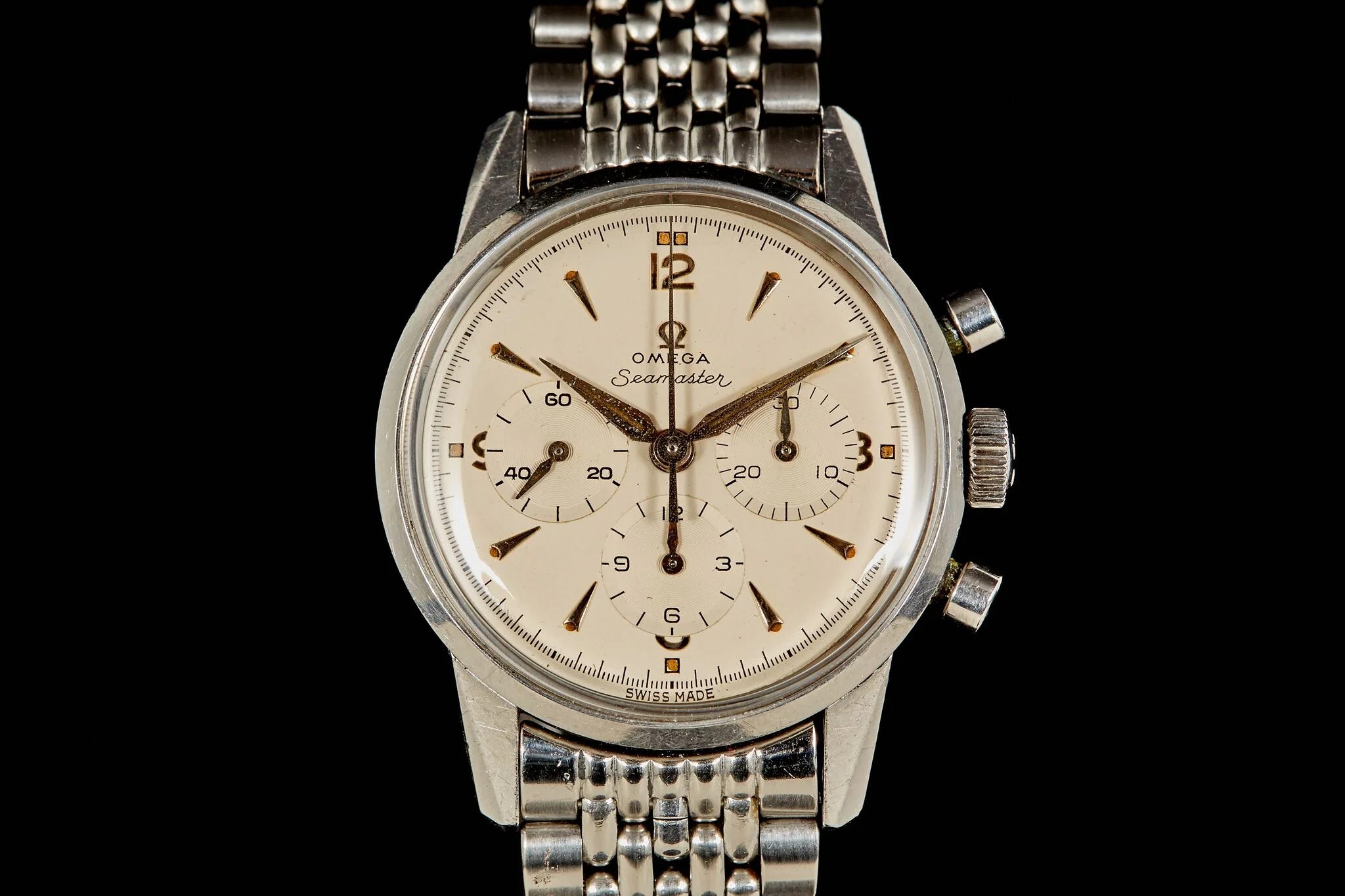
Similar to the previous, with stainless steel case and faceted lugs, seen as CK 14364-1, 14364-2, 14364-59, 14364-60, and 14364-61 (at least).
CK 14360 (1960-61)
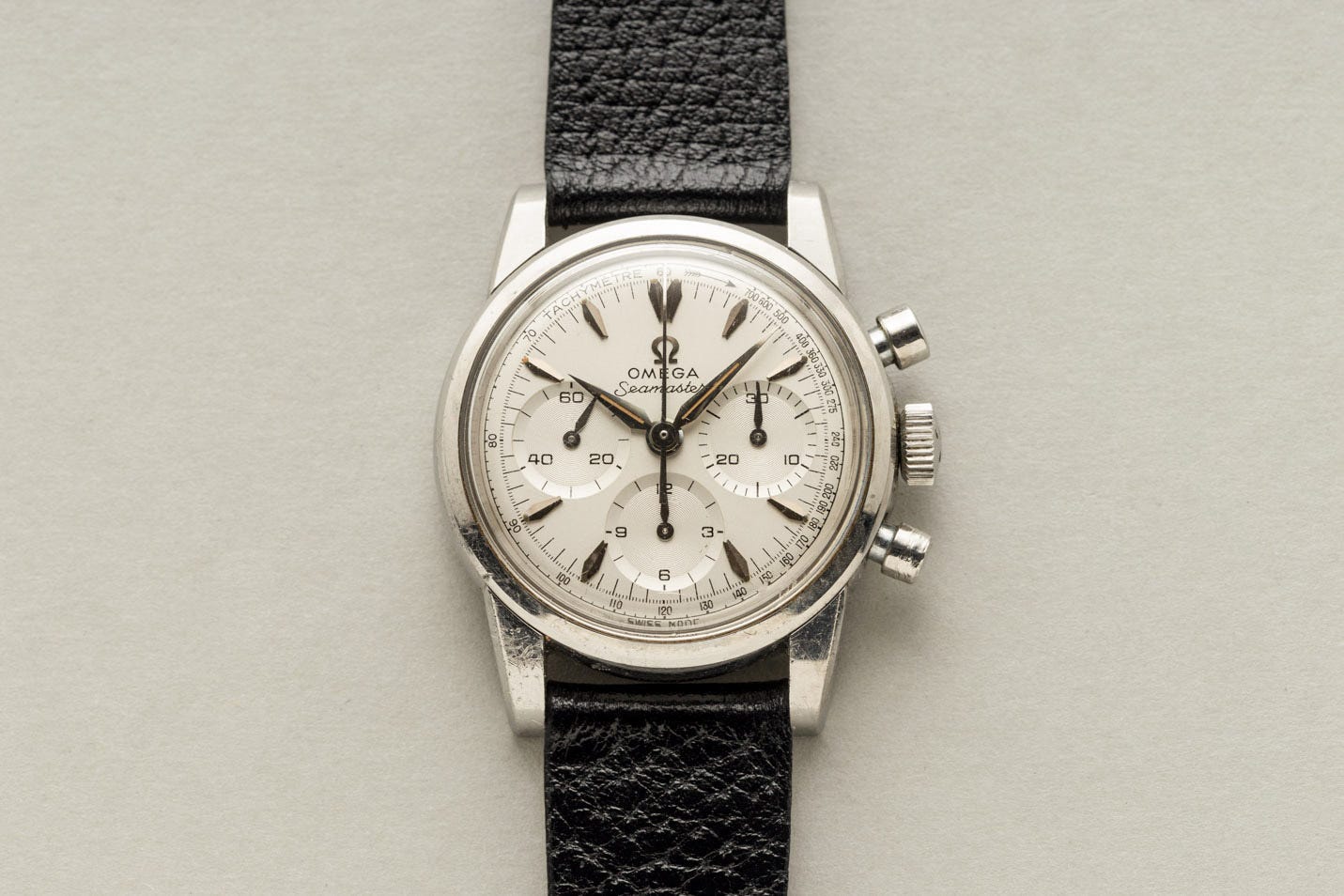
Stainless steel case with beefy lugs.
CK 14904 (1960-62)
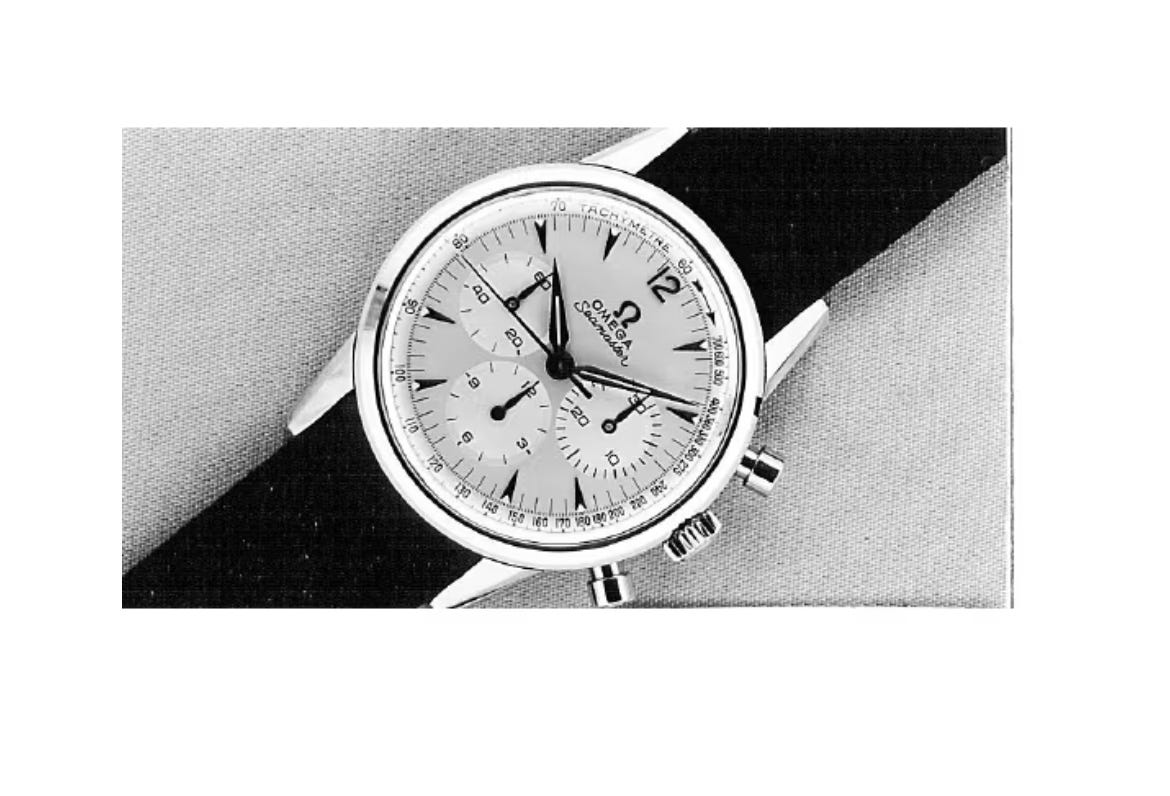
Seemingly very rare, produced from 1960–62 according to Omega. Can be found in gold and stainless steel.
105.001 (1962)
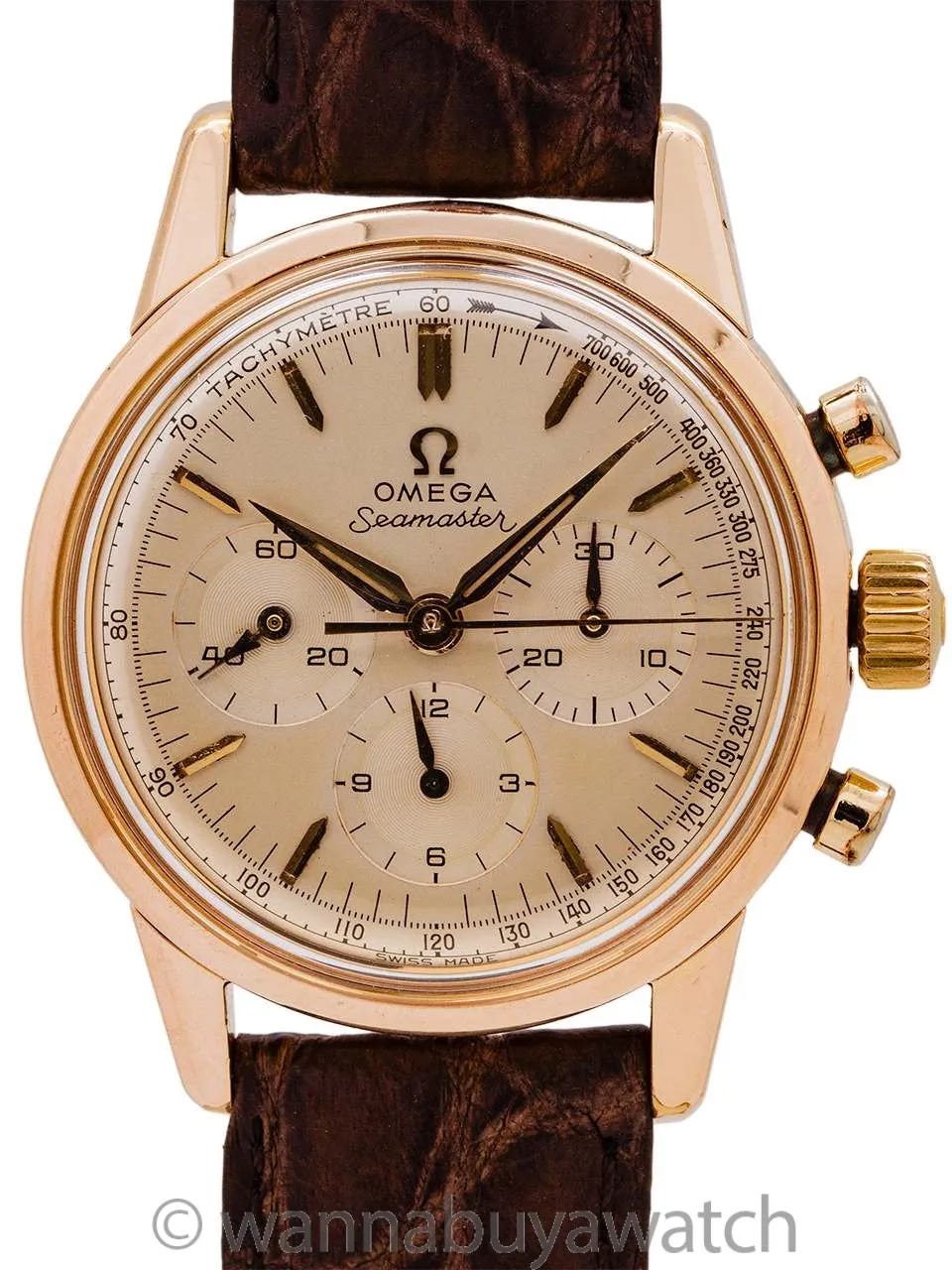
Can be found with stainless steel, solid gold, or gold-capped case. Introduced in 1962 according to Omega.
105.004 (1962-65)
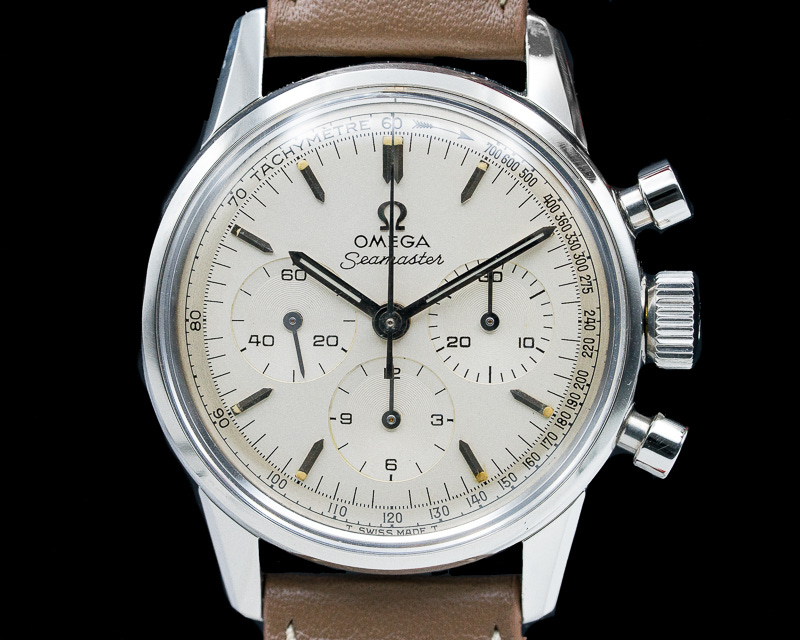
Produced from 1962-65, according to Omega. Can be found with stainless steel or yellow gold cases.
Baton hands start to become more common than alpha hands.
For the first time, we start to see black dials, variation beyond the standard silver dial.
105.005 (1962-66)
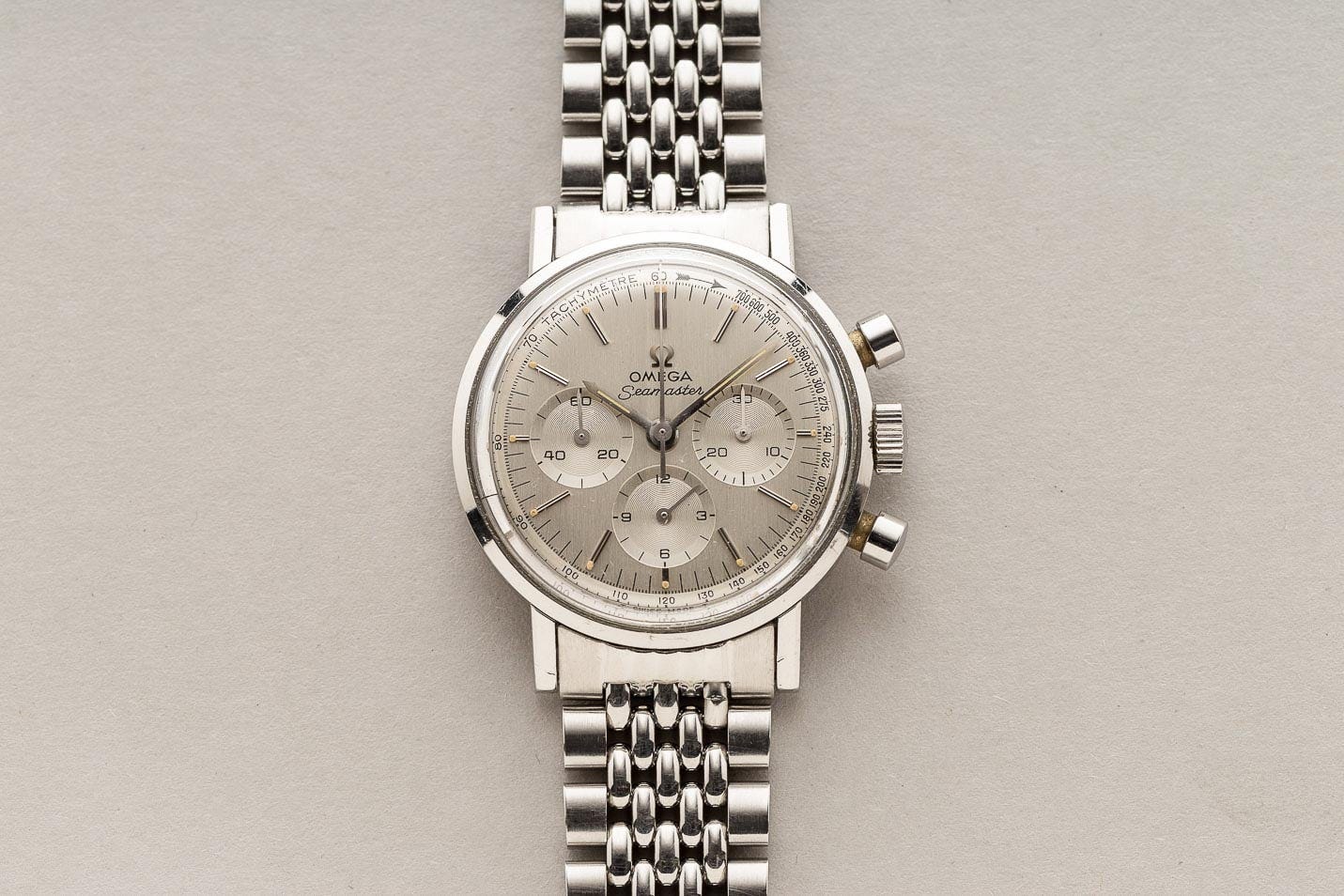
Thin, straight lugs (my least favorite). Introduced in 1962 according to Omega.
Straight lug case, can be found with stainless steel, gold, or gold-capped cases.
Again, some dial variation.
ST 145.005 (1966-67)
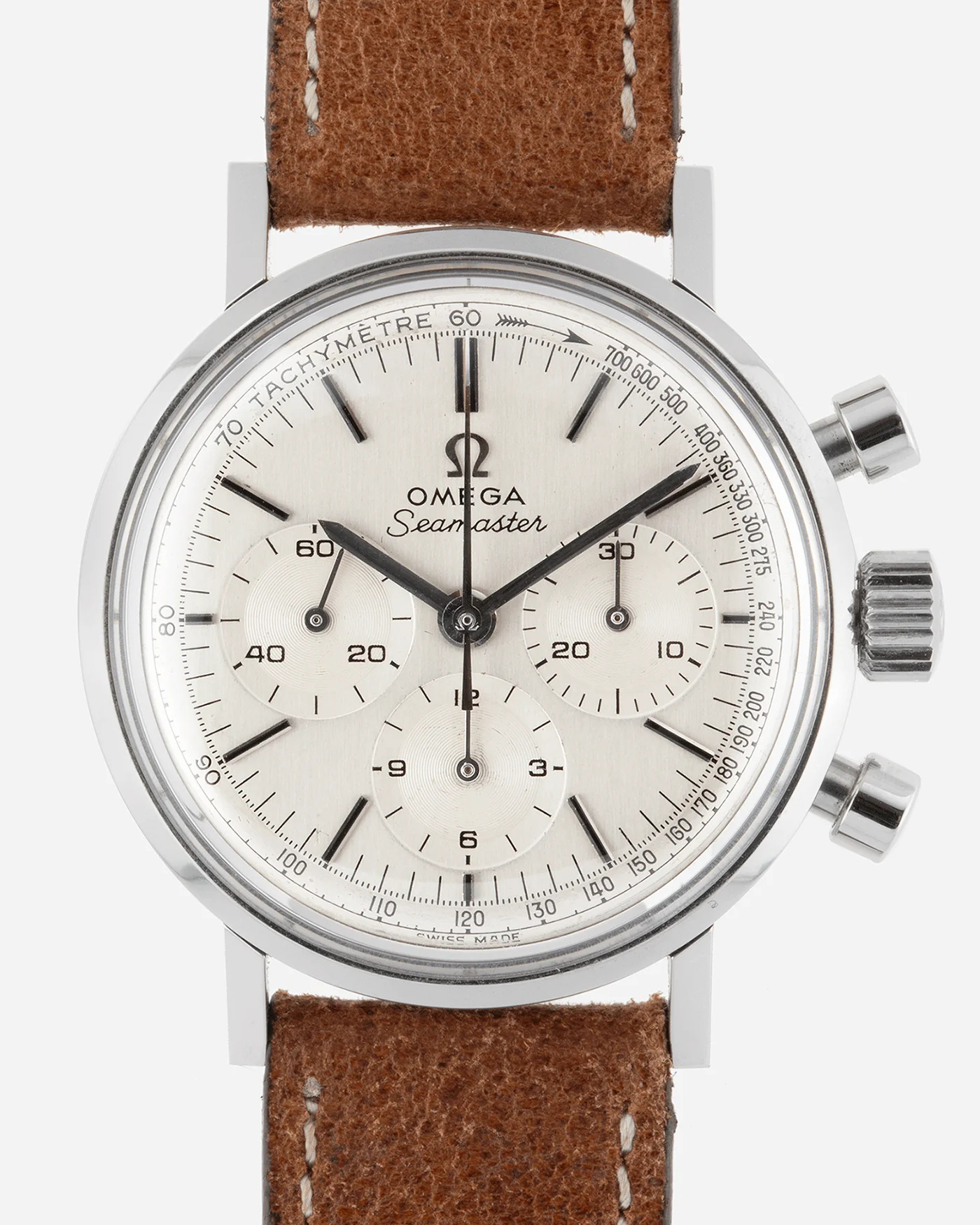

Can be found with stainless steel, gold, or gold-capped cases. Introduced in 1966, per Omega. Similar case with straight lugs.
Watchmaker Roger Smith is known to wear a ref. 145.005 De Ville.
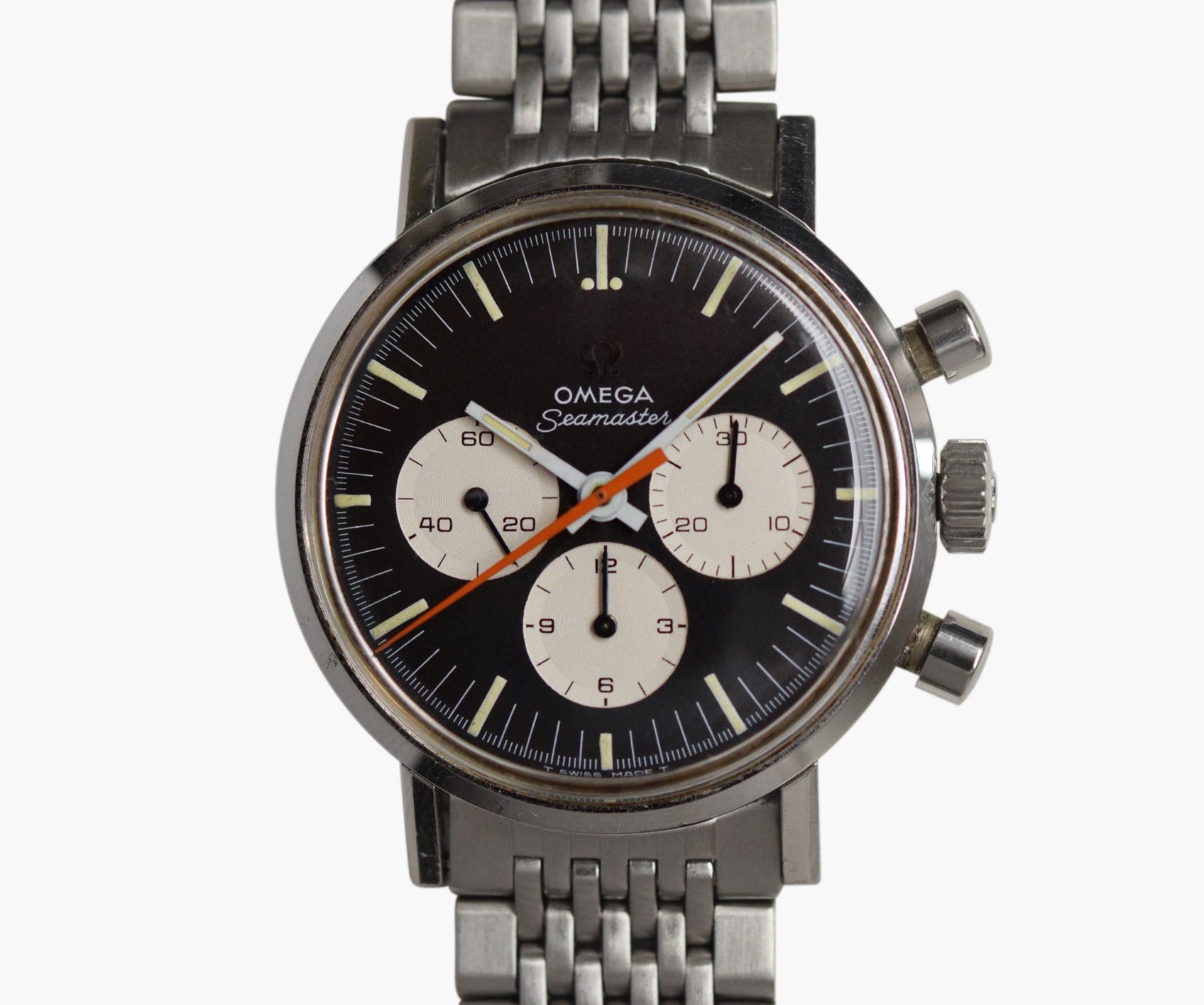
One rare variant is the reverse panda “Ultraman” with orange hand (nicknamed because it looks similar to the Speedmaster Ultraman). Supposedly made for the 1968 Mexican Olympics, but I haven’t researched this on my own:
De Ville BA 141.010 (1966)
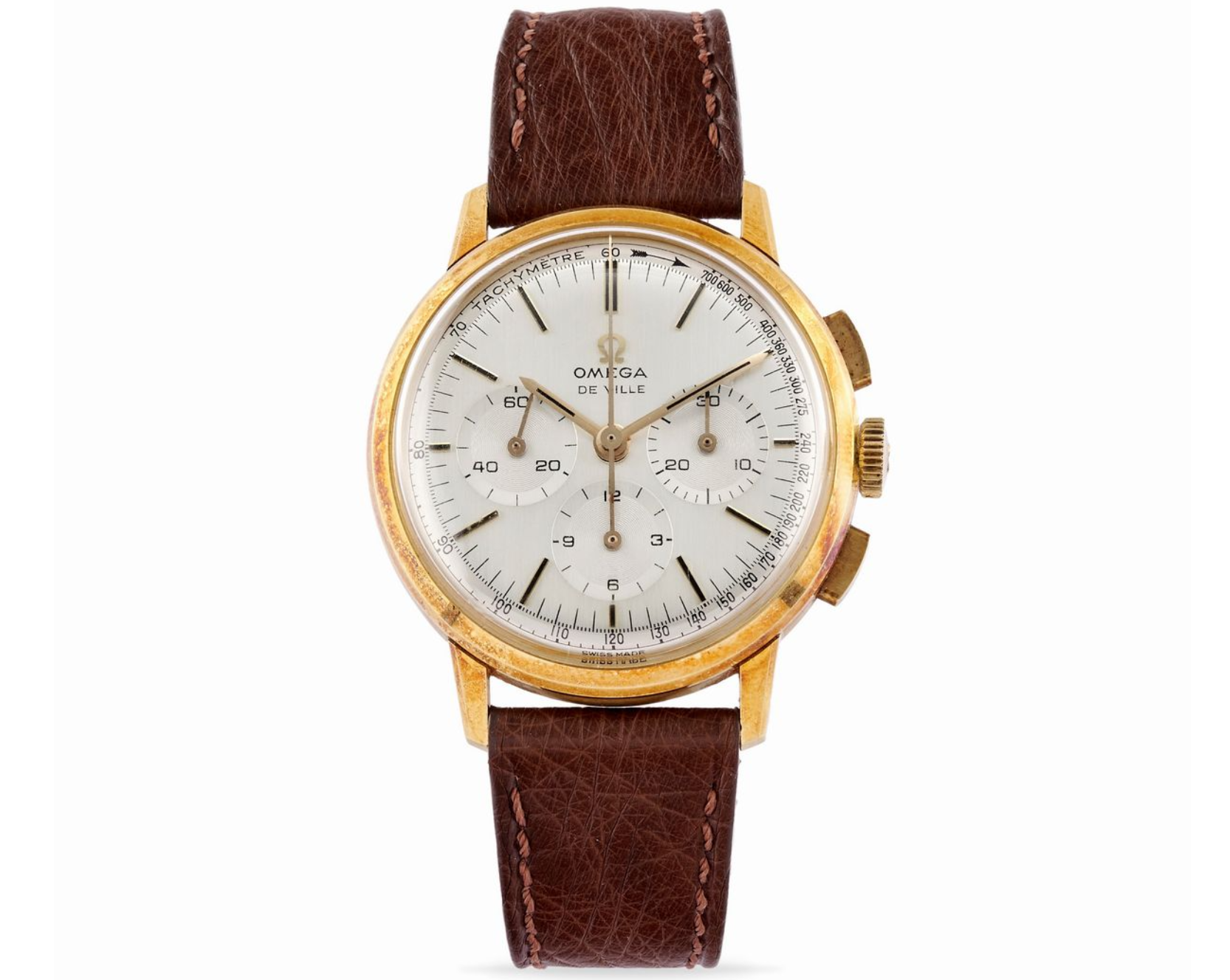
Gold case, introduced in 1966, per Omega.
It’s the best of mid-century chronographs—simple design, excellent movement. Nothing more! Let me know if I missed any references.
Thanks to @the_lost_spring_bar for helping cross-check some of these in the book Omega: A Journey Through Time.
Well done Tony, about time somebody did this! Couple notes I’d add: most of the 4 digits are SnapBack cases, and became 5 digits when Omega made them into screwbacks, thus improving WR specs. There’s conjecture on which version of “O” in “Omega” font is correct (oval or regular circle), I’m on the side of regular circle being original, as their print typically is more accurate with serifs. Lastly, many black dials are redials or fakes, so caveat emptor.
Nice write up Tony. I too prefer these Seamasters to the speedies! I am in love with the 145.005-67 black dial, a very elusive watch… The CK 29xx are nice too, particularly the beefier lugs references with the patinated dials… evocative watches!