


The Ref is a weekly story about a sometimes-forgotten watch or moment in history. Sunday is the perfect time to step away from the feed for a few blissfully naive minutes to remember the watches that were. Ref. 03 is about a moment in collecting that Tudor prefers we’d ignore. Previous editions:


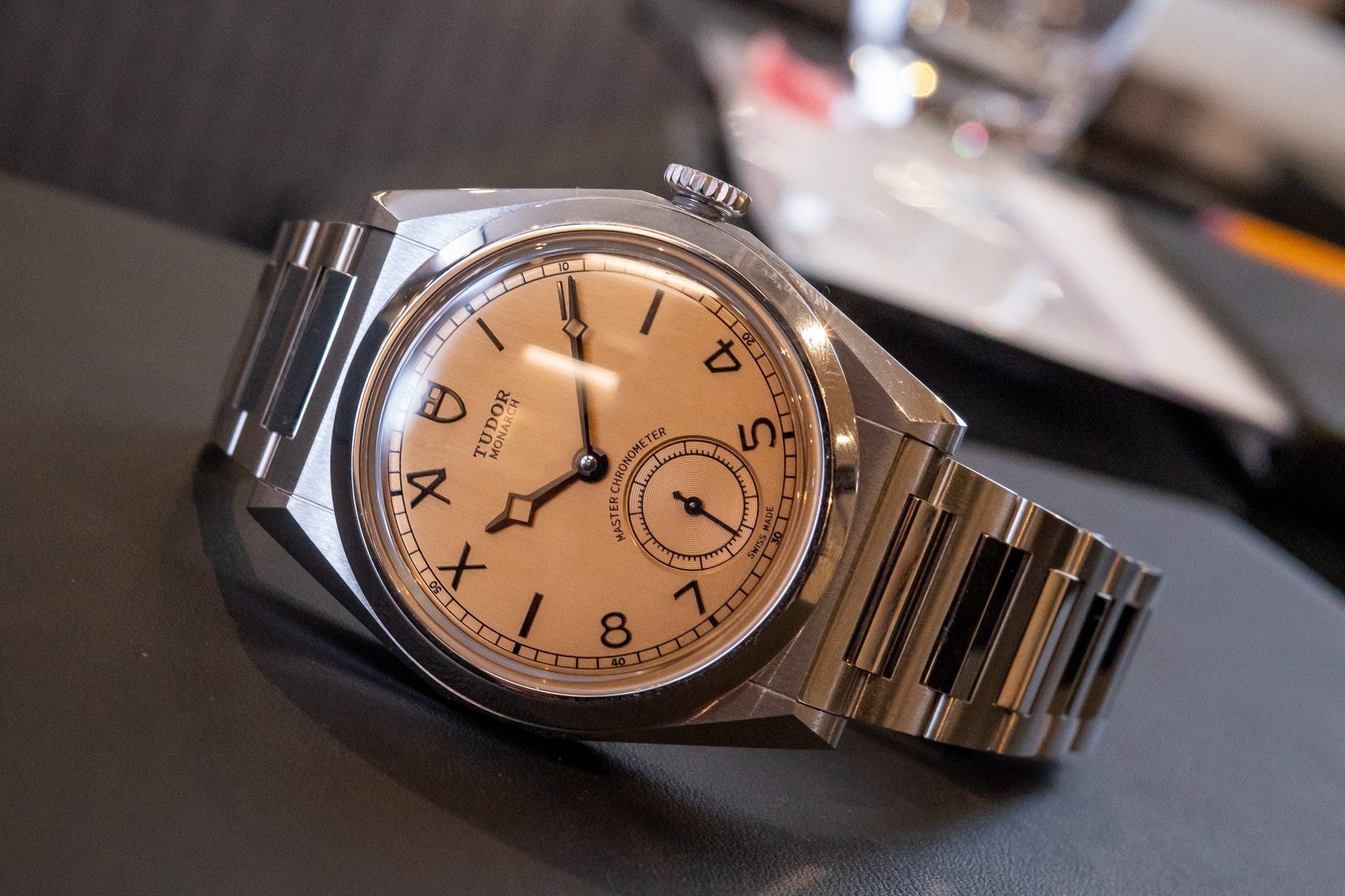
When Tudor released the Monarch at Watches and Wonders, it insisted on referring to the dial as “Error-Proof” style, even though collectors often call the mix of Roman and Arabic numerals a California dial.
I love these little quirks of language, especially when they pit brands and enthusiasts against each other.
Subscribers also get (1) 10% off in the Unpolished Store, (2) $50 off a service at Watchcheck, and (3) access to all comments and Q&As.
Rolex applied for a patent on an “error-proof” dial in 1941. The application features Roman numerals on the top half, Arabics on the bottom, and a big triangle at 12 o’clock. Meant to be impossible to mess up reading, whether you’re in the dark, upside down, or had one too many martinis.
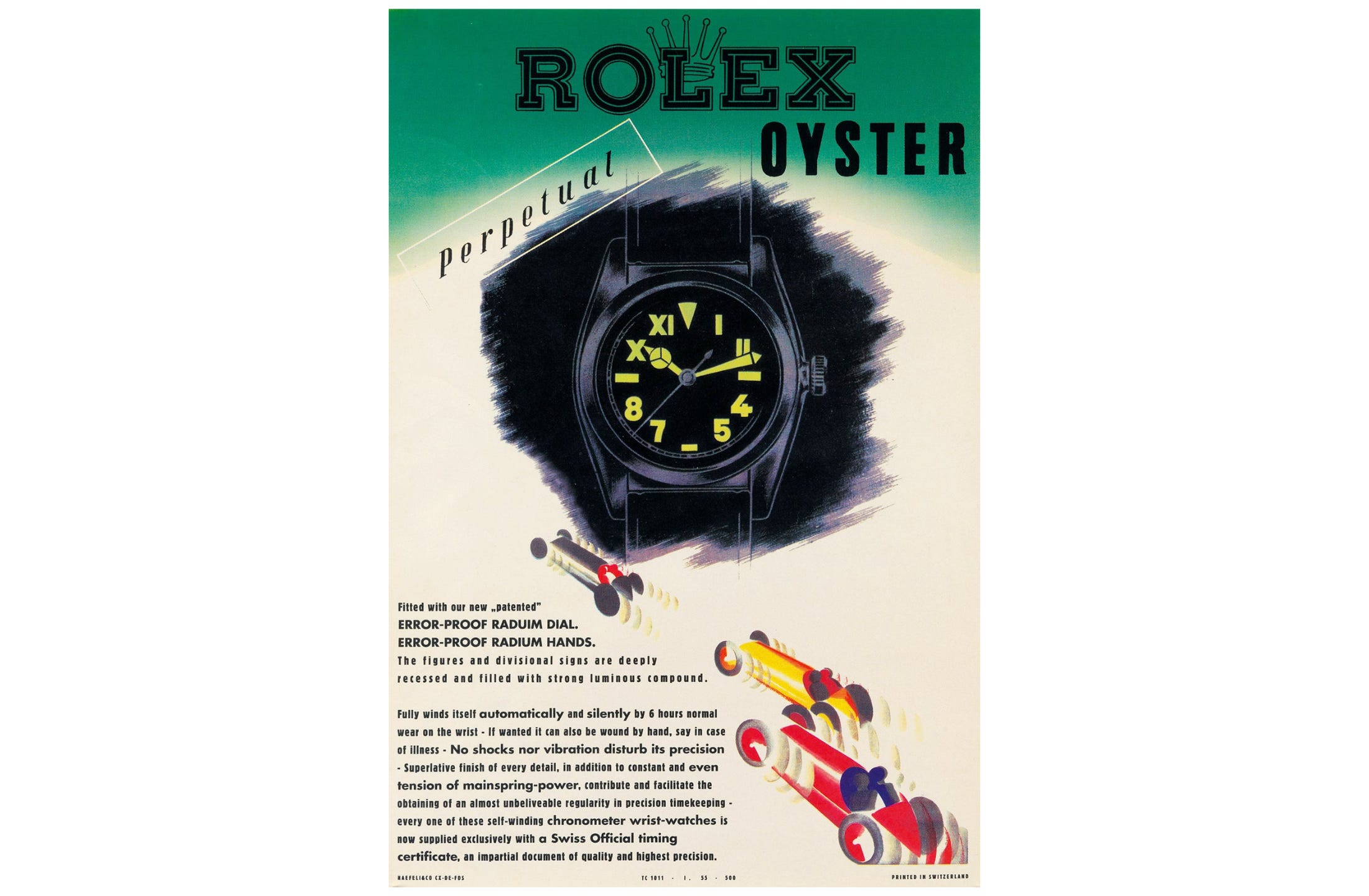
Some early ads also refer to the Mercedes hands as “error-proof,” presumably because the design made it so the hour and minute hands couldn’t be confused.
These Error-Proof dials can be found on Rolex Bubblebacks from the 1940s, though they’re pretty rare (maybe 1 in 20 Bubblebacks had one?). In ads, they’re described as having recessed numerals that were filled with strong radium lume. “Sports watches,” before some marketing department invented the saccharine term.
Tudor didn’t use the Error-Proof layout in the 1940s, but you can find a couple of rare 80s references that sometimes feature it, mostly the ref. 74000 Prince Date and the ref. 76200 Day-Date.1 They’re hard to find, but doggedly chased by a small group.
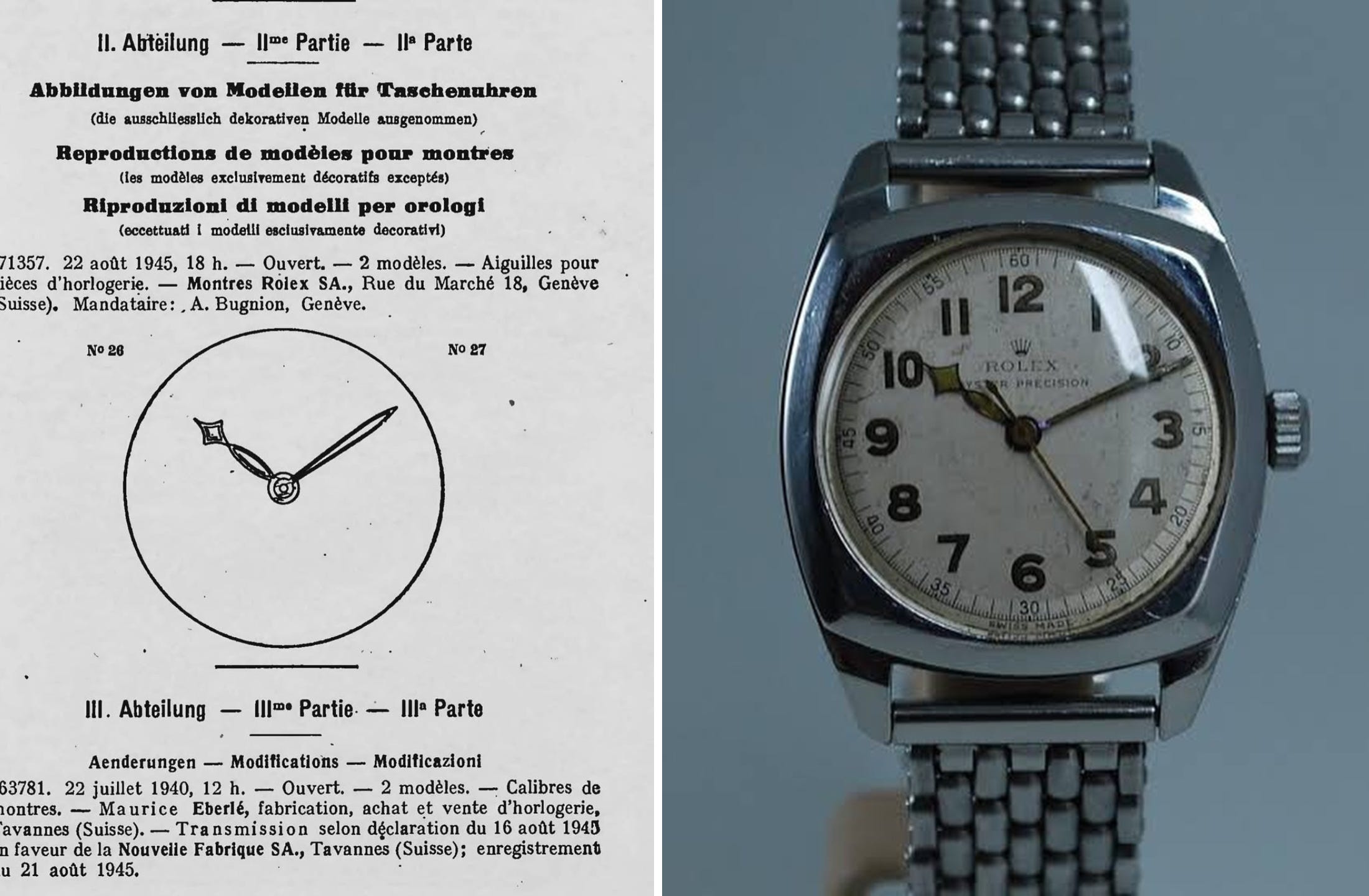
A fun, somewhat related bit: I originally thought the Monarch hour hand was a sort of hollowed-out snowflake hand, a nod to its divers that makes sense for the dressed-up watch. But watch sleuth @niccoloy sent the above, a 1940s Rolex with a star-inspired hand that looks a lot like the Monarch hand. Along with the 1945 design trademark, it seems like a precursor to the snowflake hand that would eventually appear in Tudor Submariners.
California Dreamin’
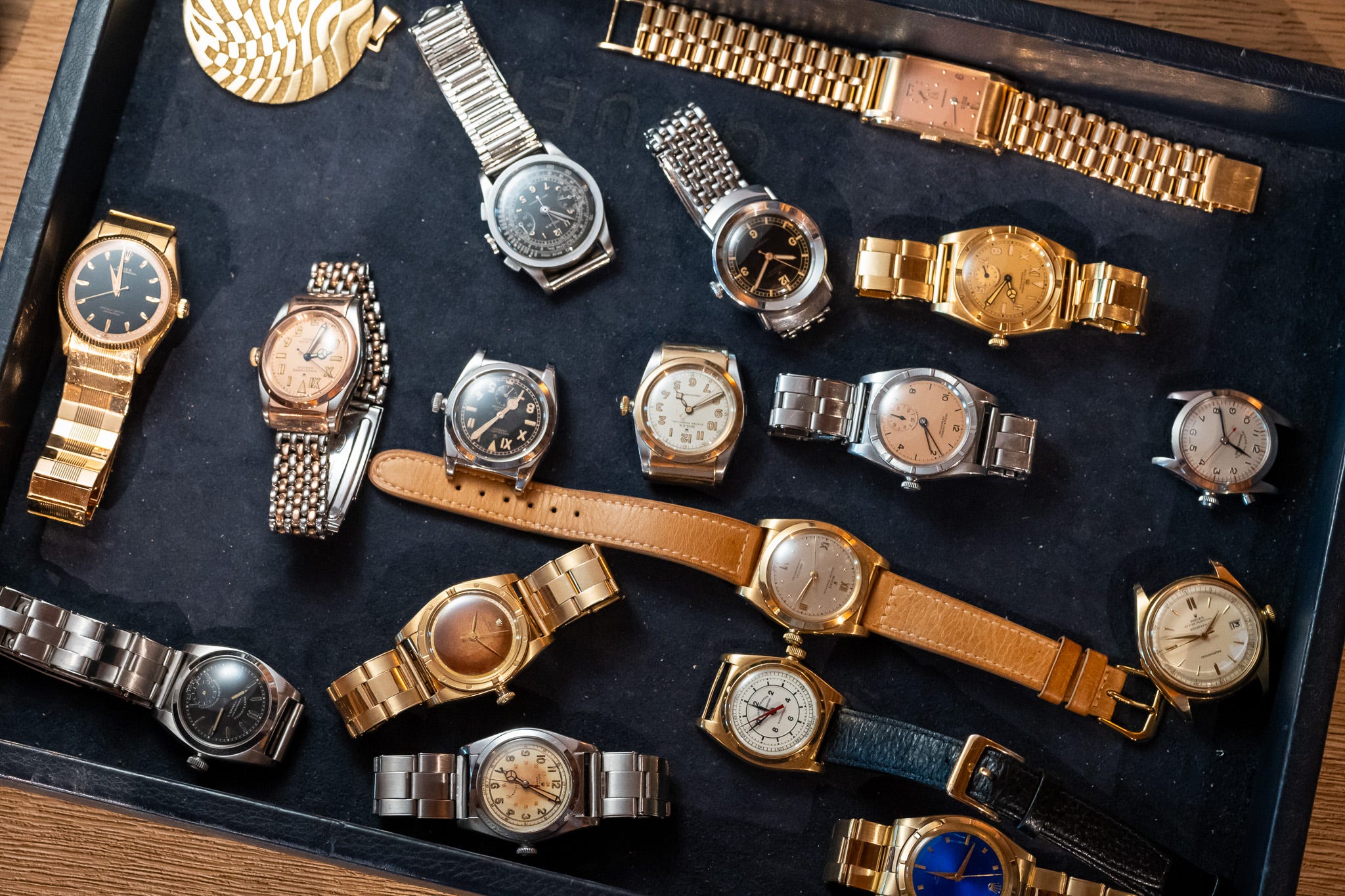
In the 1980s, Japan experienced an economic boom. Instead of spending their money on digital apes and Pokémon cards, they spent it on property, golf memberships, and watches. Specifically, Rolex Bubblebacks. Early Japanese collectors were drawn to its smaller size, variety, and historical importance. Bubblebacks were the first watches to smash together Rolex’s two key innovations, the water-resistant Oyster case and its “perpetual” automatic-winding movement.
For one reason or another, they had a particular affinity for the quirky layout of the Error-Proof dial.
As demand began to outstrip supply, dealers got creative.
By then, Japanese dealers or collectors were going to California to source watches, where the vintage scene was booming on Melrose Avenue in West Hollywood. Not just watches, but Levi’s, Hawaiian shirts—old Rolex watches were part of the vibe.
“Back then, people just wanted a dial that looked cool,” said dealer Ken Jacobs in my in-depth article on Bubblebacks. Ken’s an absolute L.A. legend who was selling watches back in the 80s. It was early in the popularization of vintage watches and Rolex, and the U.S. was “definitely a fashion market,” as he put it.
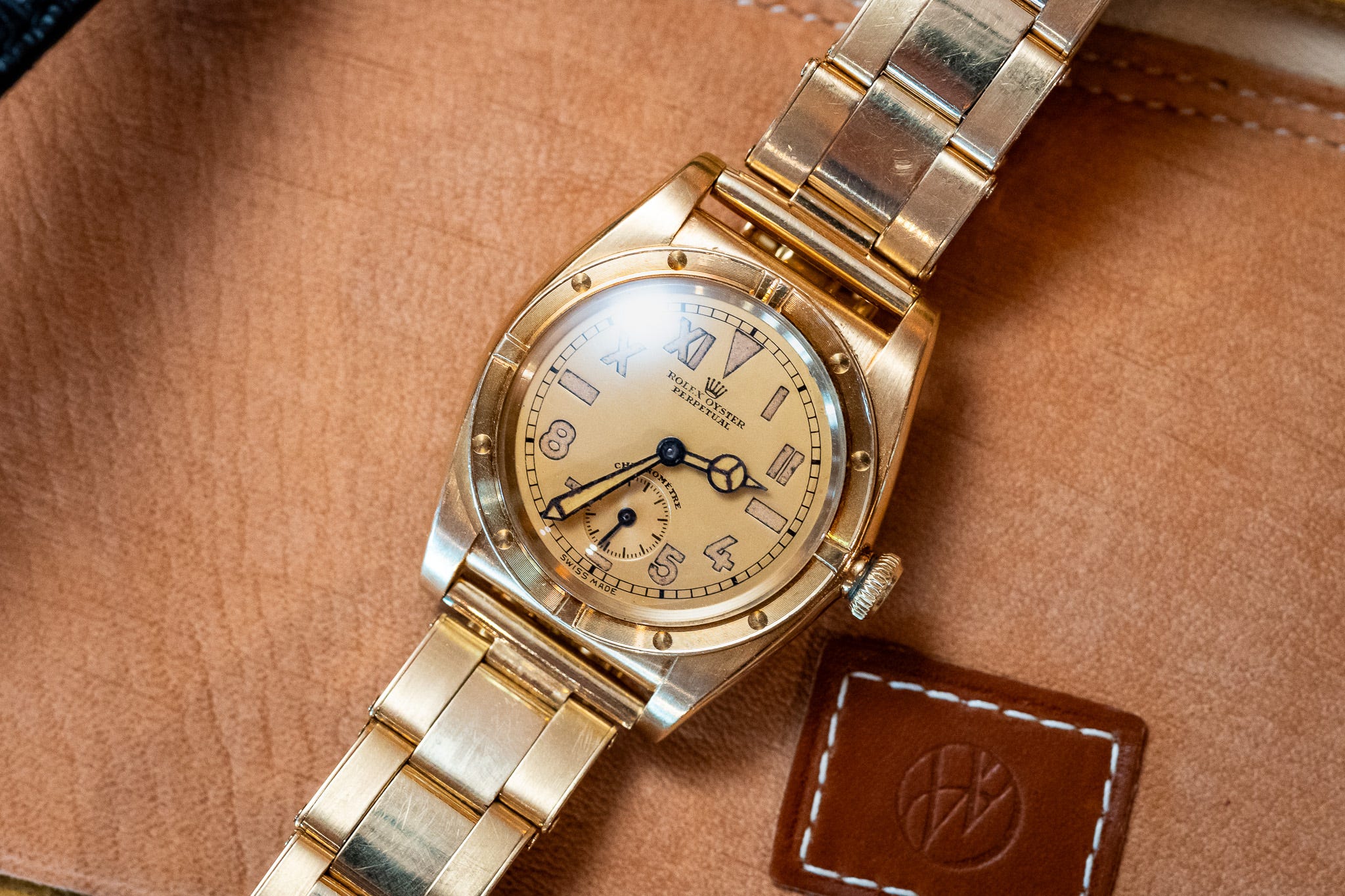
Los Angeles has always been more about expression and customization than other cities. Think of Tom Wolfe’s classic Kandy-Kolored essay about its custom car culture, which practically elevated hot-rod building to the status of an art.
In short supply of original Error-Proof dials, dial refinishers, especially Kirk Rich in L.A., began to copy the coveted mixed-numeral style. As the dials spread, they became known as “California” dials. At first, it was something of a shorthand for a refinished dial. Nowadays, it’s a nickname for the style that mixes Arabic and Roman numerals.


While original Error-Proof dials have solid colors with that radium lume filling up the recessed numerals, refinished ones can have an assortment of color combinations that’ll often look like a bullseye.
These refinished dials were all common and accepted. Collectors just wanted a watch that looked cool.
Why It Matters
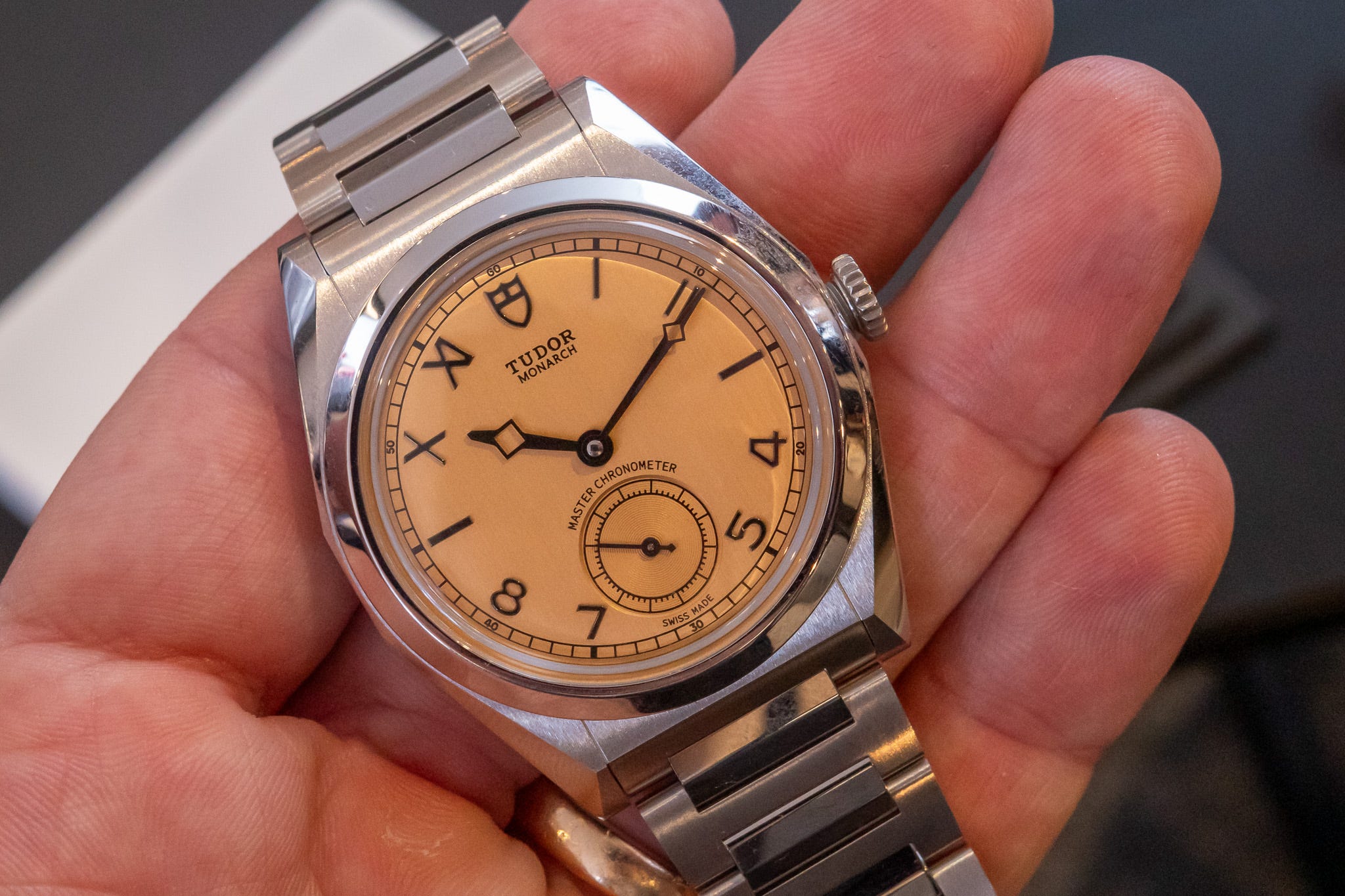
These two moments in history—the original Rolex Error Proof patent from 1941, and the rise of California dials in the 1980s—hint at why Tudor might’ve insisted on calling the Monarch’s dial “Error Proof.” Referring to it as a California dial would be akin to acknowledging this history of aftermarket refinishing in a way most brands prefer not to.
More broadly, brands, especially Rolex, love to create their own lingo. Every innovation is also a branding opportunity. The maybe-not-quite-grand-feu dial on this year’s off-catalog Daytona is just the latest example.
Meanwhile, collectors also love a good nickname. The Italians did it best. Sadly, the melodic Tasti Tondi and Padellone have become the cringey Starbucks, Batman, or Bruce Wayne.
While brands want to tell their version of history, collectors have to keep them honest. Otherwise, we might miss the best, kandy-kolored parts.

UNPOLISHED STORE


Shop the Unpolished Matte Calfskin Straps. French Calfskin, stitched in the U.S. A matte finish that sits nicely between dressy and distressed, equally at home on the Laurent Ferrier Traveller for Hodinkee or a Patek Philippe 570G. shop.unpolishedwatches.com
Further Reading:
There Goes (VAROOM! VAROOM!) That Kandy Kolored (THPHHHHHH!) Tangerine-Flake Streamline Baby (RAHGHHHH!) Around the Bend (BRUMMMMMMMMMMMMMMMM…) (Esquire) — MUST READ!
Buying, Selling, Collecting: The Rolex Bubbleback (Hodinkee)
4+1: Dealer Ken Jacobs On Embracing Vintage Style For 40-Plus Years (Hodinkee)
Hands-On: The Tudor Monarch (Hodinkee)
California Love (Revolution)
As you might guess, the only examples I can find of either of these 80s Tudors right now are in Japan: Ref. 74000N, Ref. 76200.
We certainly know the history of the "Unique dial" as the Japanese collectors call them, and the California dial as the rest of the world refers to them. At one time, we were preparing a catalog by which collectors could specify the dial configuration and color combination they wanted for their bubbleback. The popularization lead to enterprising sellers having dials for Tudors and countless other brands reprinted with the popular 1/2 Roman, 1/2 Arabic graphics.
I have to say, not that anyone asked, that I am not a fan of this new Tudor Monarch dial. Thin printed numerals just seem too sparse agains the pale salmon background.
We still occasionally receive requests to produce California dial bubblebacks. Sadly we find the scarcity of replacement parts for proper operation of the N/A caliber auto rotor to be too much of an obstacle for us to sell and guaranty these models. Time for someone to produce quality after market auto axles for these models.
+100 points for the Tom Wolfe reference.