


⛳️ Happy Masters Sunday. This weekend edition is all about golf and watches, two of the most expensive ways to waste a Sunday morning. Today:
How Rolex signed its first modern sports ambassador
The simple charm of the mid-century golfer’s watch
The scramble to get a Rolex on the wrist of one Masters winner before the green jacket went on
Before we get to the golf—
Watches & Wonders starts Tuesday. I'll be posting appointment videos on Instagram (Tudor and Cartier), along with a Day 1 newsletter and YouTube video by Wednesday. I’ll also open the chat for paid subscribers on Day 1 (link below).
🎧 New Podcast: The Psychology of Watch Collecting. One reason I find watch collecting so fascinating is that it puts on display the entire breadth of human psychology: Why we want the things we want, and how to enjoy what we already have. This week’s podcast guest is Kingflum, who writes the newsletter Screwdown Crown. He’s known just as much for his diversions on psychology as he is for calling out the BS he sees in the watch industry. Listen below or wherever you get pods: Spotify / Apple / RSS:


How Arnold Palmer and Rolex created the modern sports ambassador
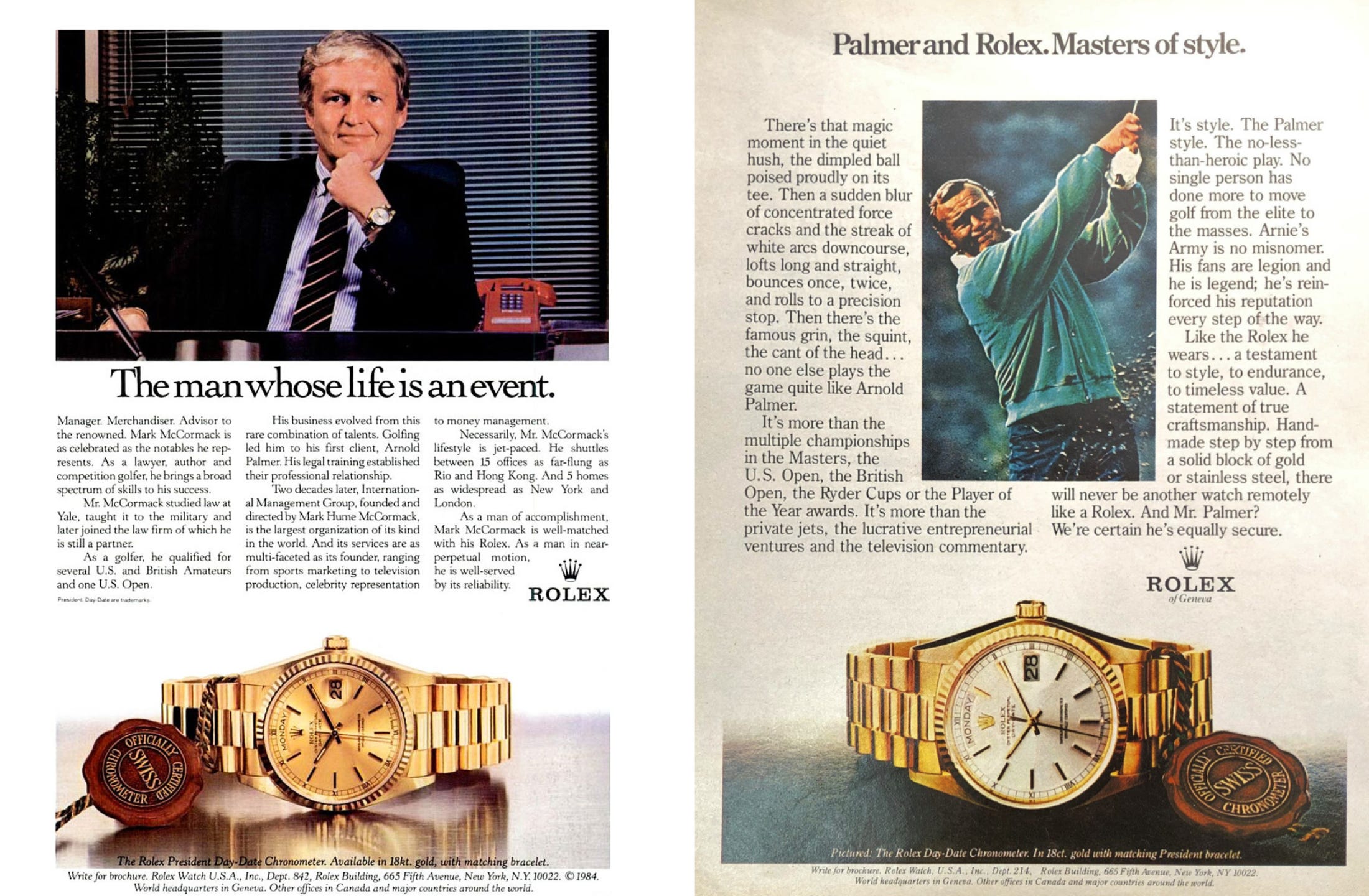
When the Masters winner slips on his green jacket on Sunday, no doubt we’ll catch a glimmer of the watch on his wrist.
That all started with a handshake in 1960, when Cleveland lawyer Mark McCormack convinced Arnold Palmer to become his client. McCormack was a talented golfer in his own right—the two had played against each other in college—and by then Palmer had already won two majors.
But McCormack saw Palmer as more than a golfer. Palmer had already become a popular athlete, assembling “Arnie’s Army,” his growing popularity lining up with the advent of television.
Before their handshake, Palmer had two endorsement deals: $500 for Heinz Ketchup (along with free ketchup) and Wilson Sporting Goods, which required him to return his clubs if he stopped playing golf.
McCormack and Palmer probably couldn’t have imagined that 50 years later, there’d be tall iced teas with his name in 7-Eleven stores across the world. But the endorsements came quickly: United Airlines, Pennzoil, Hertz.
The big one came in 1967: Rolex. Palmer became Rolex’s first “Testimonee,” a made-up word for its roster of ambassadors.
Before McCormack and Palmer, sports endorsements were merely functional, like Arnie’s deal with Wilson. These are the tools I use to compete at the highest level, you should try them too. Just a decade prior, the world’s best golfer, Ben Hogan, had collaborated with Timex on a line of accessible watches.
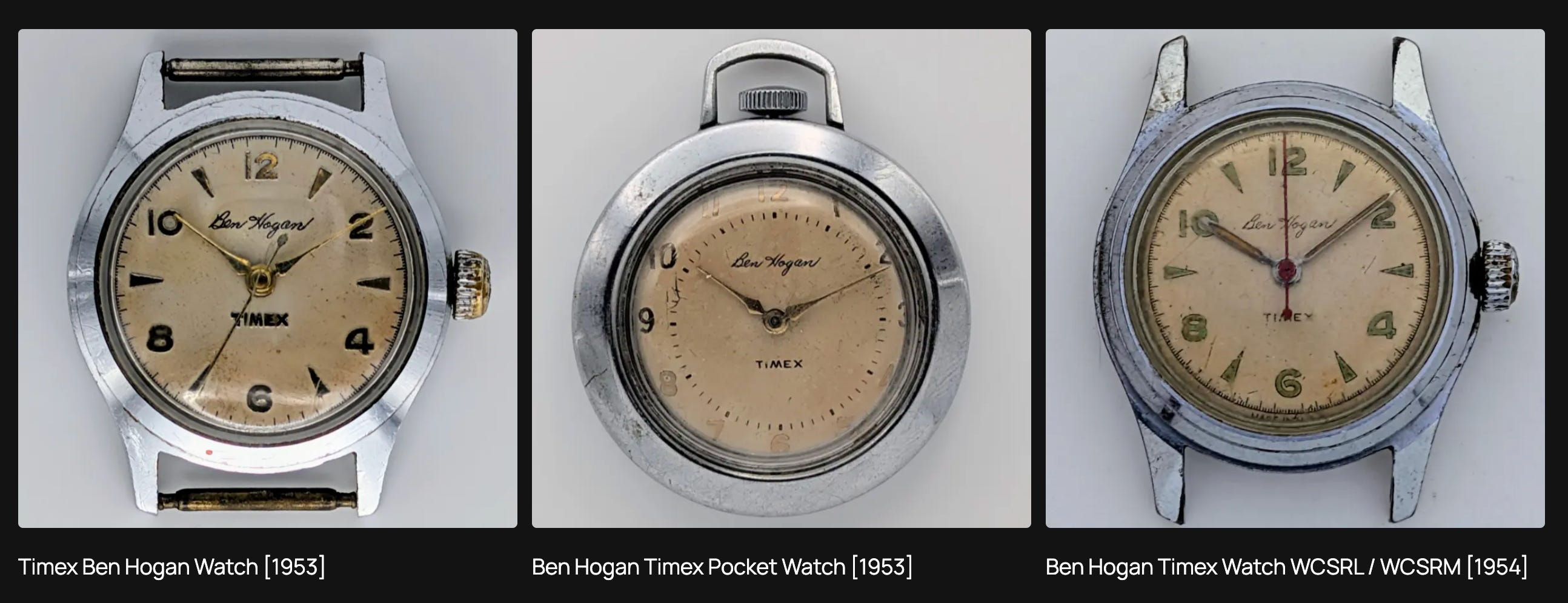
After Palmer, athletes became aspirational.
Timex was “takes a licking, keeps on ticking.” Rolex was for “men who guide the destinies of the world.”
Rolex didn't just sponsor golf; it became golf. Today, it sponsors every professional major; it added Jack Nicklaus and Gary Player to its roster of Testimonees; hell, it sponsors the junior golf rankings. The Rolex golf clocks!
By 1990, McCormack was named the “Most Powerful Man in Sports.” He founded the massive agency IMG and represented Tiger Woods, Serena Williams, Wayne Gretzky, and even Pope John Paul II.
Every modern sports star follows the playbook written by McCormack and Palmer of the athlete as brand. It’s Michael Jordan’s Jumpan logo, Lebron’s signature shoe, or Roger Federer “leaking” the new Land-Dweller. 1
Sometimes, the line between athlete and advertisement gets so blurry that we don't even notice it.
McCormack and Palmer also gave Rolex a head start. When the quartz/currency crisis came for the entire Swiss industry in the 70s, Rolex was already transitioning from talking about the features of its watches (robust, waterproof, accurate) to the lifestyle of those who wear its watches.
Andre Heiniger, president of Rolex from 1962 until 1997, oversaw its growth from a maker of tools into a world-famous brand.
As recounted in one obituary, a friend once asked him, “How’s the watch business?” to which Heiniger replied, “I have no idea.” His friend laughed, but Heiniger wasn’t trying to be funny. “Rolex is not in the watch business. We are in the luxury business.”
Palmer and McCormack sparked that pivot.
Collecting the mid-century golfer’s watch
That pivot is everywhere now. Golf is bigger and more accessible than ever, and so is watch collecting—both worth celebrating. But bigger hasn’t always meant better. The mid-century golfer’s watch didn’t have GPS, shock resistance, or a heart rate monitor—they just told time, which was more than enough.
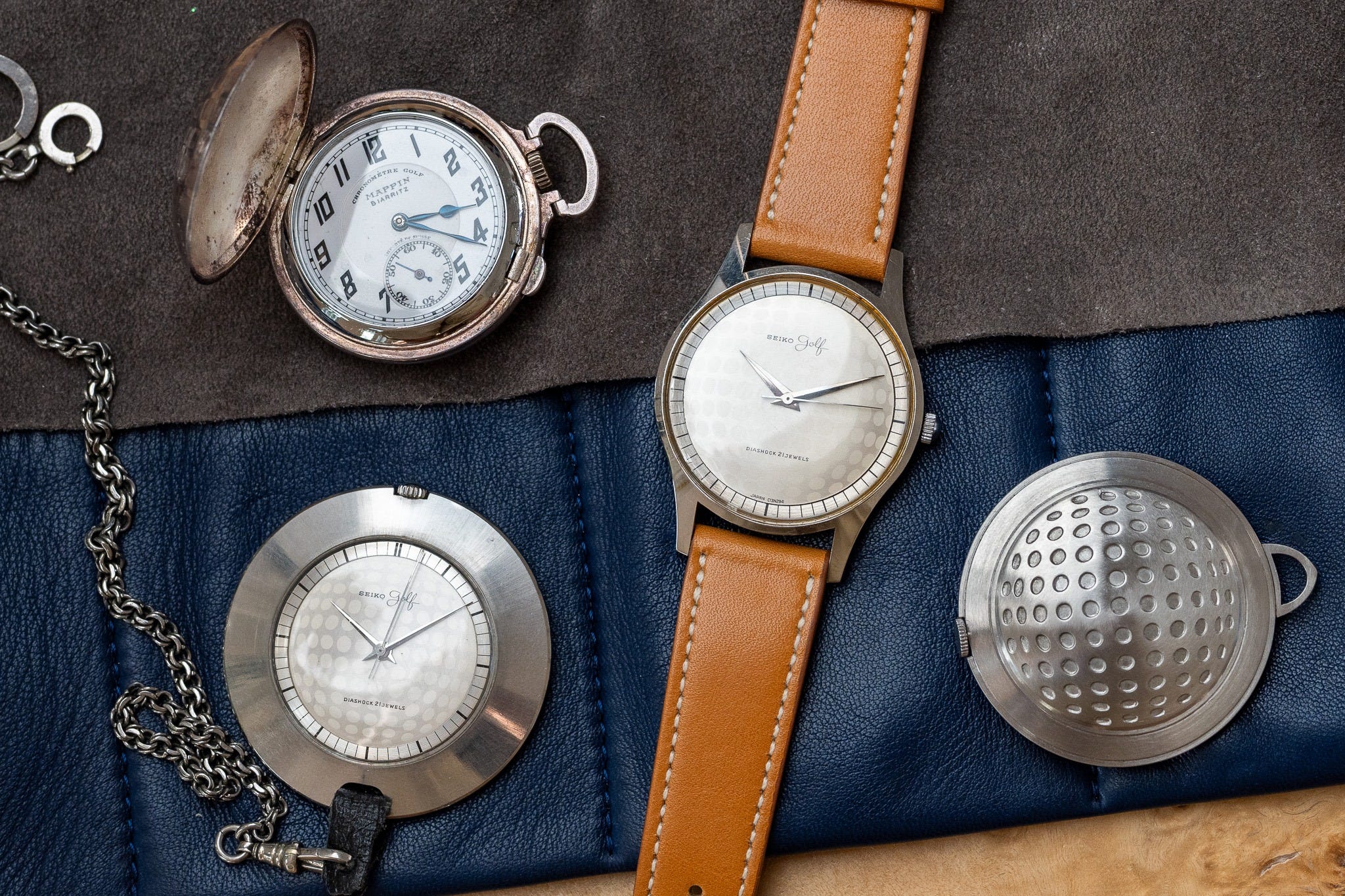
Today, watchmakers often come up with shock-proof solutions more fit for a Best Buy than a watch boutique, but there was a more elegant solution in the mid-20th century:
The golfer’s watch.
A simple, back-to-the-future solution. Instead of strapping on a wristwatch, you put it in your pocket. These golfers’ watches were made to hang from the belt, often dangling from ornate chains with a crown at 12 o’clock.
As far back as the 1930s, Hermès, Cartier, and even Abercrombie & Fitch had made watches built into belt buckles, hinged to flip open so a golfer could check the time on the course.
These weren’t sports watches in the modern sense, but dress watches for a sport played in polos and pressed trousers. The category peaked in the 1950s and 60s, with golf booming globally and brands competing for a slice of the scorecard.
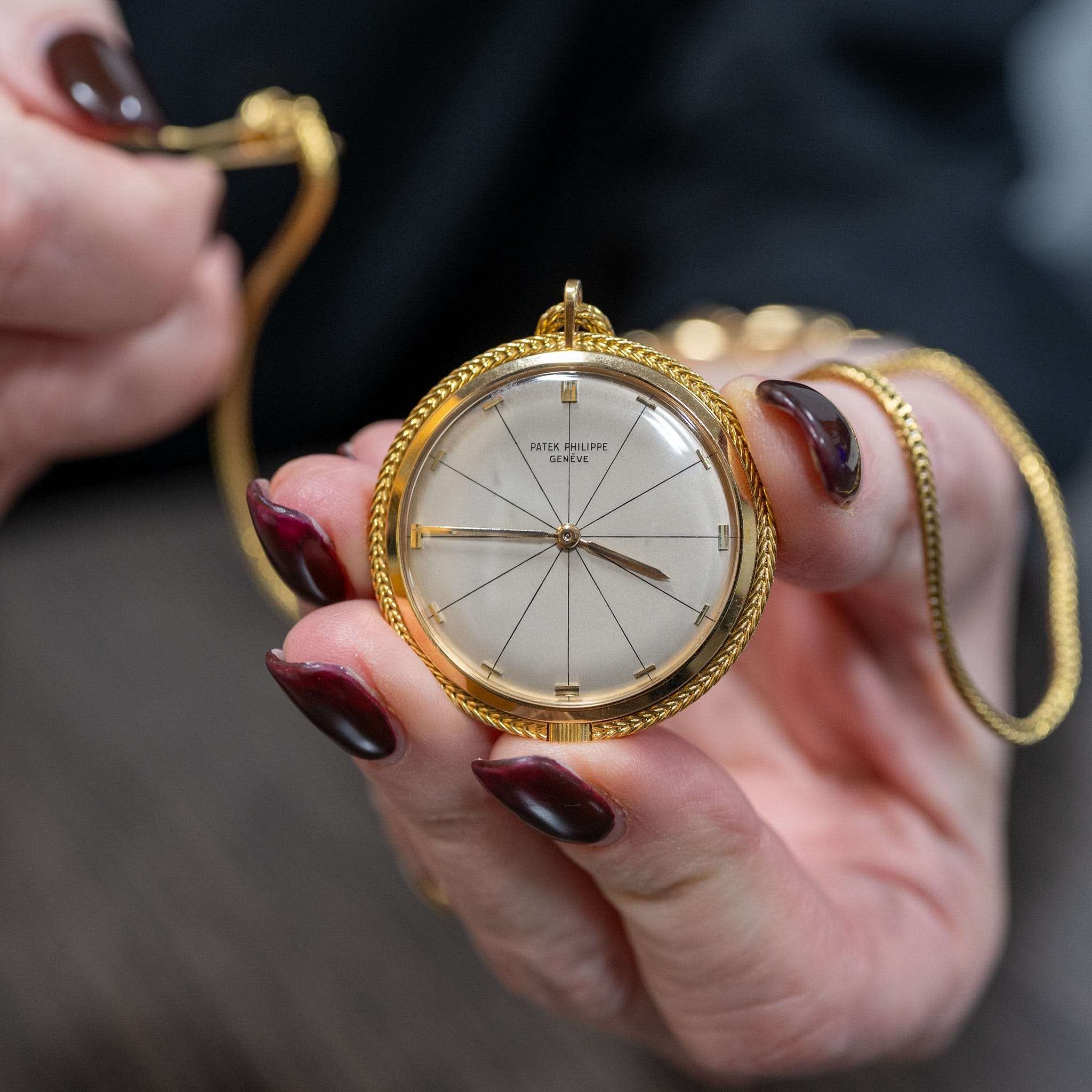
Whether you were playing at a country club or a muni, there was a golfer’s watch for you:
Gilbert Albert's Montres Golf. The best of the bunch came from Patek Philippe, designed by Gilbert Albert during his tenure as head of its creative workshop. The Golf watches—refs. 782, 783, and 799—were launched in 1959. Made in gold with integrated chains and clips, and delivered in leather pouches. The segmented dials are unmistakably from Albert's pen, also seen in his wristwatches for Universal Genève and Patek Philippe. These golf watches come up for sale occasionally and are relatively affordable compared to his other designs.
Seiko Golf. In Japan, golf exploded after the war. The U.S. military had taken control of numerous golf courses during the war, and when they were handed back in the 1950s, enthusiasm for the sport spiked. That’s when Seiko began making golf-themed watches for the pocket and wrist, featuring dimpled, golf-ball-textured dials and cases. The wristwatch even has a bit of a Patek Philippe 565 vibe. While they’re kinda hard to find in the States, they’re not super expensive—maybe starting at $700-$800 for the pocket watch.
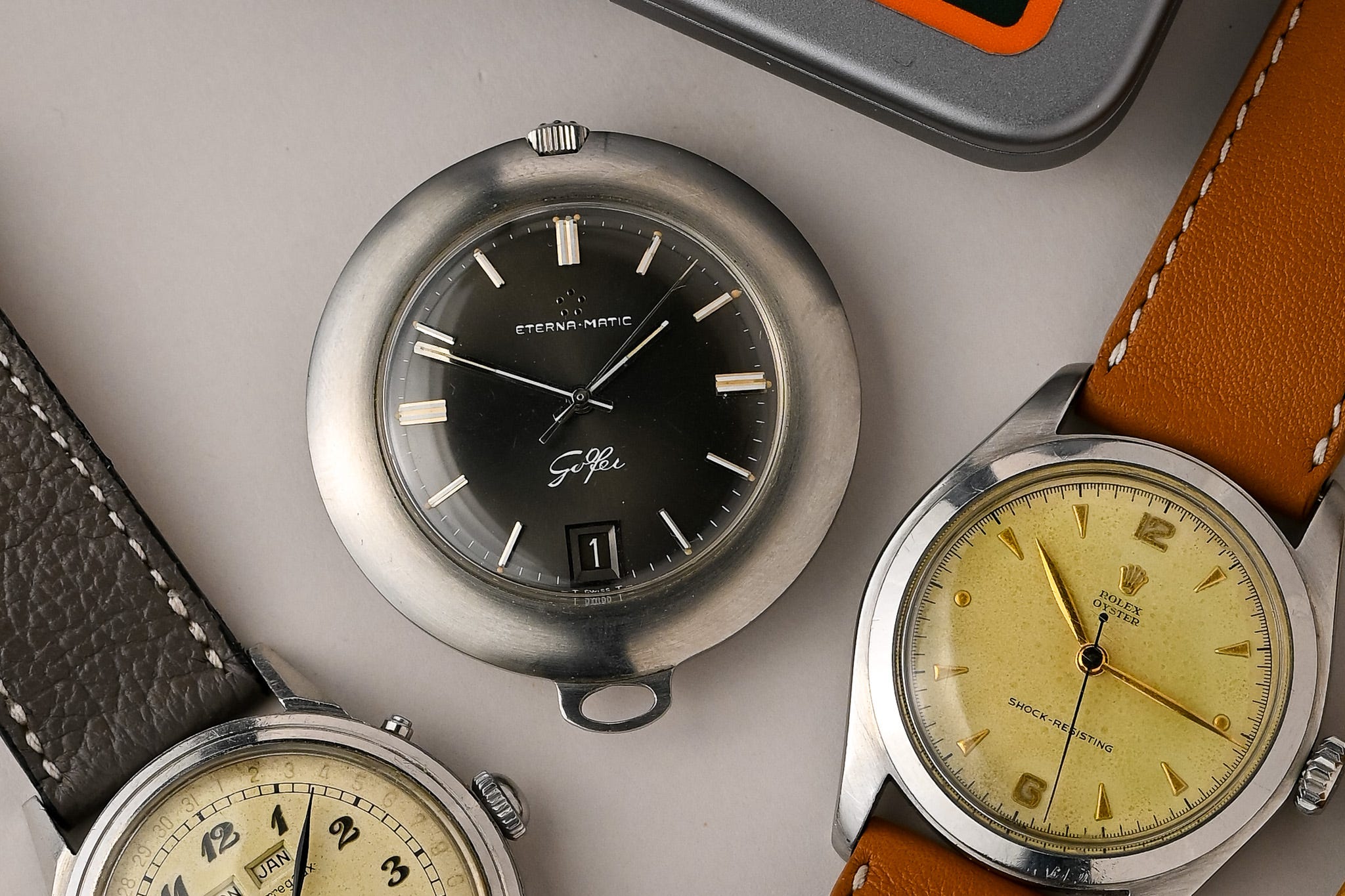
That’s not all. The Patek Philippe and Seiko are some of my favorites, but there are others: Eterna made a golfer’s watch, so did Omega. And that’s before we even get to later score counters like the Cartier Pasha Golf.


Play it as it lies
Soon enough, shock-proof technology became good enough to handle a golf swing (whether it’s recommended is another matter). Phil Mickelson has won a couple of majors wearing his 90s Rolex Cellini.
I’ve talked before about playing a different game—finding corners of collecting that nobody else is paying attention to. For me, golfer’s watches are one corner.
There’s fun to be had from $100 to $10k: A Patek Philippe by Gilbert Albert reaching the top end, but that rope-style chain matching the bezel is peak Patek Philippe. Meanwhile, a Seiko Cronos golf or Eterna Golfer can be found on eBay for a few hundred bucks if you’re patient.
There are also all kinds of random stories to uncover because of the connection between golf and watches: The Heuer Carreras made for Arcola Country Club in New Jersey, not to mention Jack Nicklaus’ Day-Date selling for a million bucks.
Some watch brands still make golf watches today, though I’m not sure why. They promise GPS, hole layouts, exact yardages—everything except the one thing the mid-century golfer's watch had: elegance.
The scramble to get a Rolex on Scottie Scheffler's wrist after his first Masters win
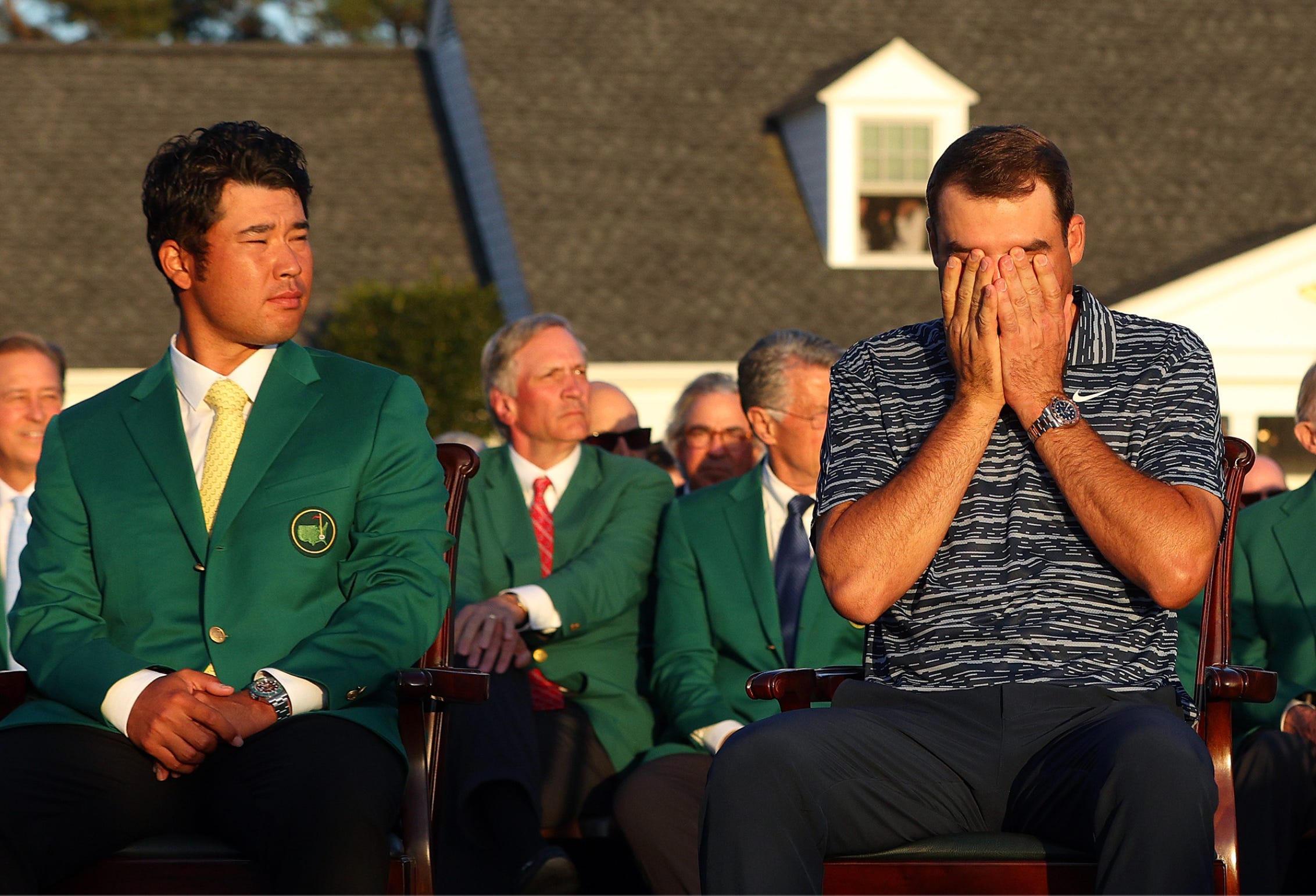
In a move that proved prescient, Rolex signed Scottie Scheffler as a Testimonee the Sunday before his first Masters win in 2022.
The biggest part of a watch deal is getting a watch on their wrist before they hoist the trophy. It’s the money shot. This proved a challenge after Scottie’s first Masters win. He’s got big hands, and while he had a watch in his bag ready for the moment, it wouldn’t fit on his wrist.
As Chad Mumm, producer of Netflix’s Full Swing tells it in his podcast, this had people frantically looking for a Rolex for Scottie before the trophy ceremony. Mumm doesn’t name names, but when you put together that Scottie had signed just days before his win, it’s reasonable to believe it’s him (and look how tight that GMT-Master II is).
They found a member of Augusta National to borrow a watch from. Somewhere, there’s a guy out there whose GMT-Master II now has the distinction of being worn by Scottie Scheffler when slipping on the green jacket for his first Masters— and we’ll never know about it.
Rolex has spent the last 60 years perfecting the art of the ambassador, but the best stories can never be planned.
Get in touch:
tony[at]unpolishedwatches.com
My favorite, leave a comment or like this post
Keep an eye on the chat for Watches & Wonders

I found this 1997 Golf Digest interview with Mark McCormack. There are all kinds of nuggets, but this exchange proved foretelling:
Q: There have been so many tragic figures in sport. How does Tiger avoid becoming one of them?
A: He's got to concentrate on playing golf as well as he can. It is very easy to get involved in a whole bunch of other things. Sports personalities often think if they are a champion in sport, they can be a champion at everything….They just think they can do everything, and they can't. Tiger knows that. There will be time for all those things later on if he so chooses.
“Rolex is not in the watch business. We are in the luxury business.”
Love the Crown, or hate it (and I am personally a fan…especially of the vintage steel stuff), the understanding of this simple fact way, way back in their corporate culture is why they dominate the market today. And, as long as they keep doing it, and doing it well, they will remain light years ahead in sales (and market influence) of everyone else.
Really nice article. As I am a terrible golfer but my 19 year old son is actually quite good, I am going to use a golf watch as a gateway into the hobby for him. Last year for his prom I told him he could wear any of my watches to the dance. He had zero interest. But if he had a golf oriented pocket watch dangling at his side while his buddies were lacking, I think it would peak his interest. 😂