


Before today’s main event, Patek Philippe vs. Lange:
Watch Pages has the noble, if quixotic, goal of tracking every new release. It lists 139 new watches so far in 2026. We won’t see major releases until Watches & Wonders, so I’d like to declare the Daniel Roth Skeleton as my Q1 “best new watch.”
A visit to Laurent Jolliet, Geneva’s old-school chain and bracelet maker.
A lovely documentary on Swiss food & culture: Dirt Switzerland.
Shop the Unpolished Store. We’ve got the best Canvas Strap: Thin, flexible, and without the padding that ruins other canvas straps. The Matte Calfskin Strap is 100 bucks and looks great on a Calatrava or a vintage Sub. Both made in the U.S. Shop Now.
Check out the entire archive online. Paid subscribers also get 10% off our U.S.-made straps in the Unpolished Store, a $50 credit for any Watchcheck service, along with 2 emails/week and access to all comments & Q&As.
1-on-1: Patek Philippe vs. A. Lange & Söhne
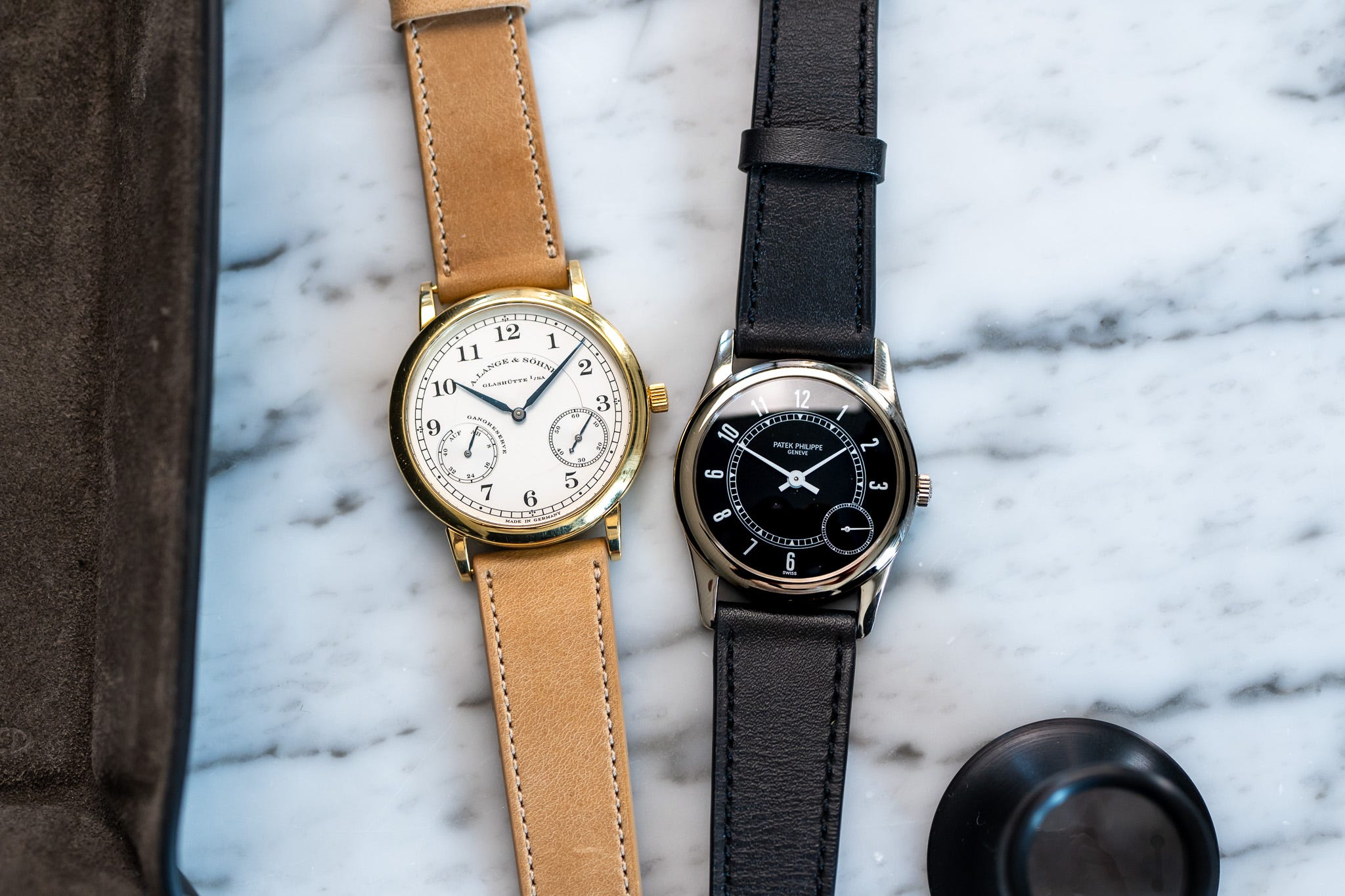
When these watches were introduced in the 1990s:
The Patek Philippe Calatrava ref. 5000 was an old watch trying to be new.
The A. Lange & Sohne 1815 Up/Down was a new watch trying to be old.
It was a time when watchmaking itself was also trying to decide if it wanted to be one, the other, or both—a question still left mostly unresolved.
Thirty years on, both the ref. 5000 and the 1815 are old, or at least, neo-vintage. I also think they’re two of the most compelling dress watches you can find at their price.
Why these two? Similar in purpose, but very different. Next to the Chopard L.U.C 1860, they’re two of the most interesting time-only, commercial dress watches from the 90s. They’re not either brand’s simplest watches, and the flourishes they chose say something about each’s approach to watchmaking.
Today, you can get ‘em for a similar price—call it $23-26k depending on condition, accessories, and how imminent World War III feels on that particular day. I find them more interesting than any modern dress watch at the price (Can you even find a gold dress watch for $25k in 2026?)
They’re not the most collectible or complicated. Collector’s guides will focus on the Datograph or 3970, but these are the (relatively) accessible watches that more of us can aspire to own.
Quintessential dress watches. Let’s start with Patek Philippe.
Patek Philippe ref. 5000
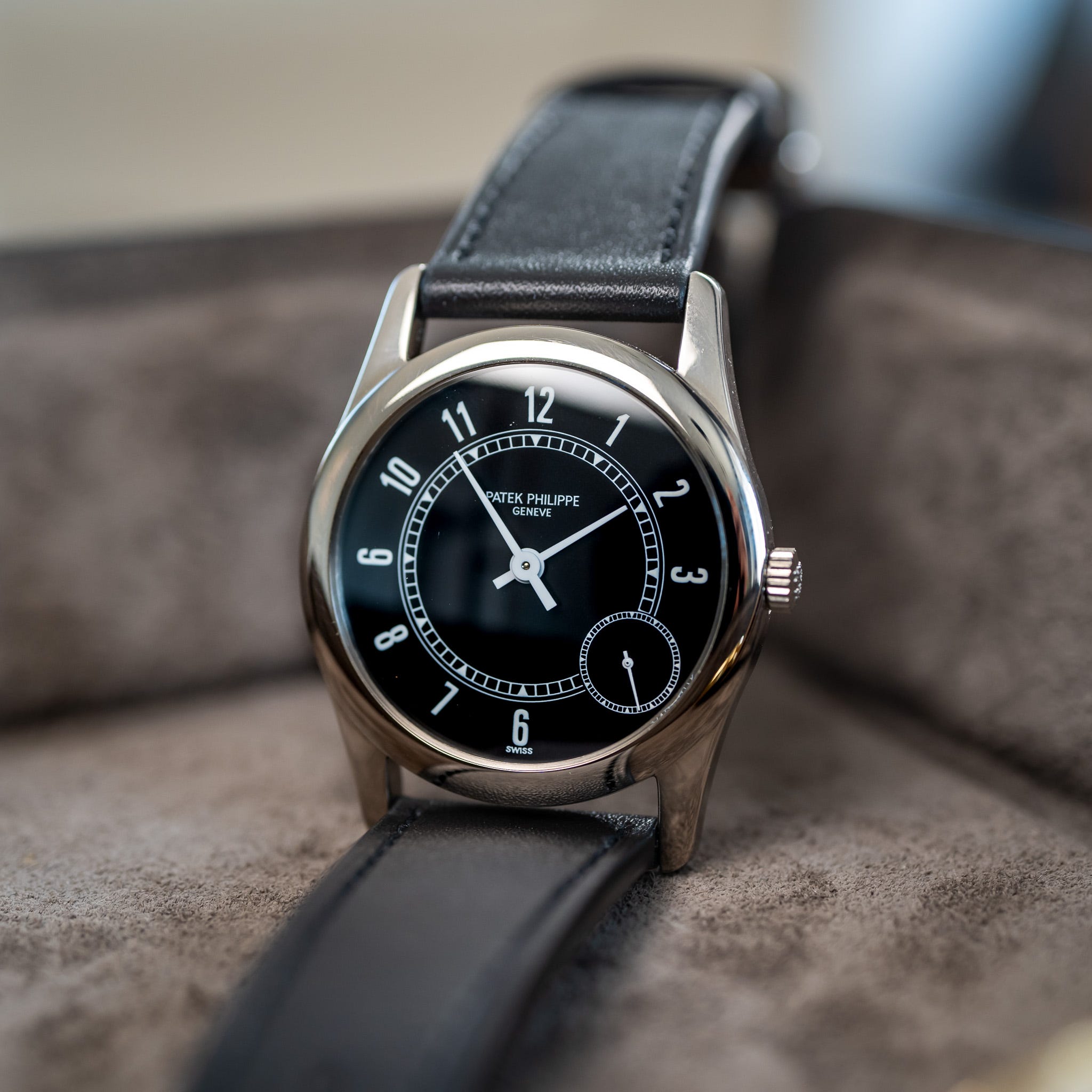
Patek Philippe introduced the 5000 in 1992. It’s best known as the result of a collaboration explored by Ferrari and Patek Philippe that never came to be.1 The utilitarian design looks like the gauges on old Italian sports cars.
The white-gold 5000G started as a limited run of 1,000 but proved so popular that another 900 in yellow gold came soon after. Patek made additional runs throughout the 90s in rose, white, and yellow gold.2
Last year, I wrote about neo-vintage Calatravas for Collectability. Tania Edwards, who worked at Patek Philippe in the 90s, said:
“I remember the ref. 5000 so distinctly. Everyone thought it was so cool—the off-center seconds, black dial, it was very modern for Patek Philippe.”
While the 80s had brought updates to the classics: the perpetual calendar (3940), perpetual calendar chronograph (3970), and Calatrava (3796), the 5000 was fresh and modern.
And it was a hit. It became a key step in modernizing the Calatrava, leading to offspring like the 6000, 6006, and 6007.
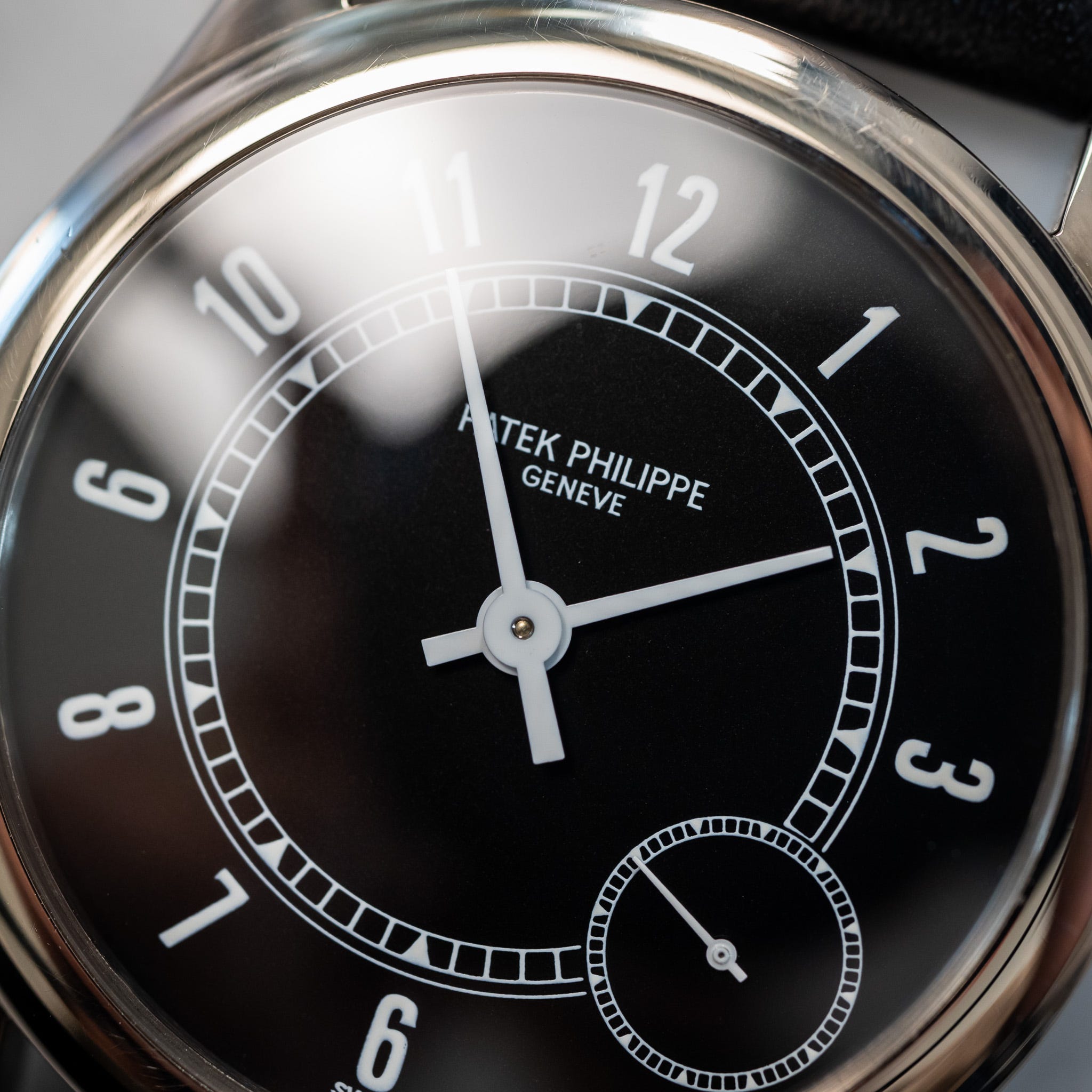
The dial has a high-contrast, modern vibe:
Deep, glossy black lacquer that reflects light—perhaps the most difficult dial I’ve photographed. Some develop a slight bubbling.
Stark white pad-printed numerals, railway and seconds tracks. The printing is thick and slightly raised, like the lume on an old Sub; matching white “matchstick” hands.
Simple, instrumental typography inspired by old car gauges—the condensed, elongated numerals just work.
Off-center seconds, which brings us to the movement:
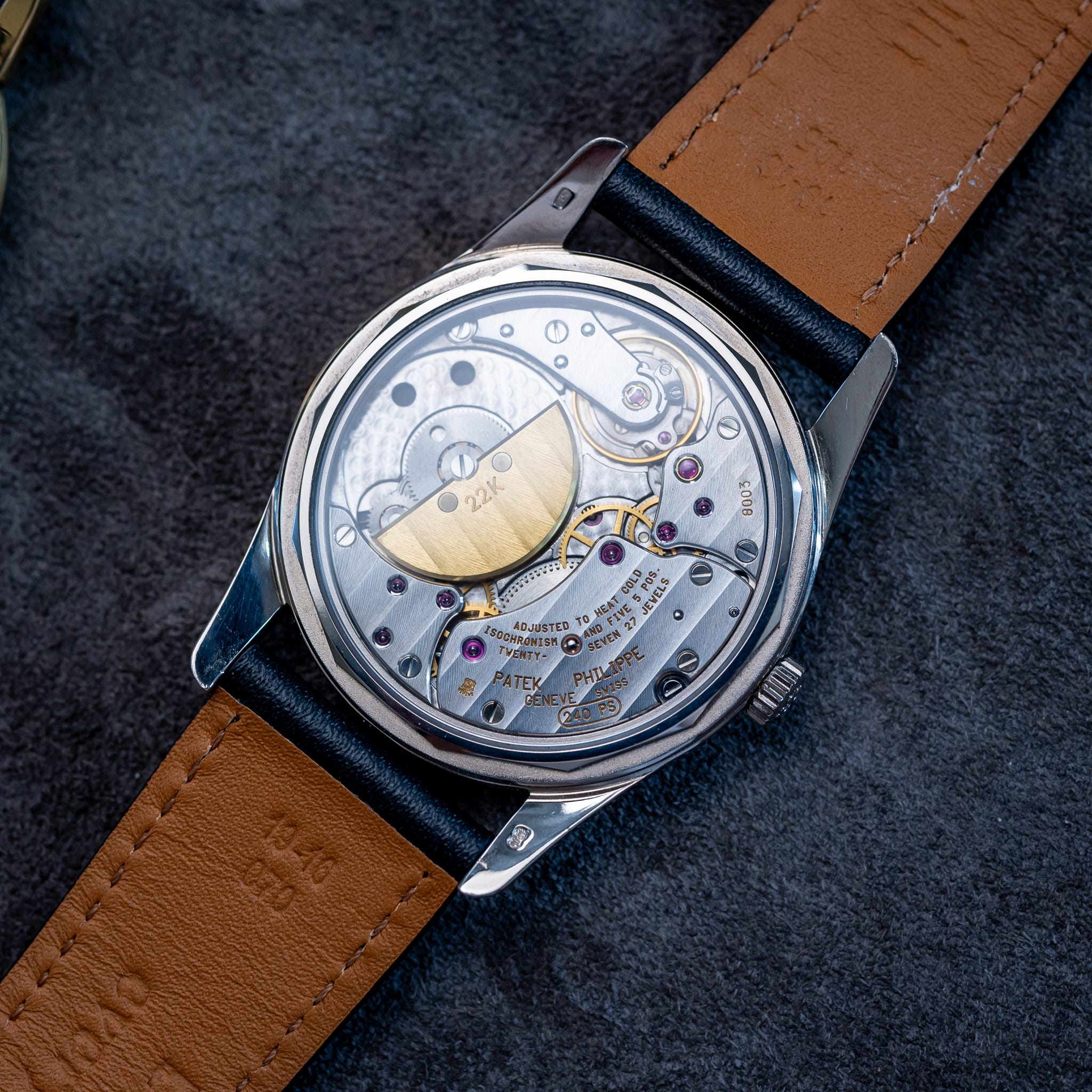
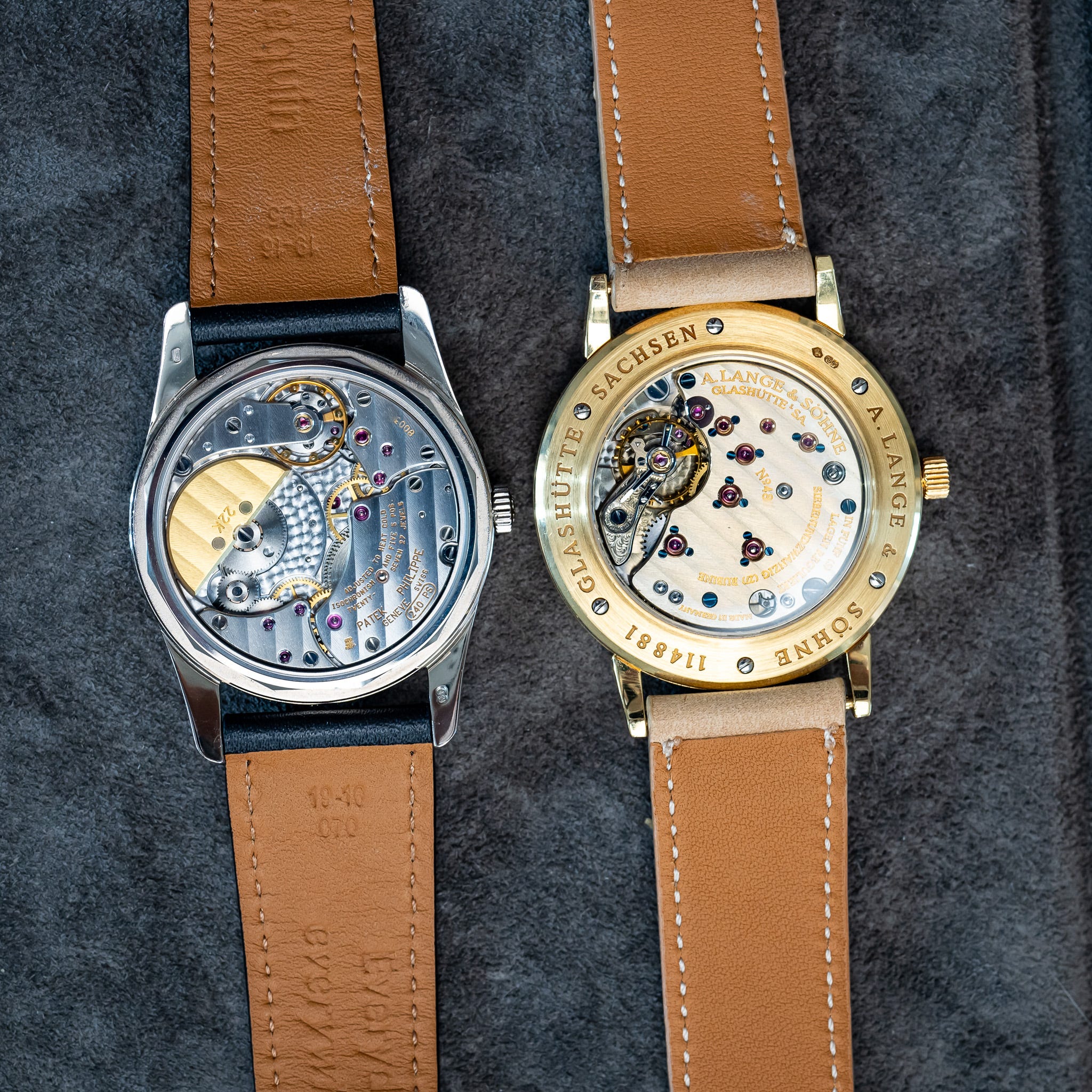
The caliber 240PS (petite seconds): an ultra-thin micro-rotor with the Geneva Seal. The base 240 was used in the 80s, but this is the first time we see it with its off-center seconds. Through the exhibition caseback, you can see the 22kt-gold micro-rotor takes up half the movement, dictating the placement of the gear train. Rather than add some gears to move the seconds to 6 o’clock, which would’ve made it thicker, Patek went with it.
We’ll compare the cal. 240 to the Lange below, with a little help from Walt Odets.
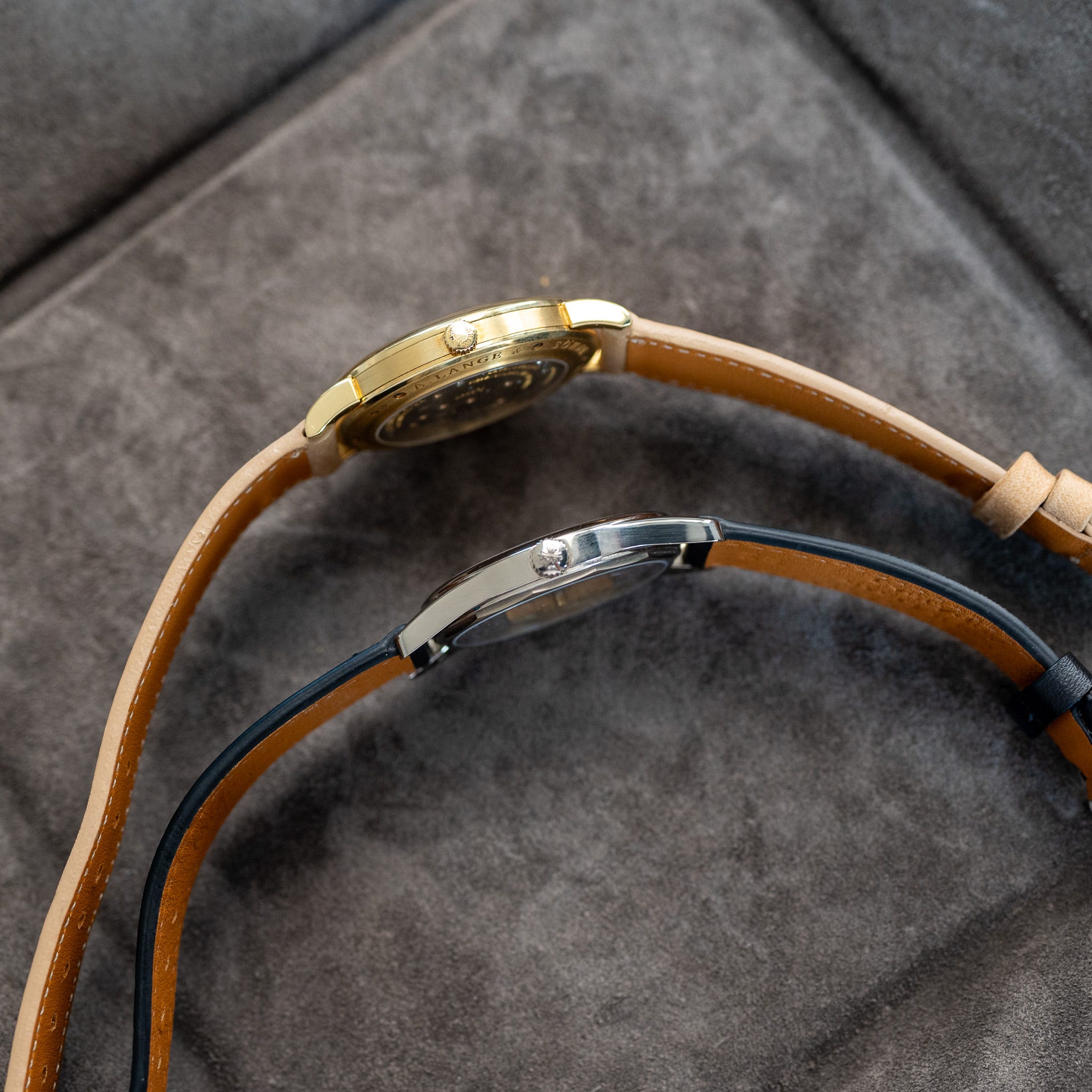
The case: Two-piece, entirely polished gold:
(1) Lugs, midcase, and bezel, and (2) the screw-down caseback.
33mm but wears larger thanks to long, straight lugs—42mm lug-to-lug.
Before the 5000, the Calatrava was your grandfather’s watch: Usually yellow gold, silver dial, manual wind, hobnail (the horror!), snap-back case. The 5000 changed all that. By some definitions, it’s hardly even a Calatrava. This comes through in how it wears.
You’d be forgiven for not realizing that, in name, it’s a dress watch. The jet-black dial reminds me more of 90s Rolex dials than the staid opaline of most Patek Philippe dials.
It’s not perfect: As Patek Philippe’s first real effort to make a modern Calatrava:
Those matchstick hands look unfinished and plain.
The caliber 240 has uni-directional winding and a relatively modest two-day power reserve. Both decisions were made to keep the movement compact—which I agree with—but worth noting.3
The biggest criticism would be that the 5000 was doomed as a concept. It’s a sporty-dress hybrid, and by trying to be both, it accomplishes neither, unable to decide between technical brilliance or aesthetic harmony.
Collecting the 5000G
Those first 1,000 ref. 5000Gs are believed to have movement numbers 800,xxx.
The “first series” deserves a slight premium. But confirm the production date with an Extract (e.g., the one here has movement number 800,xxx, and dates to 1993).
Later examples are 1.9m
Some say total production across metals was capped at 5,000 units.
The other metals are fine, but if you’re gonna get one, get a G.
Most neo-vintage Calatravas are ~85% there for me, but the 5000 is as good as it gets.
To wit: the 3796 and 3923 are too small, the 5026 tries too hard, the lugs on the 3960 are atrocious. I do like the 5022.
Fun fact: Malcolm Gillan has pointed out the 5000 uses the large hallmarks also seen on 3970s from the early 90s, much-loved by collectors.
BATTLE OF THE CASES


Let’s transition to the Lange 1815 Up/Down by comparing specs:

Lange 1815 Up/Down (ref. 221.021)
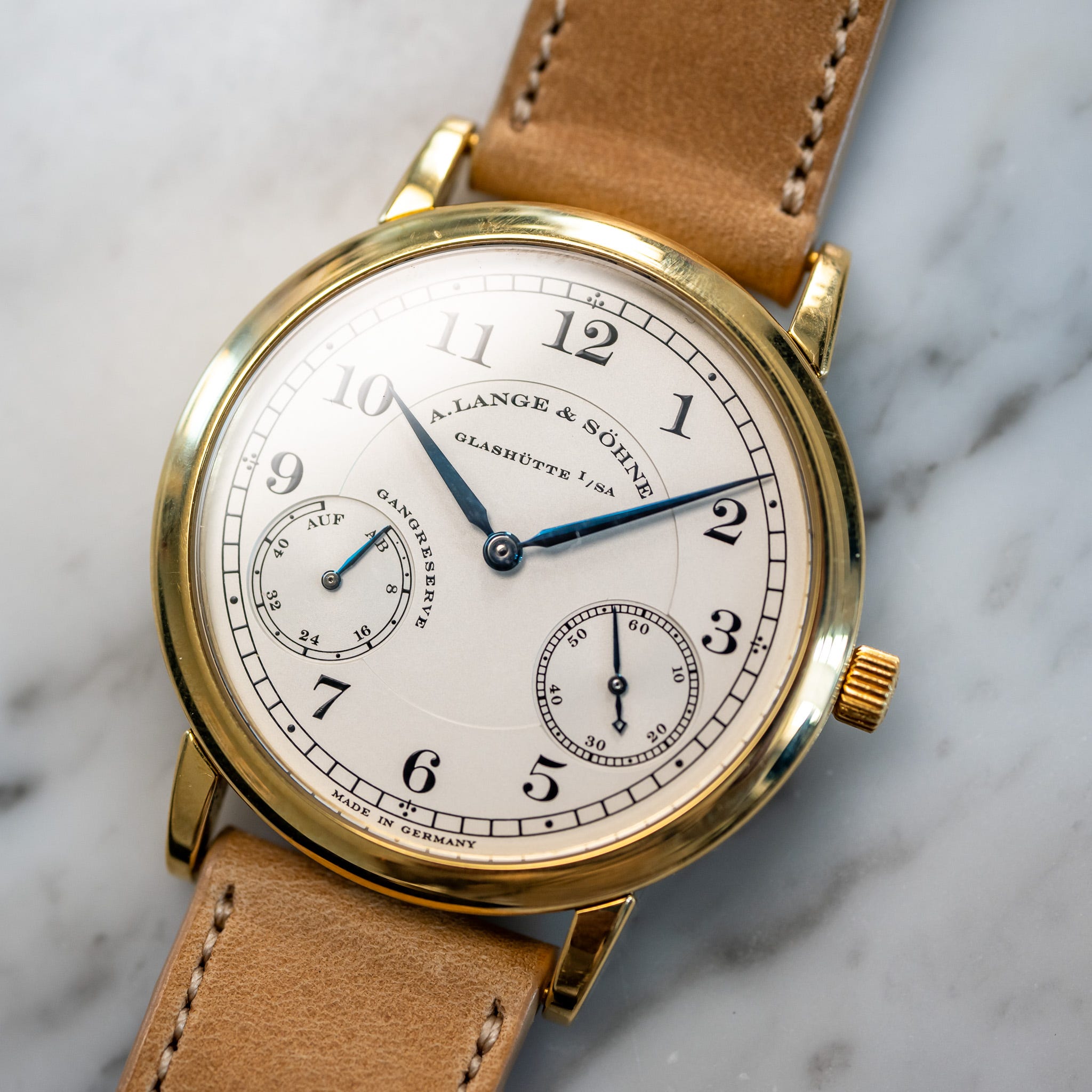
A. Lange & Söhne introduced the 1815 Up/Down in 1997 as the first expansion of the 1815 collection. It’s a no-nonsense, manual-wind watch, inspired by pocket watches made by Lange and then other Glashütte watchmakers in the 1800s. If you stroll through the shops of Glashütte or Dresden, you’ll see how common the “up/down” style is in Germany.
The case: The 1815 Up/Down is 35.8mm and noticeably better than the Patek:
Three-piece case: Polished bezel, brushed midcase, and caseback.
Notched lugs welded to the midcase.
Personal preference: I like the presence of a larger diameter and shorter lugs.
Inside is the caliber L942.1:
45-hour power reserve, hacking seconds, 3 Hz.
Larger nickel (German) silver 3/4 plate—below, you can see how it’s aged to a warmer hue than the rhodium-plated Patek Philippe.
It’s the same movement as in its contemporary time-only 1815, adding a few additional gears for the power reserve indicator, but not much in thickness.
The visible parts of the movement are elaborate: German silver, gold chatons, engraved balance cock, swan-neck regulator, and superior finishing. It may not make this a better movement than the cal. 240, but it’s certainly more elaborate, expensive, and expressive.
We’ll get to its shortcomings in the comparison below.
The dial is very different from the 5000:
Silver argenté dial
Bold black, serif numerals that look more embossed than printed
While the ref. 5000 is designed to evoke vintage Ferrari speedometers, the 1815 Up/Down is more like an old printed, very official document.
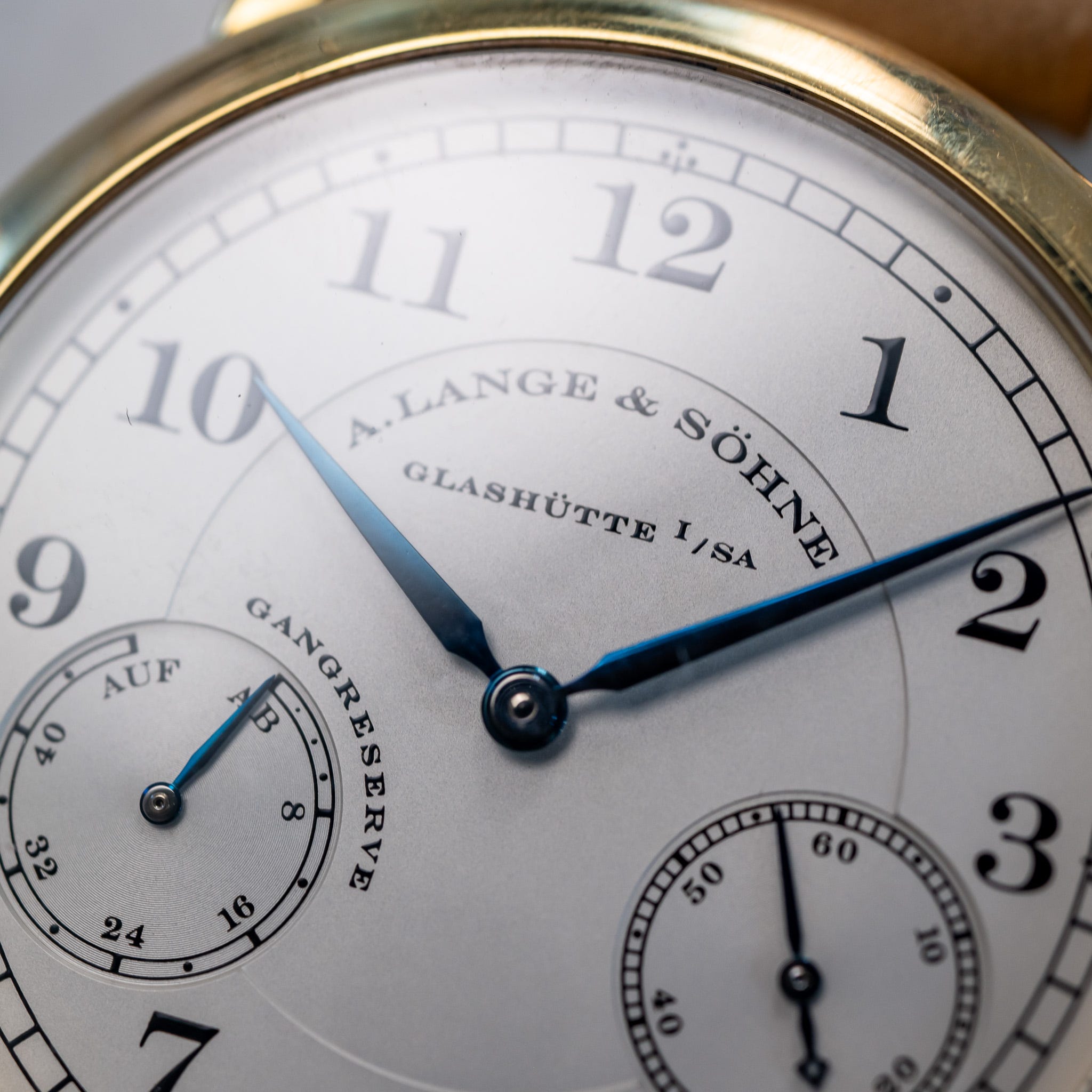
Criticisms: The crown is too small; the dial is bordering on boring; low power reserve, especially for a manual winder; it’s the least Lange Lange—thin, symmetrical, and decidedly not the L1.
This last point is what I like about the 1815, as most Langes are thicker than what I want from a dress watch, but if you want that Teutonic “Mercedes-door-closing” thunk, the 1815 isn’t for you.
Collecting the 1815 Up/Down
Lange made the yellow gold ref. 221.021 from 1997-2008, and the standard platinum and pink gold with silver dials for most of that time. Yellow seems more common, but not by a lot. A few notable variations:
White gold with blue dial (ref. 221.027): Made from 1997-2001. Beautiful and rare—only a few come up a year, and expect at least a 1.5x premium to a standard U/D.
Wellendorff bracelets: For 1-2 years at the start of production, Lange offered yellow gold and platinum with an integrated Wellendorff bracelet (refs. 251.021 and 251.025).
Special edition: The only first-gen special edition is the Homage to Walter Lange, which measures 37.5mm and has some other special touches.
Lange discontinued the original U/D in 2008, eventually bringing it back at 39mm. It doesn’t look as good, but the movement’s better.
For more on collecting the 1815 Up/Down. Langpedia’s guide is a must.
Patek Philippe vs. Lange: A Debate Since 1994
Perhaps since Lange was reborn in 1994 or when it introduced the Datograph in 1999, Patek and Lange have been pitted head-to-head for their different approaches to fine watchmaking.
The 1815 Up/Down was lucky to have been reviewed by the great writer Walter Odets, who wrote:
“It would be difficult to argue with the assertion that the Lange 1815 Up/Down offers extraordinarily high quality materials, construction, and execution.
But he wasn’t all positive, adding that: “the adherence to tradition limits what this watch could have been.” He says Lange’s approach shows no new thinking and a significant amount of backpedaling, concluding:
