


In today’s email: The Swiss don’t know how to name their conglomerates; your chance at a nice Longines 13ZN; William Massena on why “it’s much easier to sell a watch at $100k than 10 watches at $10,000.”
📆 I hope to see many of you at the Windup Fair in Chicago this weekend, including at the Friday night party I co-organized, sponsored by Atelier Wen and Formex. RSVP HERE.
🎁 Unpolished Members get: (1) a Welcome Care Package; (2) 10% off in the Unpolished Store; (3) $50 off Watchcheck, along with 2 newsletters/week, comments, Q&As. Find info on all your benefits at THIS LINK.
Is the boomer watch gone for good?
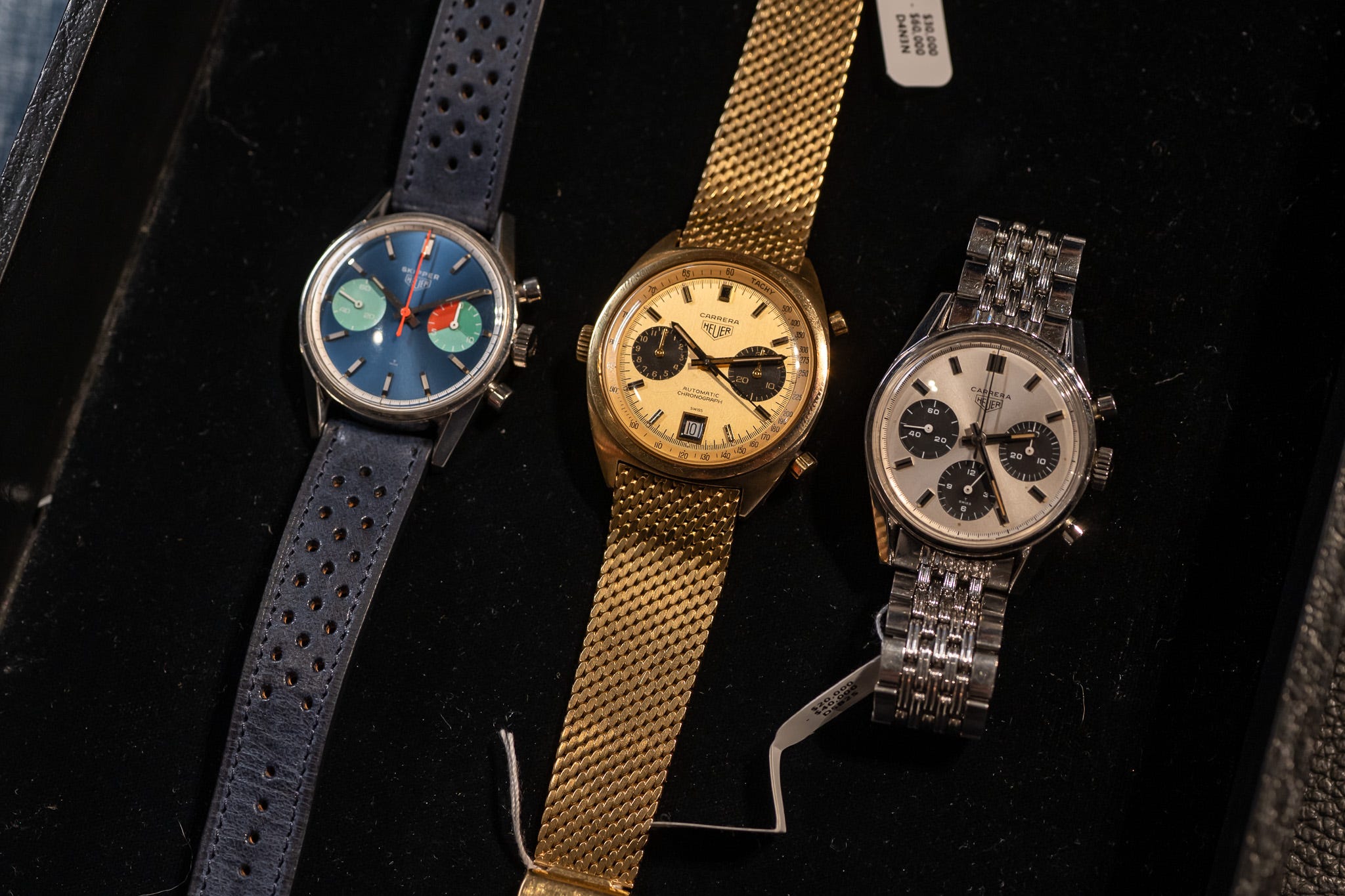
One day, I can’t remember exactly when, I started calling old Heuers “boomer watches,” my humble submission in the never-ending parade that is one generation groaning at the cringe of the one before it.
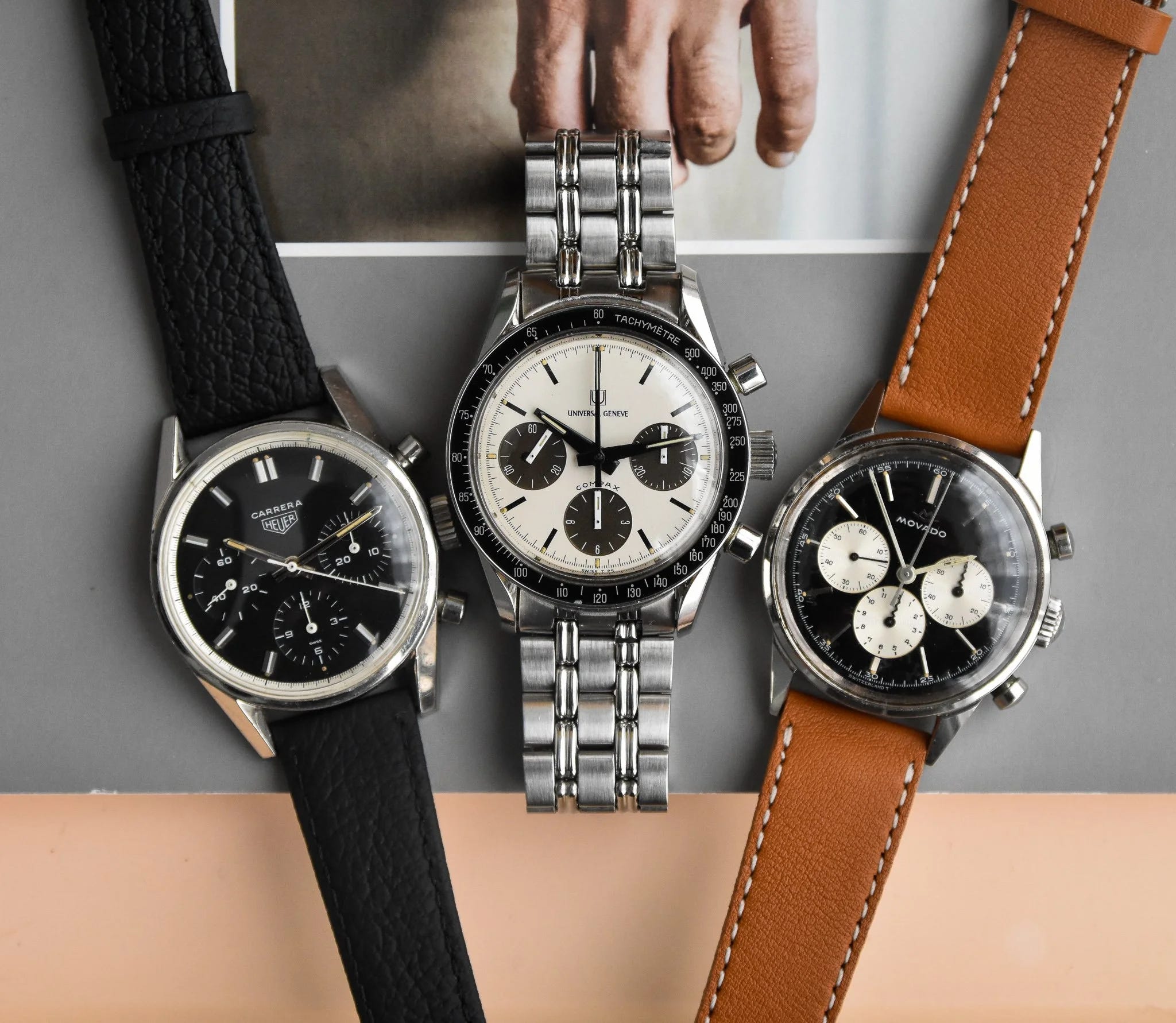
To be clear: I like Carreras (some of my best friends are Carreras!) A few of the early vintage watches I bought were manual Carreras—a 7753N, 2447N, “poor man’s” Heuers. Despite growing up in Indianapolis, it wasn’t the racing provenance that pulled me in. I just liked the design. Clean, minimal, and confident in itself in a way a Daytona never was, which needed all those tachymeters and text.
But at some point, “the market” stopped paying up for Heuers. You can get a vintage Carrera for about the same price in 2026 as in 2016, while NVDA 0.00%↑ is up 15,497% and $FPJ about as much.
This malaise may have started with vintage Heuer, but it soon spread to Omega Speedmasters and vintage Rolex and don’t forget Breitling and anything associated with Steve McQueen or race cars. While the geezer watch was taking over the Lower East Side, the boomer watch was stalling out like an old Mustang.
The collecting world shifted its focus forward, to the “neo-vintage” watches of the 1980s and 90s, along with the indie boom that started in that era and continues to today.
It all made me wonder: Is the boomer watch gone for good, or does it have a few more turns of the Twist left?
What even is a boomer watch?
“A gilt dial Submariner is kind of a boomer watch, but I love that stuff,” Trevor Wynn of Pare Pare Podcast confided in our recent podcast episode. I asked him for a few more examples of classic baby boomer watches. “Maybe a vintage Breitling Navitimer or Omega Speedmaster,” Trevor, who’s in his late 30s, replied.
He pointed me to the archetype of the NASA astronaut who drove a Chevy Corvette C2 (which many Apollo-era astronauts had through a famous $1-a-year lease program) and wore a Speedmaster. Guys that were heroes to an entire generation.
The baby boomer watch is downstream of who that generation idolized—astronauts, divers, drivers, Newman. It’s the mid-century golden age of utility-meets-design, something that deeply appeals to the nostalgia of those who grew up to see us take to space and the deep sea. It’s a Navitimer, but not a Nautilus. A vintage Rolex Submariner, but not a King Midas.
Right artist, right piece
But reducing someone’s taste simply to the cruel, pre-determined fate of the generation in which they were born is terribly reductive. So I reached out to Rob S., aka Bazamu, no less than GQ’s 2022 Collector of the Year. Over 15+ years of collecting, Rob’s shown an admirable lack of ageism, indiscriminately buying watches from the 1940s to the 2020s (Leo, take notes).
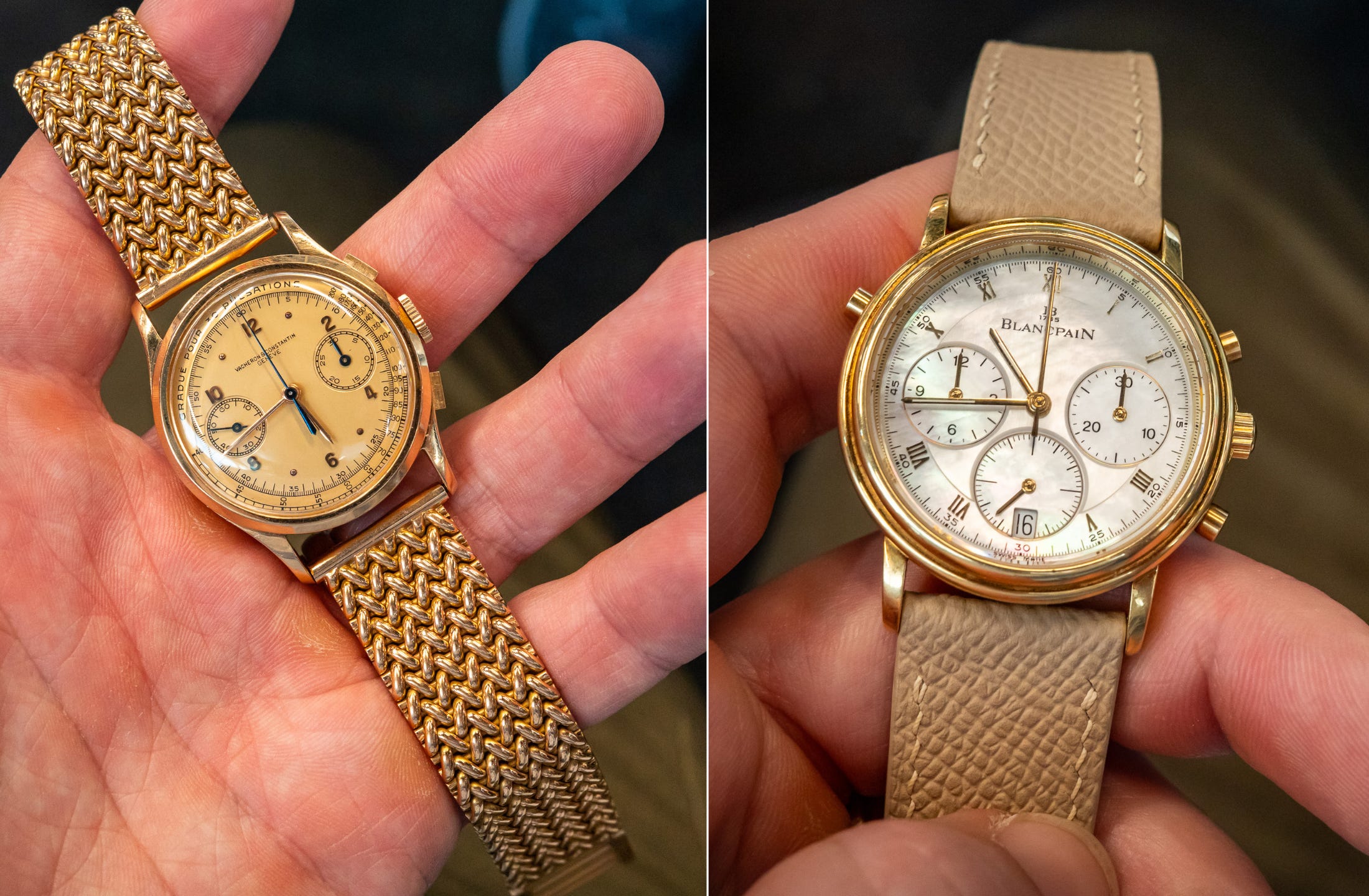
He’d already been teasing me about the idea of the boomer watch (“If the Carrera is a boomer watch, I must have an old heart,” he’s written).
Rob, who’s in his late 30s, doesn’t sort watches by decade, but has a buying philosophy he borrowed from the art world: “right artist, right piece.” He explained:
“You can buy a Picasso, but if it's the wrong period or style, it isn't held in the same regard as his best works. That’s informed which brands and references become interesting and worth exploring, regardless of production period or style.”
He tries to find pockets of value for watches that deserve more appreciation than they get. In his early collecting days, that was vintage Heuer, Omega, Universal Geneve, Tudor, Longines—“blue blood historical brands that live in the shadow of vintage Rolex despite their horological and historical merit,” as he put it.
Like many of us, he became neo-vintage- and indie-curious, so applied the same logic. As Journe and Voutilainen exploded, he instead explored early Lange, Urban Jürgensen, 90s Blancpain.
“There are so many interesting brands that are the ‘right artists’ and should be collectible but don't reach the heights of the handful of brands that popular dealers and collectors myopically obsess over,” he said.
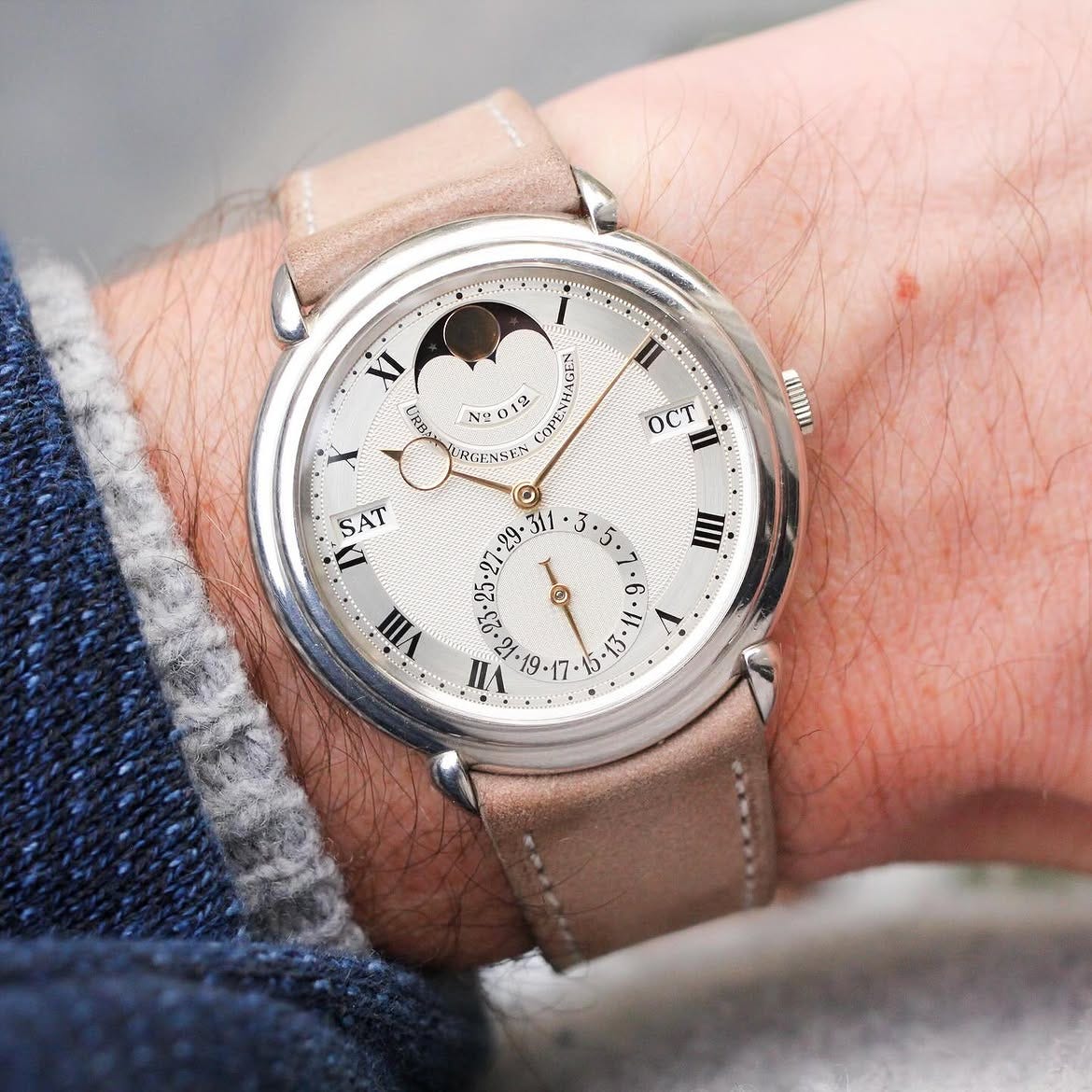
One example: “I love to tell people the story of when I bought my Urban Jürgensen Reference 2, as it garnered a collective shrug from just about anyone I spoke with (including Auro Montanari). One of my closest friends in the watch world called it an ‘old man’s watch.’
However, I thought it was an incredibly important watch—a 38mm platinum perpetual calendar, largely handmade by Derek Pratt during the early 2000s of independent watchmaking, all for the price of a 6239 Daytona. In my mind, it was the quintessential ‘right artist, right piece.’”
The money’s changing hands
Still, you can’t escape the generational math. Boomers are, actuarially speaking, headed for the exits. They’re sitting on $110 trillion of wealth—lucky them. As they die, they’ll pass on the loot to their kids or grandkids—lucky us. Fancy banks and consulting firms call it the Great Wealth Transfer. Even if it turns out these buggers are living a long time, so that transfer is happening more slowly than expected, it’s already having an impact.
“Millennials don’t want to buy what their parents are selling,” art market observers have noted to the Financial Times as that industry sputters through its own turbulence. While the previous generation of collectors looked to mid-century blue chip names, young collectors often want something different: dialogue, community, connection to feel something. Sound familiar?
In the world of watches, this is something indies have been happy to serve up, with a healthy emphasis on craft, too.
Just this week, Phillips gave us some numbers from its spring sales to illustrate the growth of younger clients:
40% of purchasers were first-time buyers
33% of bidders were millennials and gen Z (up from 25% last year)
70% of lots sold online (up from 62%)
These new collectors are bringing their own taste, biases, and opinions—often different from their parents.
Dead, or just cheap?
“I think it’s a great time to buy vintage Rolex sports models right now,” my pal Max Braun said just the other day on the Hairspring podcast, as he and co-host Erik Gustafson discussed this very topic. He said this applies especially to watches with radium lume from the 1950s and early 60s, but it’s applicable across the board.
“Compared to 10 years ago, values are down considerably.”
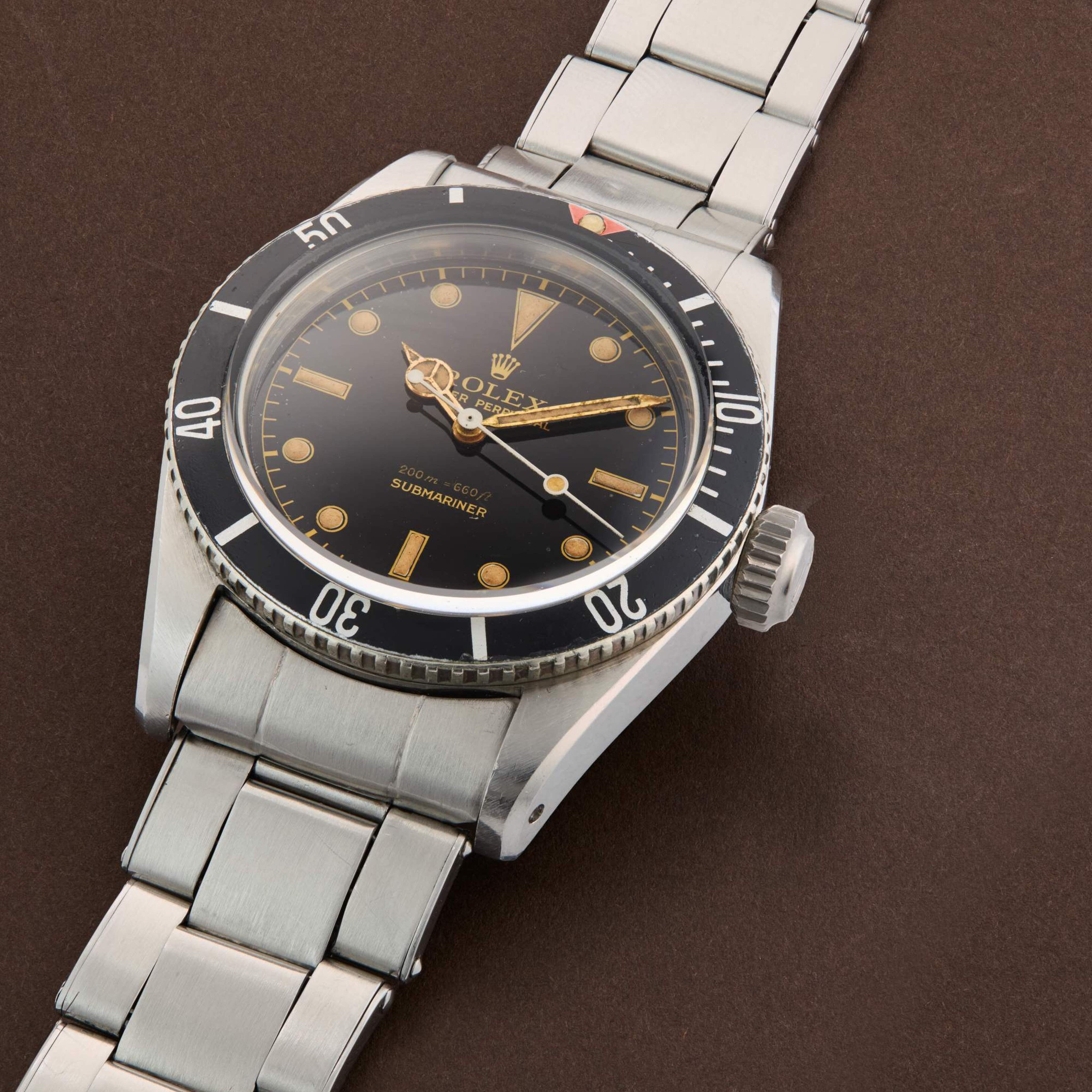
Take this crispy Submariner Big Crown 5510 (above), which might’ve pushed $1m in the late 2010s. It sold for “just” $448k at Sotheby’s in June. It’s in outstanding condition, from the family of the original owner. Exactly how you dream of finding them. But the person with $400k to spend on a mechanical mid-life crisis is spending it elsewhere.
Even for those of us who haven’t cashed out our SpaceX winnings, Max said run-of-the-mill vintage Rolex also presents buying opportunities. To wit, you can find:
Submariner Date 1680s at $15k
Explorer II 1655s in the low- to mid-$20s.
4-digit Daytonas for under $100k
Prices that are awfully similar to 10 years ago. Gustafson, ever the contrarian, isn’t so sure:
“The question in my mind is if the marketing machine behind vintage Rolex is going to regather momentum, or if it’s going to become the Model T of collecting, where the population that cares about it dies out.”
Comparing a 70s Sub to a Model T—harsh! He’s hinting at our hard actuarial fates. And yet.
It’s hard for me to fathom a world in which anything that says Rolex on the dial goes the way of the Model T, but then again, maybe people used to say that about the Model T. I find vintage Rolex watches to be some of the most wearable old things around, and in many cases, more wearable than those delicate, ultra-thin, neo-vintage whatevers. They certainly need to be serviced less, and those service invoices will have one fewer zero, too.
These are great watches, but today’s generation of astute collectors may on the whole assign less value to them compared to those who came before.
I asked Rob if his more modern escapades had crowded out his vintage watches. No way, he said:
“I can't imagine selling off the vintage watches in my collection (Heuer, Omega, Longines, UG, etc.) to shift into indies. My tastes and interests are always evolving, but there's a comfort that comes with rediscovering something like a simple Carrera after wearing watches on the other end of the horological spectrum.”
Instead, much of the churn in his collecting comes from selling things to avoid feeling duplicative. Selling one Lange to buy another, for example (instead of offloading a Speedmaster or two).
Ahoooga! goes the Model T
Gustafson’s Model T line was still ringing in the back of my head like its iconic Ahooga! horn. While it’s not as popular as it used to be, it turns out the Model T keeps chugging along. Some young collectors have taken an interest, even if it’s mostly a car for those with an AARP card.
But the Carrera, Speedmaster, Submariner, et al. don’t necessarily have that problem. What I mean:
It’s easier to strap a 36mm Heuer Carrera to your wrist than it is to drive a Model T down Lake Shore Drive.
These are models that still exist in the modern catalogs of these brands. Ford sells F-150s and Broncos today, not Model Ts.
Watch collecting is already based on nostalgia, while the modern industry mostly repackages and sells its heritage with inflated diameters and longer power reserves. It’s a different dynamic.
Collectors always have a fetish for firsts, and as long as the Daytona is a going concern—and one that resells for 2x retail—it’s easy to imagine a pipeline that will feed some subset of buyers toward the older stuff.
The myth of McQueen or the men on the moon may fade, but the objects remain.
“The Carrera has aged incredibly gracefully,” Rob said. Perfect proportions, pure aesthetic. And prices for Carreras and Speedmasters remain relatively attainable for vintage-curious collectors.
Give it time
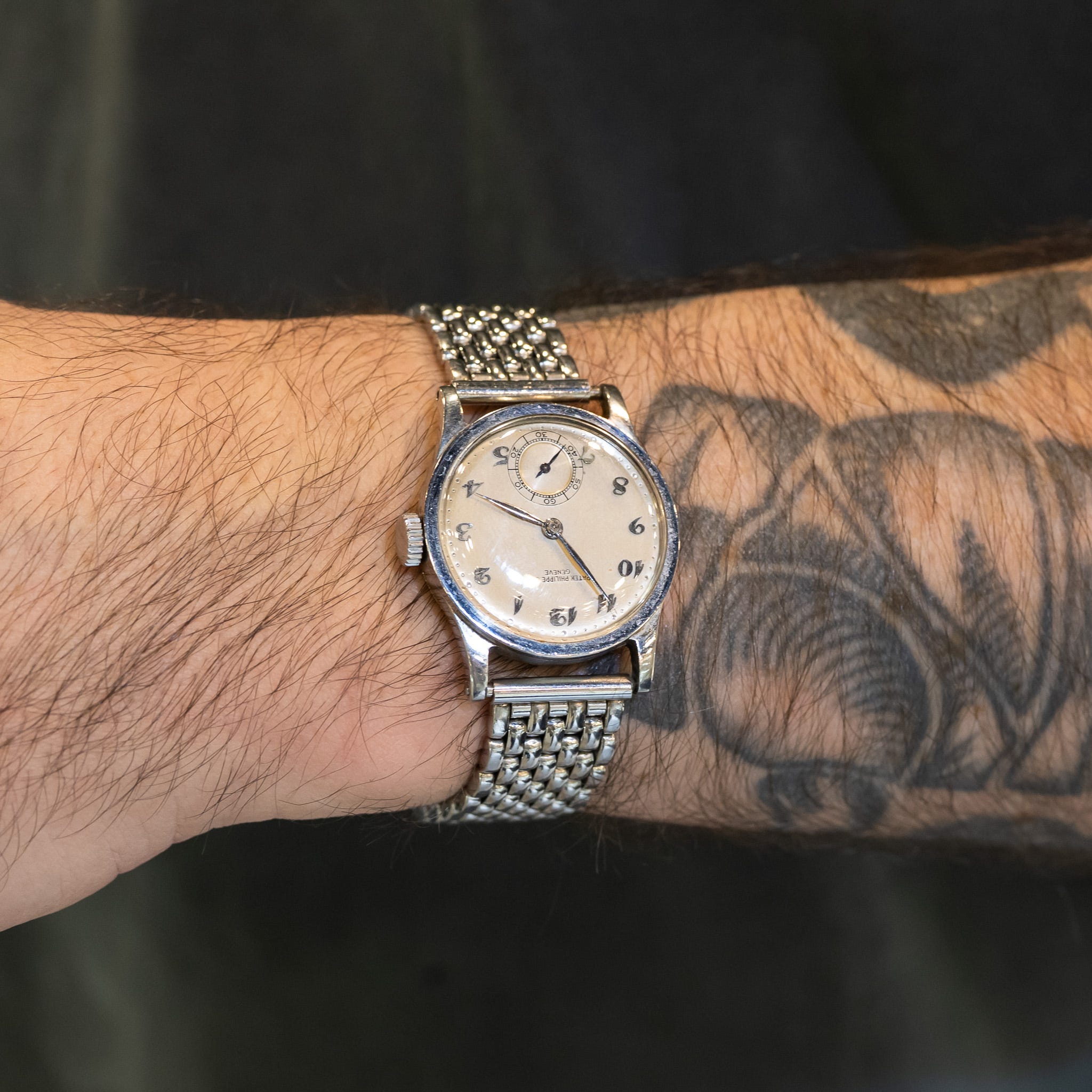
Let’s not write off the boomer watch so fast.
One of the hottest watches right now is the original Patek Philippe Calatrava 96. I can point to more than a handful of auction results from the past couple of months—$127k, $480k (!), $153k, $123k—of a little 96 selling for more than a Daytona. Bubblebacks, too.
Forget Boomer, these are Greatest Generation watches from the 1930s-40s.
Almost nobody alive has any personal memories of a 96. And that’s exactly why it’s cool again. No dad’s-watch baggage. Historically important, and a perfect little dress watch for a 22-year-old.
A decade ago, while everyone was chasing Daytonas and Big Crowns, these were the watches everyone figured might go the way of the Model T.
But give anything enough time—long enough that nobody even remembers what a Boomer was—and some kid’ll scroll past an early Navitimer for the first time, swearing he’s the first one to discover it.
Free or paid subscribers can view or leave comments on this post (usually it’s limited to paid subscribers).
The Roundup
Universal Geneve is really staffing up for its relaunch.
Also, the Swiss suck at naming conglomerates. We get Richemont (literally translated, “Rich Mountain”); Swatch Group (which Joe Thompson himself called dumb); and now House of Brands. Whatever happened to Verixxotle?
A Longines 13ZN ‘Doppia Lancetta’ on eBay. Bidding sits around $21k as I write this. For paid subscribers, here’s the link:
“It’s much easier to sell a watch at $100k than 10 watches at $10,000.” That’s how William Massena put it when explaining why brands keep pushing prices up. His 2023 monopusher chronograph with Sylvain Pinaud (CHF 130k) sold out in 56 minutes. But his 2024 chronograph with Albishorn ($5k, and a watch I adore), took a year to sell through. The Albishorn added a clever complication, reduced the thickness, but no one bought it.
“We’re making watch collecting a rich man’s sport,” Massena warned. Full story in Robb Report.
First, I am proud to be an actual Boomer and second I am proud to own all of my Boomer watches. I will find no happieness in the day that will certainly come, when all of m newly minted collector friends who have bought their Patek 96s and little Cartiers at the recently inflated price find that they are buried in them...and I am pretty sure they will find themselves buried sooner than I will be even though I am probably twice most of their ages. A lot of these new collectors will probably feel burned that their investments have proven to be bad and leave the watch world and that is not a good thing. I guess the big lesson the long time collector learns is that the market is cyclical. What is cool today may be crap tomorrow and what is crap today may be cool again tomorrow. The best investment is always the best examples of what you like and think you will continue to like despite the whims of the market. The second best lesson is that anyone who tells you that holding on to vintage watches is always a great investment hasn't lived long enough to know. This is another good article Tony. Thanks for the excuse to have an old man rant.
Another fabulous post Tony. It’s funny, sometimes I get to thinking about the “value” of my watches and what would happen if Rolex truly fell out of fashion.
Simple, I’d lose some $$ on paper, but the value of my collection would remain constant as I simply love wearing them. I really feel for those with the kind of psyche that need their watches to be monetarily valuable in order to enjoy them.
If someone buys a Journe today and it’s worth 50% less in two years, will they still be just as happy wearing it? If the answer is “no,” they probably should think twice before making that purchase…oh wait, does any still wear their Journe now that their prices have exploded?