


Good evening. I’m back home after a couple of days in New York. “Watch Week” is huge now—the main events are still Windup and Watchtime. I only spent ~45 minutes at Windup and didn’t even get to Watchtime, but had a packed schedule. Dozens of satellite events, dinners, and parties were going on.
The unofficial Watch Week’s dispersed, disorganized nature is its best and worst feature. For example, I stopped by the FHH (Foundation of Haute Horology) panels on Thursday evening, but it was kinda boring, so I left after 30 minutes to get tacos at Los Tacos No. 1 with a couple guys from Ming before heading over to Indies NYC.
In this newsletter: A quiet firing at LVMH’s ‘indie’ brands, big changes at Kallinich Claeys, Bradley Taylor closes his order book, why everyone kept talking about American buyers, and the watches I liked (and didn’t).
👉 Unpolished doesn’t run brand ads. Members get: (1) Welcome Care Package; (2) 10% off the Unpolished Store; (3) $50 off a Watchcheck service + comments and Q&As. Benefits info HERE.
MB&F
I began my long weekend at the nice new MB&F Lounge, in the same building as 1916 Company’s showroom. I moderated a panel with Max Büsser and a subscriber (thanks Lyndon!). But honestly, Max is a one-of-one storyteller, so I didn’t do much. A few takeaways from our chat:
HM-12: Max said the original plan was to produce 80 HM-12 Robots, but production costs kept rising, so they eventually decided to make 38 (12 each across 4 colors).
He said if the HM-12 were priced with the same margin as MB&F’s other watches, it would’ve been more like CHF 480k (~$650k by the time it was imported to the States). But with MB&F’s current collection ranging from CHF 60–250k, that felt high, so Max made the decision to price it at CHF 280k ($380k). The lower price and lack of margin are why MB&F is making fewer.
HM-5: Max was asked a question about his risks and failures during the Q&A. He grew up drawing cars, and said that HM-5, released in 2012, was his first design that took inspiration directly from the automotive world. It wasn’t received well by the market and took years to sell. Even today, it doesn’t perform well on the secondary market.
He mentioned the HM-5 that sold for CHF 28k at Marteau’s auction just hours before our chat, one of the lower results in an otherwise huge sale that had people talking all weekend. The HM-5 retailed for CHF 54k in 2012.
While it was a commercial dud, he said the HM-5 isn’t a regret because it led to meeting Fabrizio Buonamassa Stigliani, creative director at Bulgari Watches. Fabrizio loved the HM-5, and that’s led to a few projects between MB&F and Bulgari.
If history is any indication, these watches that are unloved in their time—resulting in low production—become collectible in a generation.
Lange love: Max talked extemporaneously about Lange and how much he respected what Günther Blümlein built from essentially nothing in the 1990s because someone in the room was wearing a new Lange 1. Max had a front-row seat to Blümlein’s work since he joined Jaeger-LeCoultre in 1991, back when it shared ownership with Lange and IWC. Blümlein’s brilliance also came up when I talked with Tony de Haas a few weeks ago. I’d love to do an Oral History on his work across all three brands, talking with those who worked with or knew him.
Indies.NYC
I stopped by Indies NYC after that, which had the best energy of any show. Loud music, open bar, and about 25 independent watchmakers.
The location was technically private, but the organizers said 700+ people registered.
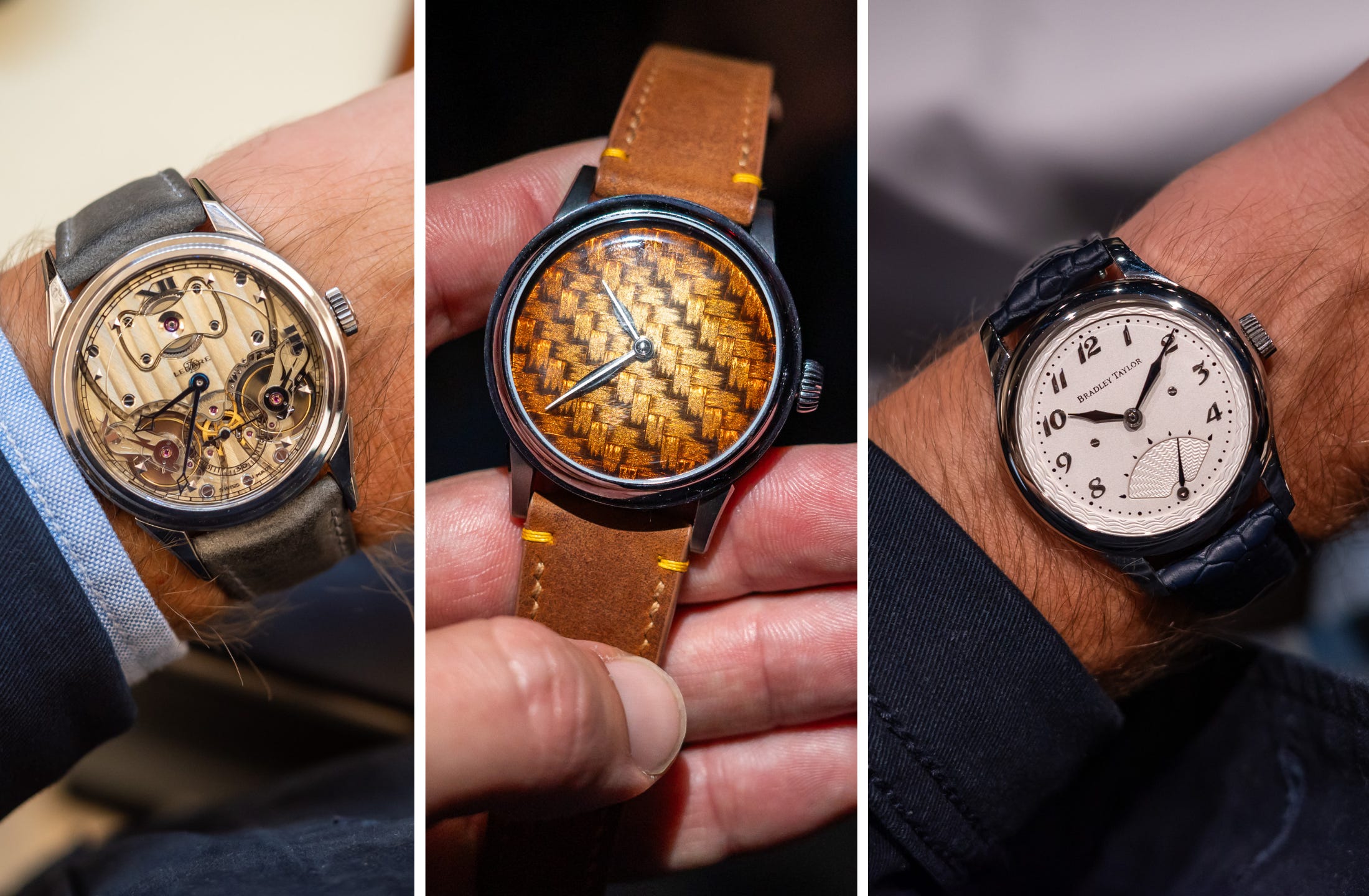
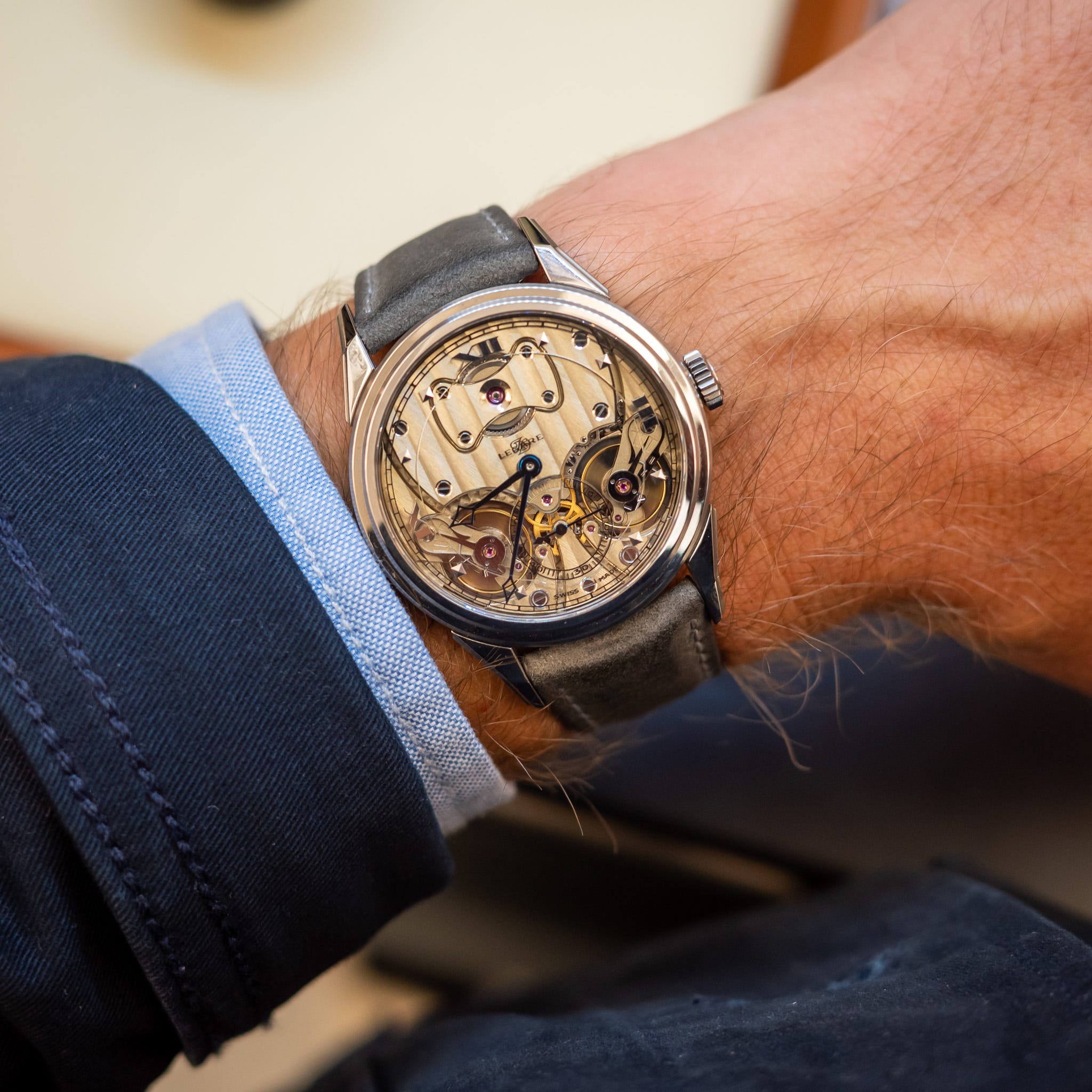
This was a theme of the week, but I didn’t have enough time to fully appreciate the density of watchmaking. I spent time with Legare, Bradley Taylor, Atelier 1776, and Stefan Pierre, and none disappointed.
Atelier 1776 introduced their Liberty 250 Tantalum that morning, and said they’d already allocated 11 of the 13 pieces by the end of the day. It has a high level of hand finishing for $39k—comps are often 1.5x. The Liberty 250 uses the ETA/Unitas 6498 architecture as its foundation, but Jason Lu and Zach Smith (who I’ve covered before) rebuilt it from the ground up. The American aesthetic and brand positioning doesn’t work for me, but it’s nicely executed, and I’m excited to see what they build from here. Check out Jason’s interview with ScrewDownCrown for more.
I also saw the Legare Chapter 1 in person for the first time. It’s funny to have Wei Koh on the “other side” of a booth. I’d read about the movement and differential gearing and understand it intellectually, but the Chapter 1 feels well made. The level of finishing on the titanium case is better than I realized, with beveled steps on the bezel and angular lugs. Between the case, dial, and movement, there might be 1-2 too many things going on, but it’s a solid first release.
Windup
I only went for about 45 minutes. I tried to go on Friday, but the line was too long, and I refuse to wait in a queue to see microbrands. I know others felt the same way, and there was plenty of complaining on social media. Line culture is everywhere, and I guess it’s part of the “community,” but with so much going on during the weekend, there are better ways to spend time.
Still, the online complaining is mostly unwarranted for what remains a free event. Windup’s gotten big enough that Worn & Wound will have to manage entrance differently next year. A paid ticket for early admission (or a late-night party), along with free, timed-entry tickets during normal hours would probably solve it. Worn & Wound has successfully grown this show from a small community event at Chelsea Market, and I’m sure they can navigate its next chapter.
I went on Saturday morning during the media hour. Here’s what I saw:
Of the 160+ brands, I’d never heard of at least 50.
While much of the talk is about microbrands, the physical space is a reminder that big companies are key to the business. Bremont, Fossil, Bulova, Oris, and Christopher Ward had the largest buildouts, along with Brew.
The Watch Preserve has the exact right mix of accessible vintage watches for Windup—vintage Movados, Art Deco American watches, Rolex, Omega, Cartier.
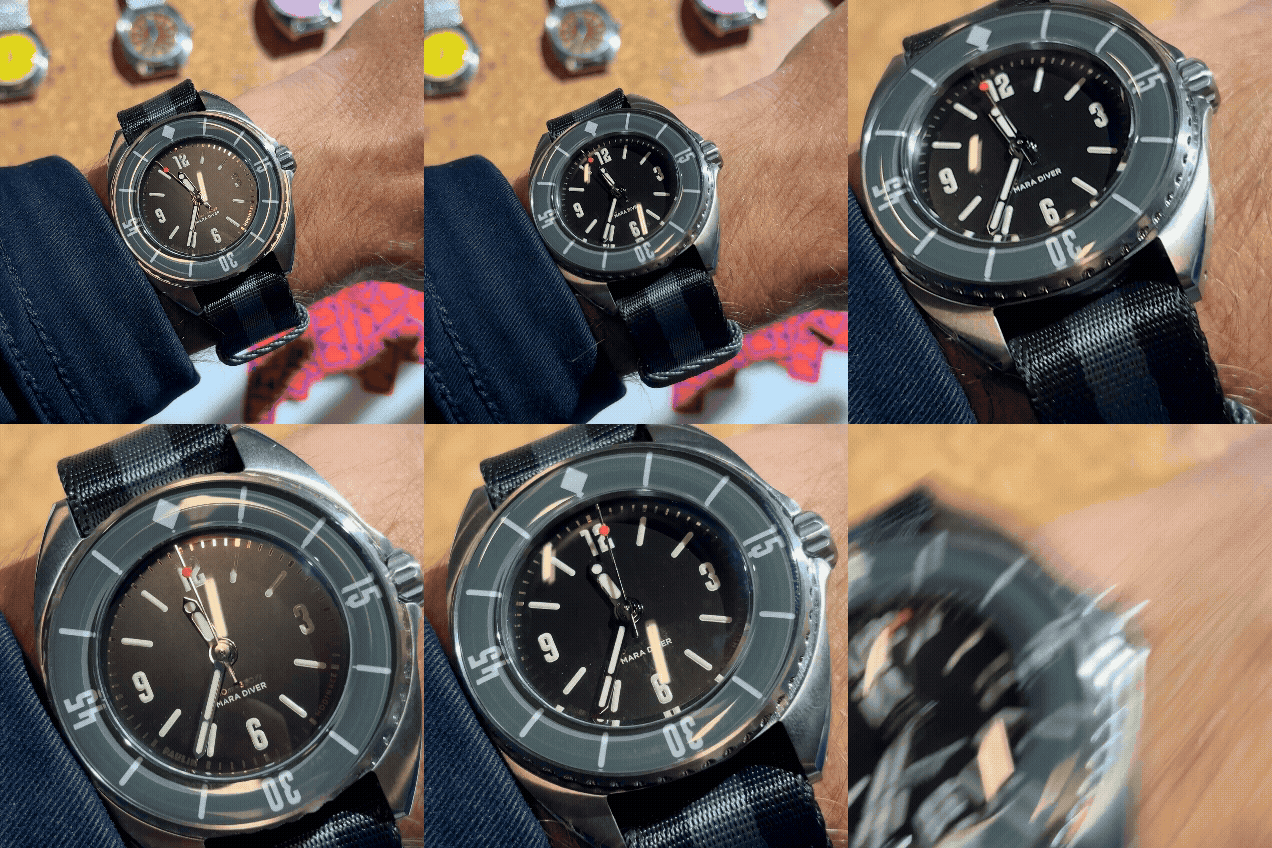
The Paulin x Hodinkee Mara collab is cool. It uses a real gilt process for the dial, which gives it a rich depth in person. I don’t think the vintage-inspired dial matches the sapphire bezel, which feels quite contemporary, but I hope Paulin uses the process in future releases. And if they don’t, I’ll demand it from founder Lewis Heath! Still, a solid offering for $1k.
Tantalum, and lots of it. Tantalum used to mean expensive, but that’s not true anymore. Jackie from Watch Ho & Co. showed me a tantalum version of his Selten collab that buyers can upgrade to at cost. The tantalum case is made in China, and it’s well finished. Ming also started offering a tantalum Polymesh bracelet ($6,500). Material is no longer a point of differentiation for high-end brands. (See also, Atelier 1776, above).
A firing, a split, and a full order book
Beyond the shows, I sat down with a few brands. These smaller meetings, coffees, and lunches yielded more insights and are the most valuable part of any Watch Week.
