


Happy Sunday. I’m helping to organize a casual hang with Ming at Sydel & Sydel in Chicago next Saturday, June 13. RSVP here to check out the Polymesh bracelet, the latest collab with Josh Shapiro, and more.
Subscribers also get (1) 10% off in the Unpolished Store, (2) $50 off a service at Watchcheck, and (3) access to all comments and Q&As.
The Roundup


A couple of quick hits before today’s throwback:
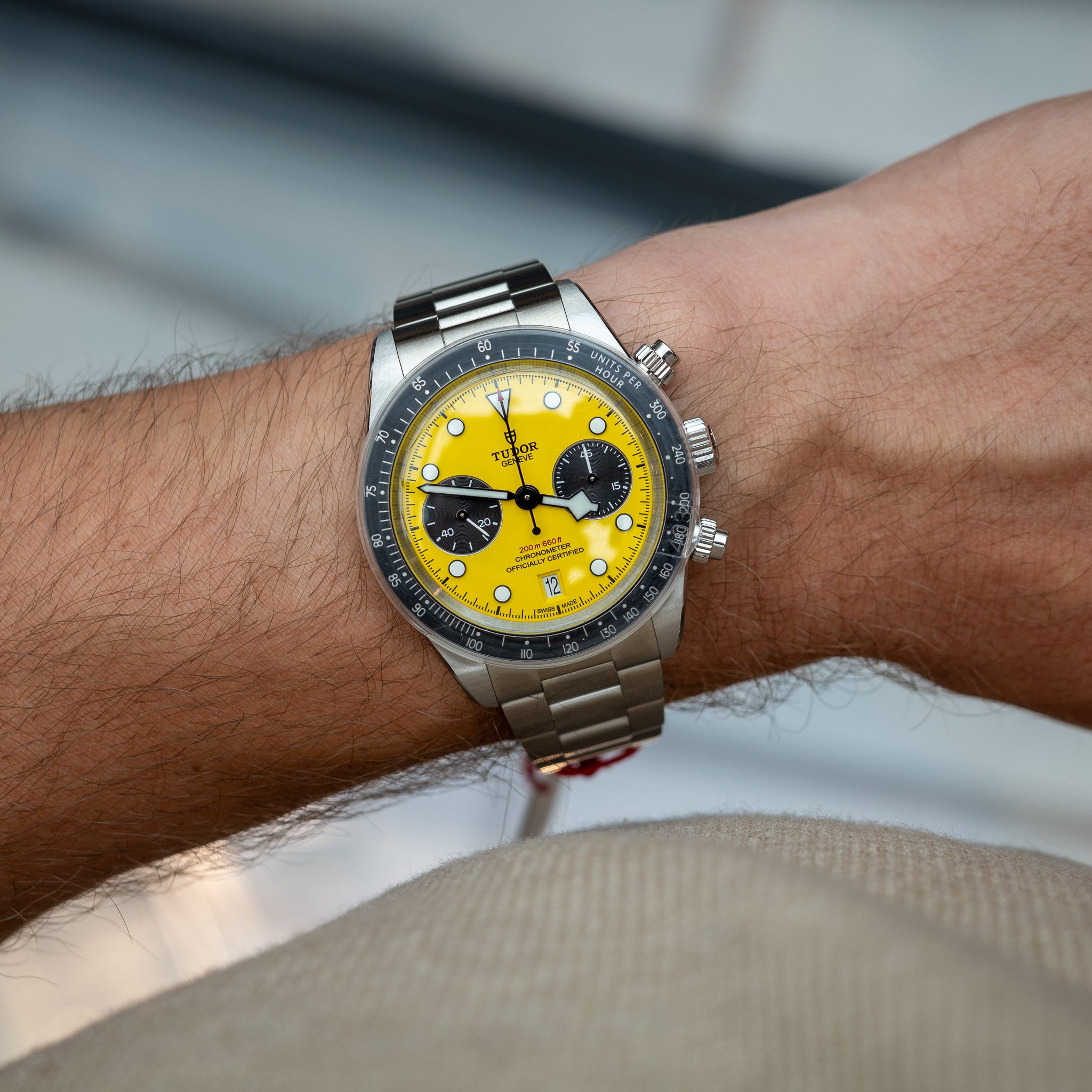
Quick impressions of the new Tudor Black Bay Chrono 39. The 39 x 13mm case (47mm lug-to-lug) wears great, basically the same as my old Black Bay 58 (above). Yellow’s a big swing, and this one’s somewhere between traffic cone and school bus. But the matte yellow is well done: Bright, not flashy. I’ve said before that I much prefer a matte to a sunburst finish, and that’s certainly true here. It works with the black accents. That said, I would’ve liked to see Tudor introduce an all-new case with more standard and accessible colors. The Bumblebee will be part of its Daring collection, along with the blue and pink before it, and harder to get. Tudor’s an enthusiast brand and doesn’t need to lean into scarcity too much. $6,725 in 2026 is fair. Thanks to Burdeen’s for letting me check out the new Bumblebee.
Apparently, Worn & Wound has acquired Lorier. The law firm that advised the acquisition broke the news on its press page. I reached out to W&W, and hopefully we’ll get the chance to hear more about it from their side. I’d heard the brand was getting killed by tariffs last year—surely they weren’t alone there—so I’m not sure if that has something to do with this news. I don’t cover microbrands much, but I like many of Lorier’s designs—Vintage-inspired but not too on the nose. And Lorenzo and Lauren were thoughtful brand owners, with an admirable reticence towards social media.
Programming note: There likely won’t be a newsletter until next Sunday, but I’m going to drop a mid-week “bonus” podcast with Trevor Wynn of Pare Pare Podcast. Make sure you’re subscribed: Spotify / Apple / RSS.
When Damage Became Tropical
The Ref is a weekly story about a sometimes-forgotten watch or moment in history. Sunday is the perfect time to step away from the feed for a few blissfully naive minutes to remember the watches that were. Ref. 04 is going back in time to discover the origins of tropical. Previous editions:
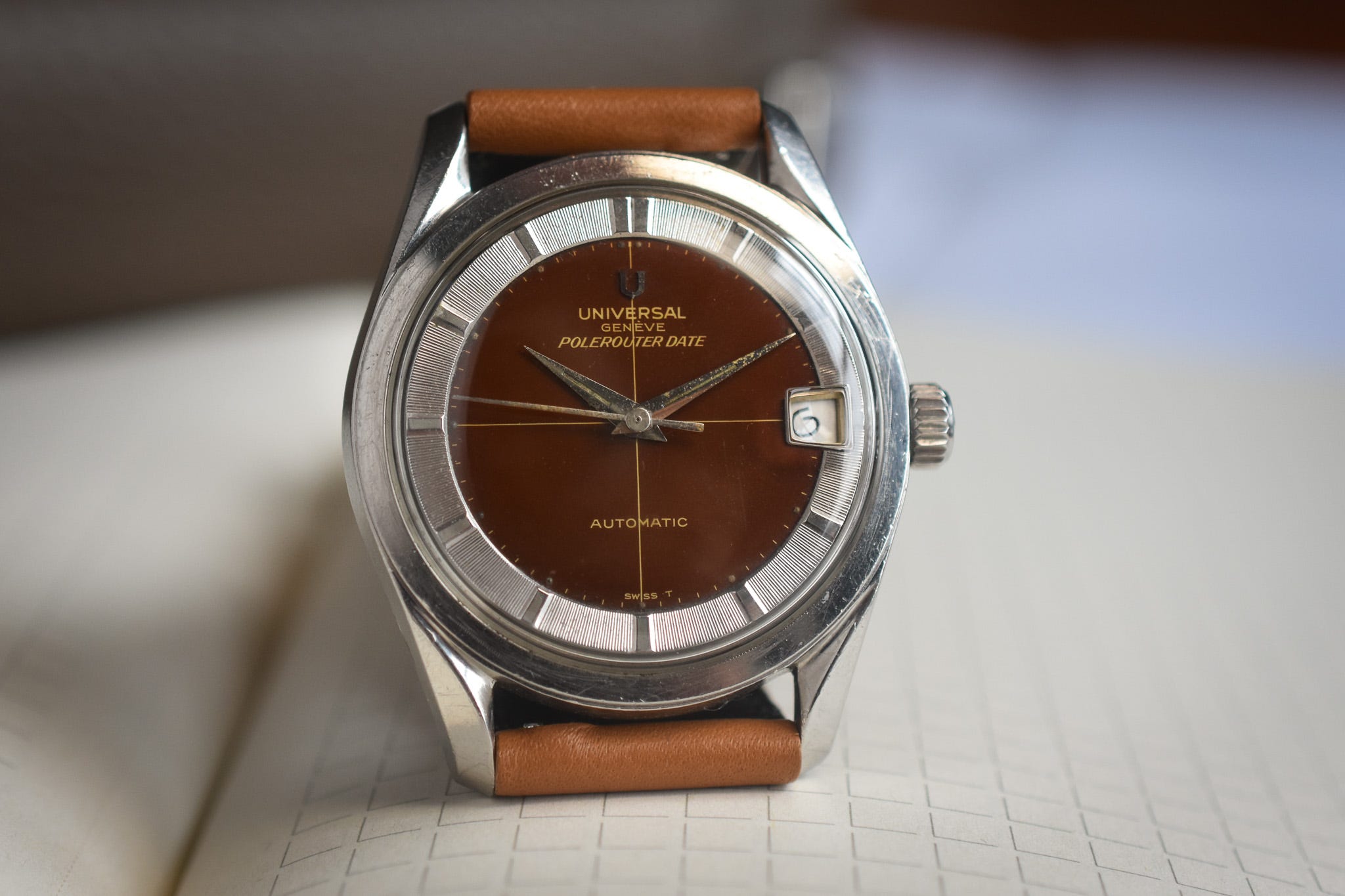
Tropical, like any good marketing term, is an invention of salespeople. Nowadays, it’s used to describe any dial—mostly black, though not always—that changes color when UV light reacts with its pigment or varnish.
I’ve owned a few tropical dials. By the time I came to watches, the appeal felt self-evident. But that wasn’t always the case.
When did “tropical” really become a thing that collectors would pay up for? I asked a couple of dealers:
“I would say around 12-14 years ago,” Adam Golden of Menta Watches texted me. “If you go back and look at auctions at that time, you start to see it, and that’s when you first start seeing real premiums attached to them.”
Matt Bain agreed: He said the term was used in the early 2000s, but the premiums didn’t start until ~2010.
William Massena gave me the most detailed answer:
“In the late 1990s, [tropical dials] were still considered damaged, then the rise of quality pictures on forums started to make us realize that it was a very similar and specific mark within Rolex and Omega. Gradually with digital camera pic quality improving, we saw that it really was a phenomenon across a wide range of brands. I think the term Tropical was invented by dealers because brown sounded bad.
Auctions
Old auction catalogs are the most publicly available source of information, so that’s where I turned. When something gains enough momentum with collectors and dealers, auctions ride the wave.
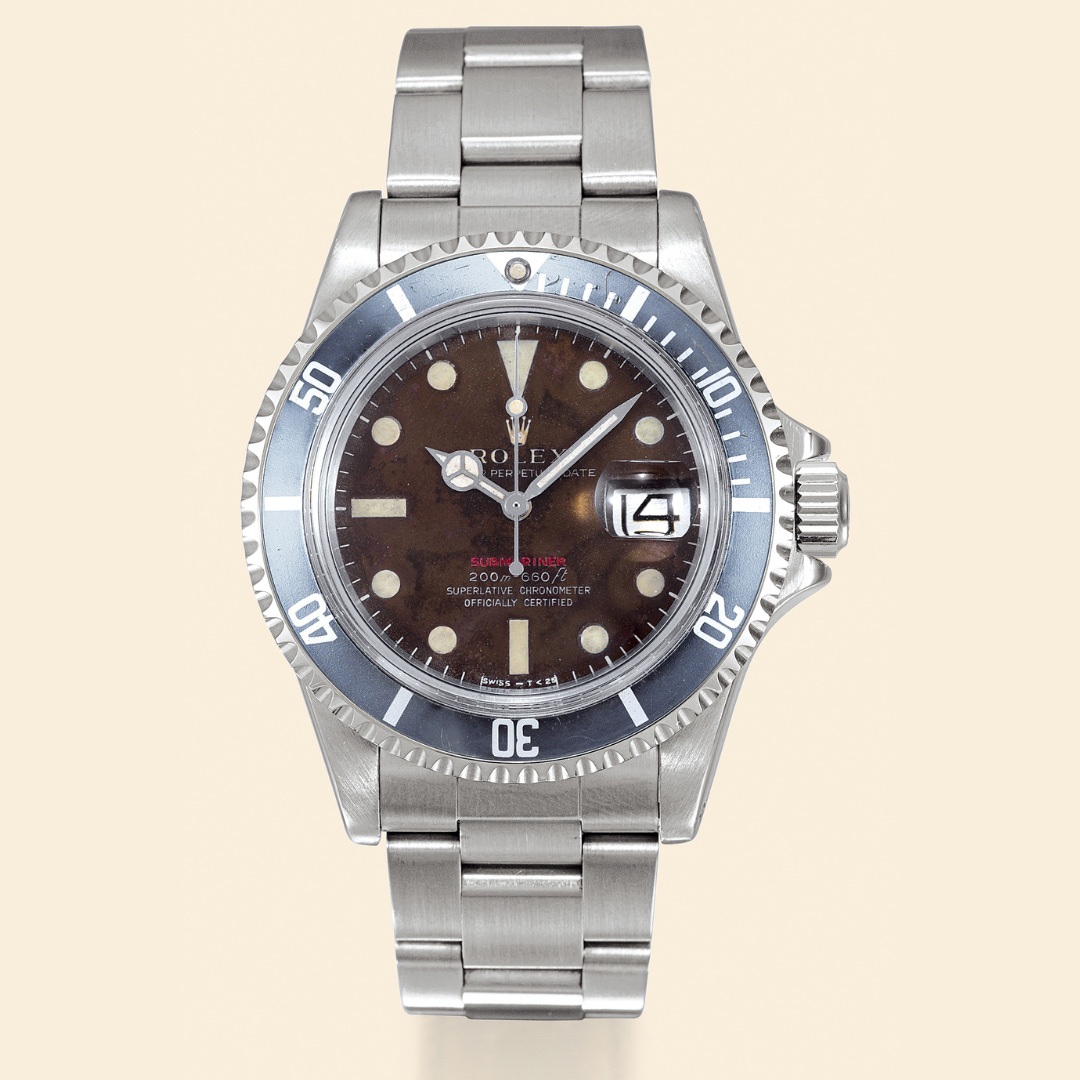
The first “tropical dial” I could find at auction came in 2007, when a Red Submariner 1680 sold for Chf 50k, 2x its high estimate:
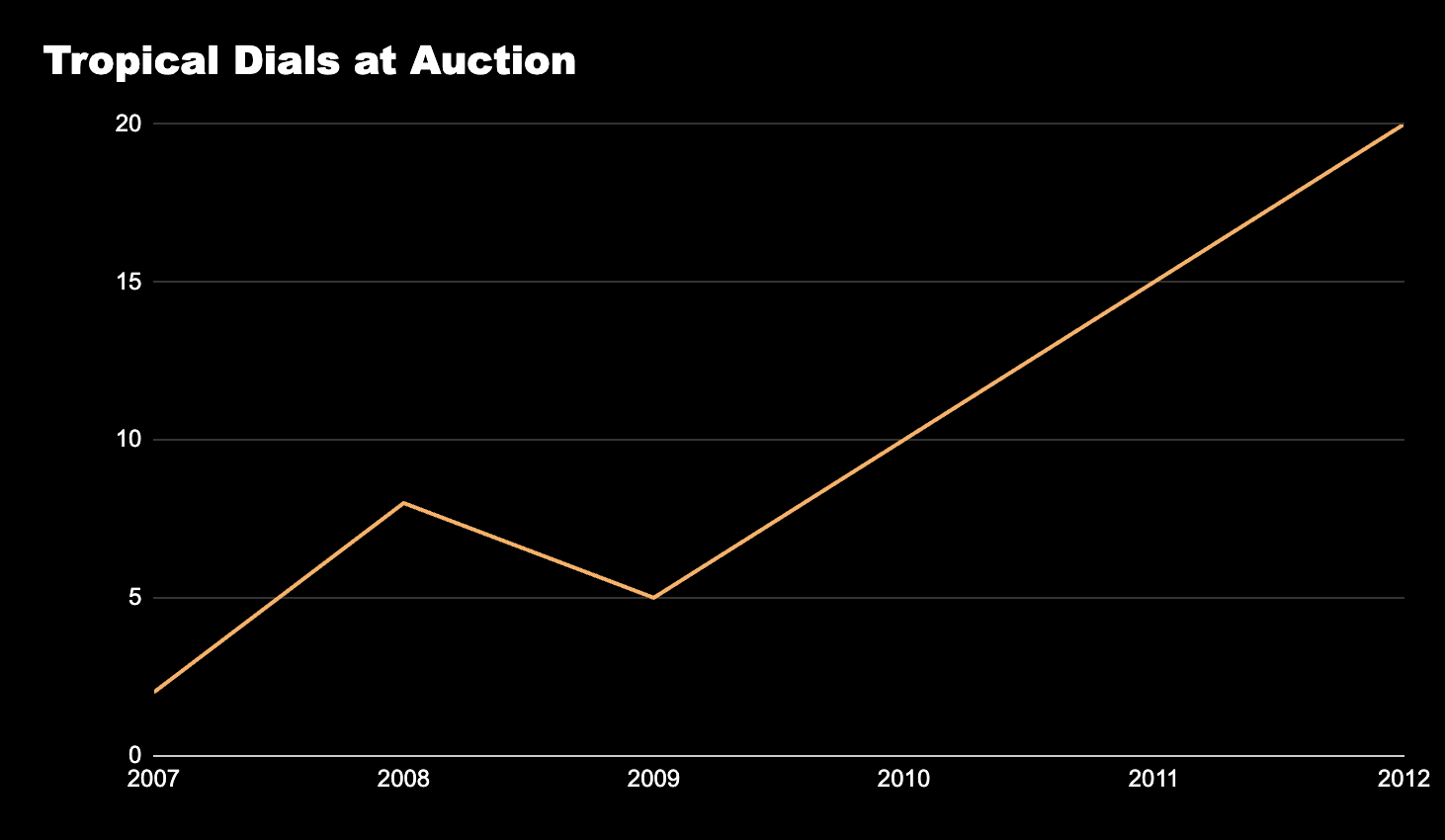
Looking at the numbers, this feels like the tropical dial’s Ed Sullivan Show moment. By 2008, Rolex GMT-Masters, Subs, Explorers, and Speedmasters were all being described as tropical:
Tropical dials are most commonly associated with sports watches with black dials baked in equatorial heat to a brown that’d make Willy Wonka jealous. But as tropical became trendy, it expanded its reach.
The first Royal Oak I found with a “tropical dial” came in 2011. Unlike the black dials of those mid-century sports watches, a tropical 5402 looks more clearly like damage to the galvanic color and varnish on the Royal Oak’s petite tapesserie.
While it’s the same degradation process that occurs to an old Rolex dial, the raised portions of the Royal Oak dial turn brown more quickly, causing a less even patina.
William’s answer offered another hint: Look at the forums. There, the tropical dial’s big bang moment came in April 2005, a couple of years before the term appeared in auction catalogs. Within days of each other, we see the first mention on TimeZone and Vintage Rolex Forum, two of the largest collecting communities at the time. Both also reference watches from Italian dealers or collectors as the source of their curiosity.
On both sites, the discussion was the same: Collectors still weren’t sure if these were originally brown dials, or black dials that had turned brown. One thread even points out that a prominent dealer at the time listed a brown-dial Submariner 5512, stating Rolex originally made the dial in that color.
William said many collectors also assumed foul play:
“Many collectors, including me, thought that a lot of these dials were too even in coloring to be original (and we were proven wrong later). I came late to tropical collecting, only after serious dealers (Eric Ku, etc.) had sold a lot…I thought it was an Italian job (and sometimes I was right!).”
At first, the term tropical was simply about naming something that happened most commonly to watches that had lived under the sun and palm trees. It wasn’t about adding an adjective to entice another bid or two.
Eventually, dealers picked it up, auctions formalized it, and the market ran with it. Somewhere along the way, the word got stretched beyond its original meaning to capture all kinds of things. Take even the faintest brown out in the sun, crank up the saturation, and a watch is “going tropical.”
In those days, the watch world was also much smaller, and distinctions were readily drawn to give collecting a gotta catch ‘em all feel.
By the time tropical appeared in auction catalogs in 2007, it had a premium associated with it. As soon as that happens, less-savory types find ways to take advantage. People start baking or faking tropical dials.
This bubbled to the surface in 2021 when a tropical Omega Speedmaster became the most infamous tropical dial ever sold, for $3.1 million.
“The tropical dial is the coolest dial. However, I think its collectibility has cooled off since that Speedy at Phillips. That scandal had two victims, the Speedy and the tropical dial, and many people forget that.”
He’s right. I still think about this Rolex Milgauss ref. 6541 from a couple of years ago:
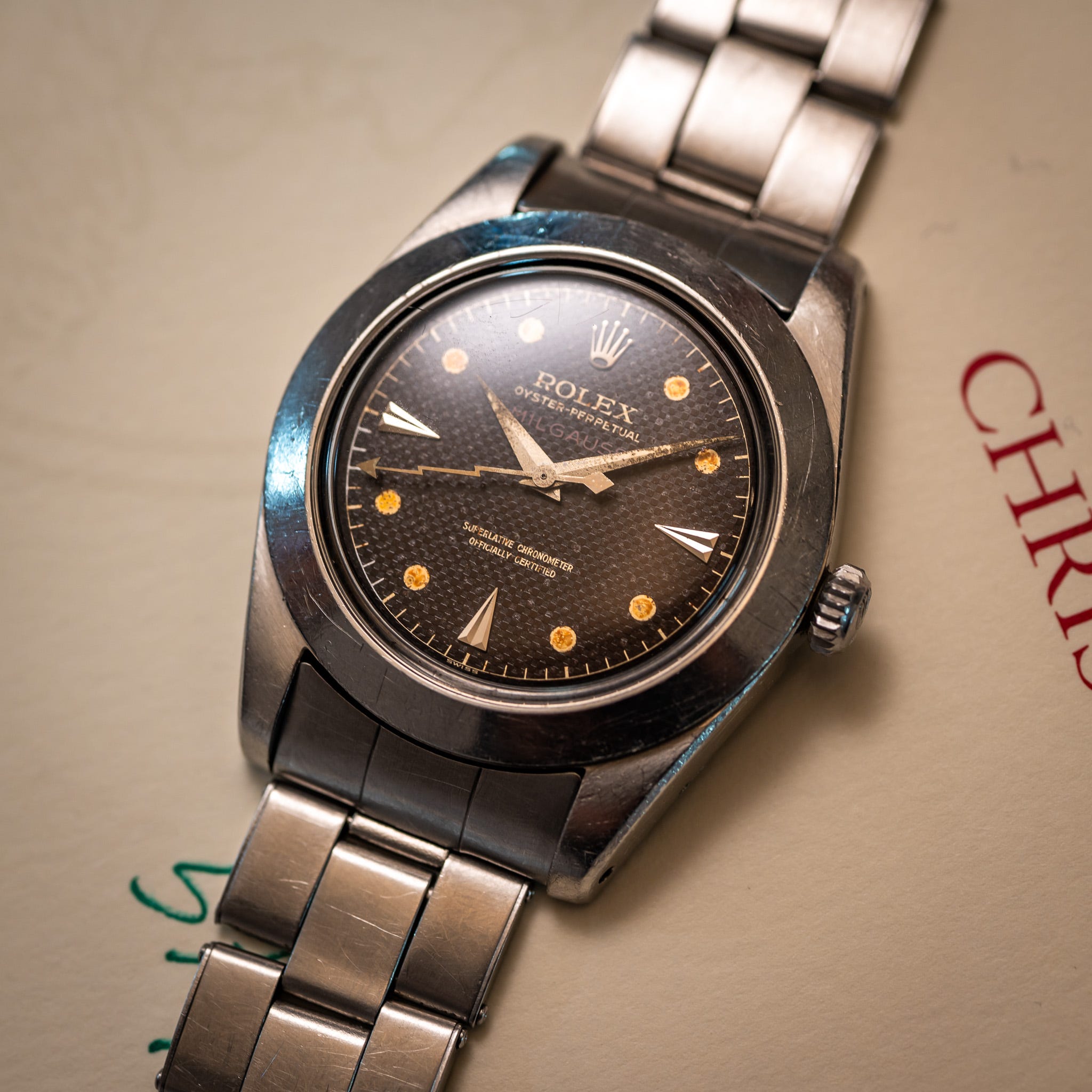
It was one of my favorite watches I saw that auction season, but it passed in the sale. The dial was slightly tropical, and there was obvious wear on the case and rust on the hands. But the entire package felt honest, the type of thing no one would bother to fake. It even came from a former CIA officer.
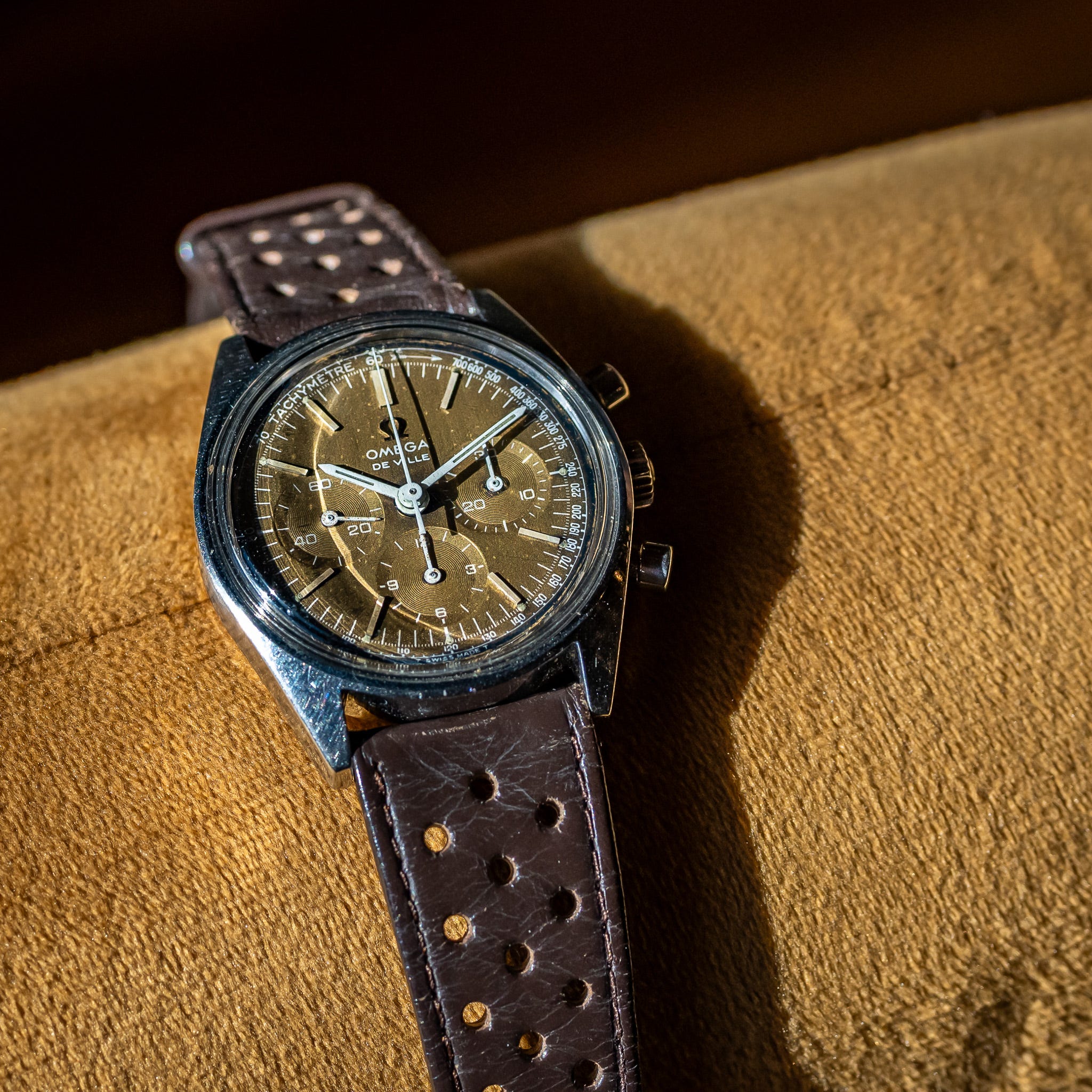
That’s the appeal of any of these tropical dials, whether today or 20 years ago:




If you’re enjoying these throwbacks:
Email me: tony[at]unpolishedwatches.com
My favorite, tap the heart or leave a comment:
"Tropical" dials are marketed for the same reason "distressed" jeans are marketed. The 'boomers who dreamed of having a countercultural life when they were kids but sold out to The Man instead wanted to buy their way into the social signifiers of an existence other than the one they led. They were, and are, willing to pay in order to look like they'd spent the past 20 years working dive boats off Antigua rather than loan adjustments off Main.
Excellent article on tropicals, Tony!! There’s nothing like a cappuccino swirl gilt tropical 1016 in the right light…