


Good morning. Before we look at some of the best—and worst—watches of 2006:
Check out the latest Unpolished Podcast with Wesley Smith of Standard H. We discuss t-shirts and how to make a good one. Then we get into watches: what bugs us about the Lange Saxonia Annual Calendar; how to fix IWC; loud rotors; a TAG Heuer Carrera we’ve both owned; and the spec sheet-ification of watches. Listen here on Substack, here on Apple Podcasts, or here on Spotify:
🎧 Podcasts will continue to be posted every other Friday, so make sure to subscribe to the “Unpolished Watches” feed wherever you listen to pods.
The Ref is a weekly story about a sometimes-forgotten watch or moment in history. Today: The future classics of 2006. Previous editions:
If 20 years is the vintage line, 2006 just crossed it.
“Vintage” is mostly another way to say “old” to make us feel better about the obscene sums these things can cost. But it does mean something—that an object has survived a generation of use, abuse, and trends, graduating from the shabbier “used” or “pre-owned” to something with enduring quality and style. Vintage commonly refers to objects 20–100 years old (100+ earns you “antique”).
It’s an elastic definition, stretching as each generation ages and becomes nostalgic for its own past. With 2006 now 20 years behind us, it’s creeping into vintage territory, or at least the even more nebulous “neo-vintage.”
2006 is the year The Departed won the Oscar for Best Picture; Carrie Underwood won the Grammy for Best New Artist; MB&F had launched but hadn’t yet released its first Horological Machine; Twitter just went live; the iPhone would come a year later. I was in high school, and I remember when we all got on facebook.com and started posting on each other’s walls during computer class.
The 2006 GPHG nominees tell you everything you need to know about the watches:
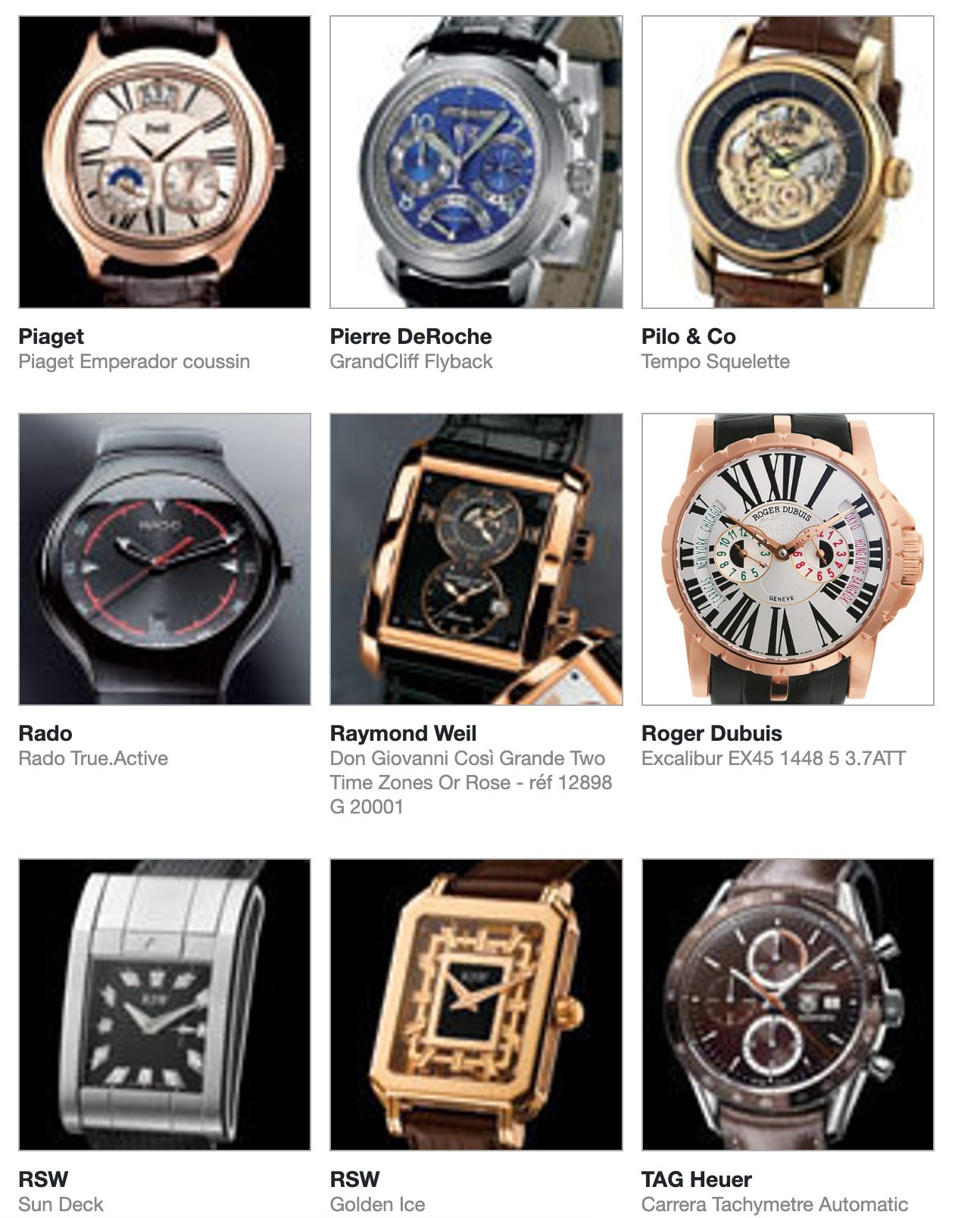
Everything was big, complicated, skeletonized, or carbon-fibered. Hublot had just introduced the world to the Big Bang. For the Reverso’s 75th anniversary, Jaeger-LeCoultre released the Complication Triptyque, the first watch with three faces.
Twenty years is also just long enough to find out how wrong a room full of collectors was. Let’s look at a few future classics released in (or around) 2006.
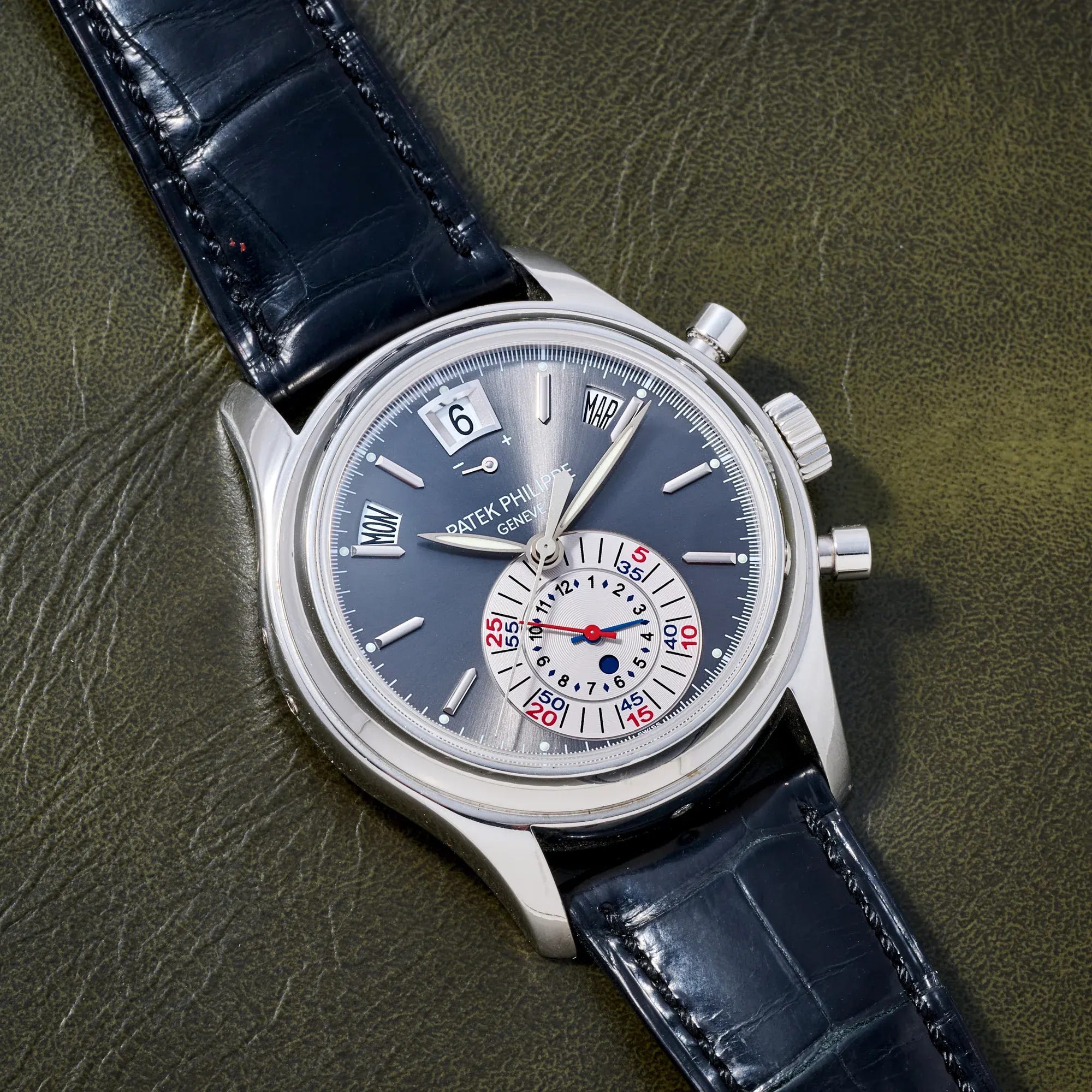
Patek Philippe Annual Calendar Chronograph 5960P
The year 2006 was also the 30th anniversary of the Nautilus. To celebrate, Patek Philippe held a special launch event for the new Nautilus collection in October, introducing the refs. 5711, 5712 (moonphase), 5980 (chronograph), and 5800 (38mm).
But those weren’t what everyone wanted.
That was the Annual Calendar Chronograph Ref. 5960P. Patek Philippe’s first in-house automatic chronograph. It’s 40.5x13mm—big and sporty and unlike anything Patek Philippe had ever made. It came a year after Patek Philippe’s first in-house chronograph, the darling split-seconds 5959.
The 5960P won Timezone’s Watch of the Year. Vertical clutch, all the counters in a single subdial at 6 o’clock. This was before Hodinkee, ABTW, and all those other blogs, when the forums were how information pinged across modems.
I’ve mentioned before that the steel 5960A—which would come along to replace the platinum in 2014—is already a modern sleeper for some, the forgotten sports watch behind the Nautilus and Aquanaut.
This is how the price chart for most of these 2000s watches looks, and the 5960P is no different:
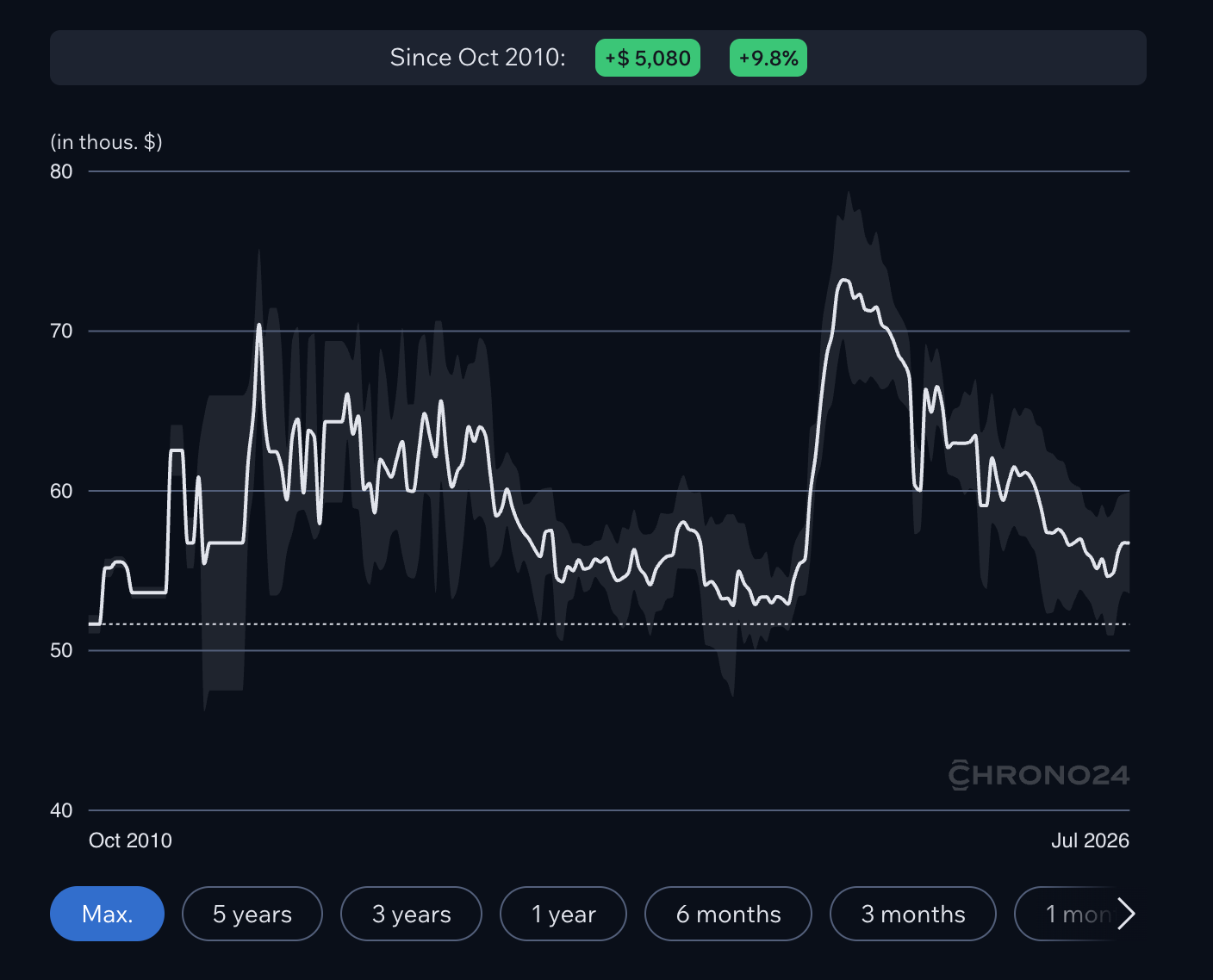
You can find dozens on the market at any given time. Right now:
Those are probably top of the market, and you can certainly go dumpster diving on C24 and find one for less.
The 5960P is exactly the kind of Patek Philippe people aren’t paying up for right now. It’s beefy—not thin like the 3940 or 3970 or 5711—but that’s what makes it very 2006.
H. Moser Perpetual 1
H. Moser & Cie. relaunched in late 2005, after Dr. Jürgen Lange and Roger Nicholas Balsiger, Heinrich Moser’s great-great-grandson, founded Moser Schaffhausen in 2002. There were three watches: the Monard (three-hander), Mayu (small seconds), and Perpetual 1.
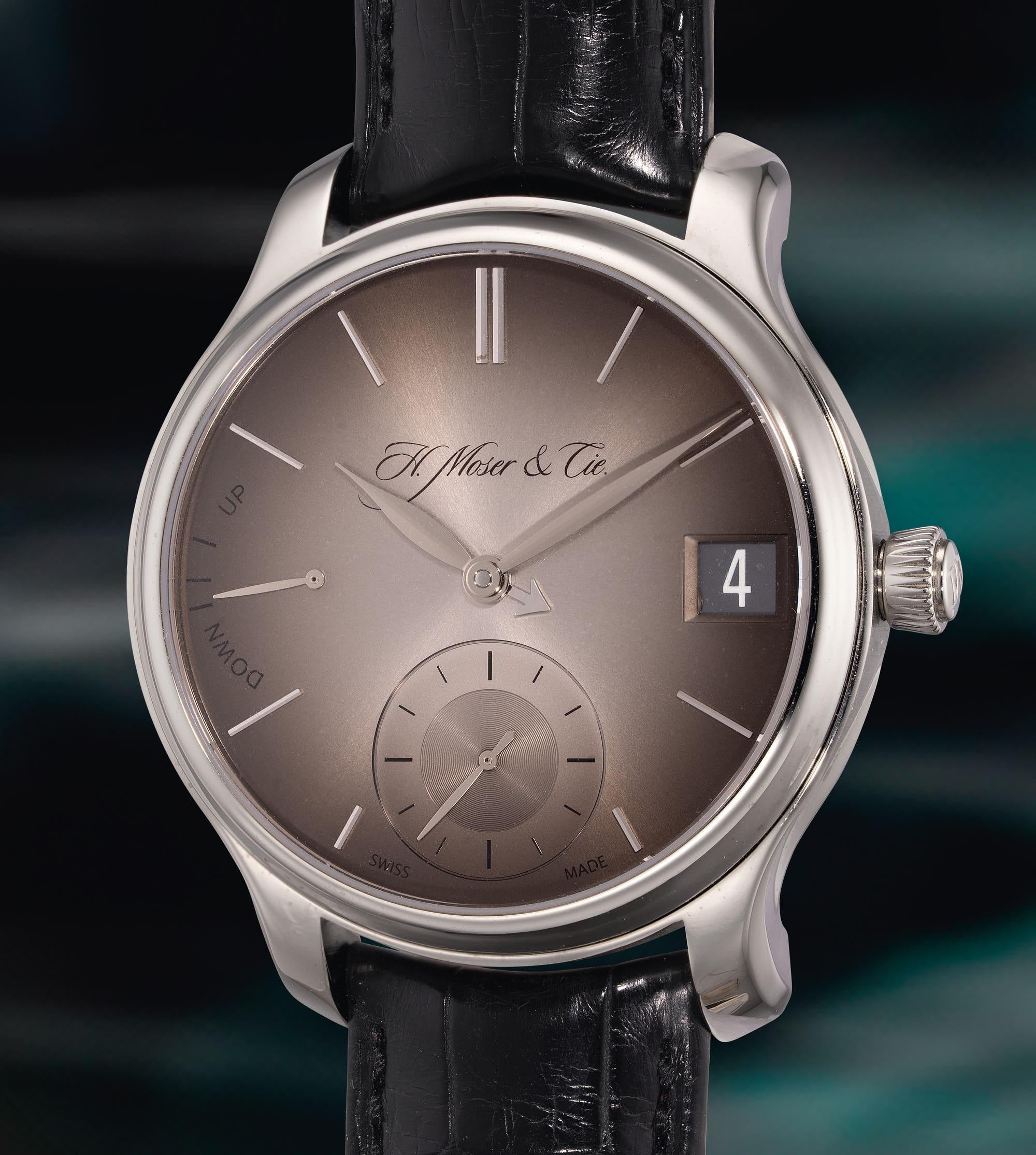
The Perpetual 1 was the breakthrough. Independent watchmaker Andreas Strehler helped develop Moser’s early watches, and his penchant for hidden complexity is on full display with the QP.
It’s minimal: that tiny hand indicates the month by pointing at the hour markers; a leap year wheel is visible through the display caseback. The calendar can be adjusted forwards and backwards, a technical trick some other brands are just now getting around to, 20 years later.
The Perpetual 1 (ref. 341.501) won the GPHG Complication Award in 2006.
The Meylan family acquired Moser in 2012—Edouard Meylan has said the company was a “mess financially” when they took over. The Meylans reduced headcount from 75 to 30 employees, sold machines, and stopped producing movements that were either unreliable or unsustainable.
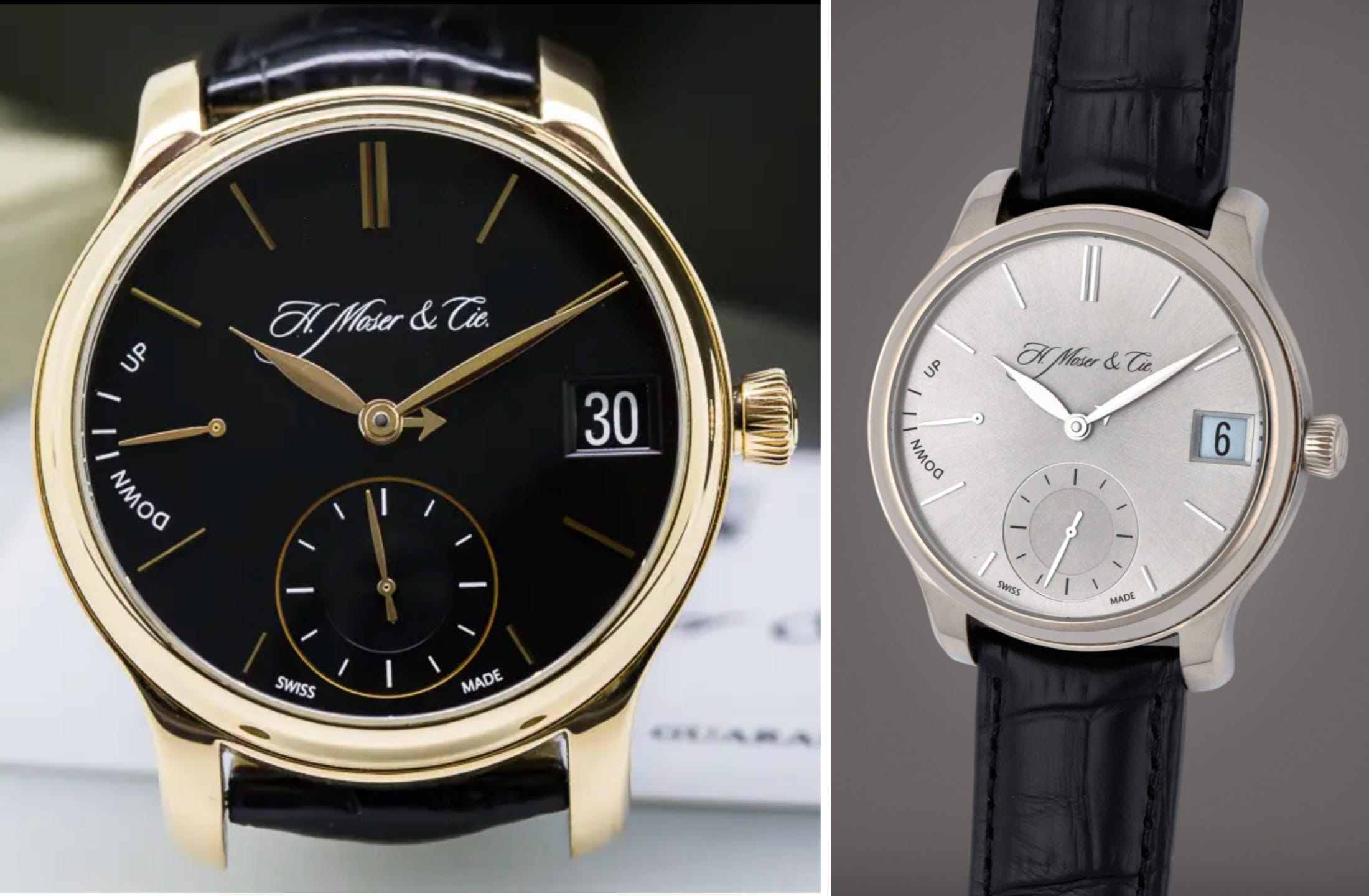
During these early years, Moser was producing just 1,000–1,200 movements a year, mainly focused on its simpler models. The Perpetual 1 would’ve been a fraction of its output, mostly limited to gold, platinum, and palladium. Moser used the original perpetual calendar cal. HMC341 until 2016.
Collectors always love firsts, and as Moser continues to grow, there’s a world in which we’ll refer to pre-Meylan Moser the same way we talk about pre-Vendome Panerai or Roth-era Breguet. Not necessarily because the watches are better—early indies are often unreliable—but because they’re the foundation of something bigger.
More cataloging of these early years is needed to understand what’s what, but prices are still reasonable:
Below: Future classics from Lange, Rolex, and Breguet; and, which watch brand had the worst CEO in the 2000s?
