


Good morning. In today’s newsletter: A hands-on look at one of my favorite low-key releases this year; beginner tips for buying vintage watches; the secret White House watch; where Hitler’s Reverso ended up (it’s gross); another Berneron Mirage; how vintage fashion is changing the economics of luxury.
Since Screwdown Crown asked yesterday: I’d never (ever!) buff out someone else’s engraving. I’ve owned multiple watches with inscriptions from previous owners, and it only adds to the story. Look, I think some dealers are a bit too precious about “originality.” Polishing out an engraving isn’t the same level of criminality as refinishing a dial, polishing scratches off the lugs, or Stalin airbrushing enemies out of his photos. But it’s also not not that.
👉 Unpolished doesn’t run brand ads. Members get: (1) Welcome Care Package; (2) 10% off the Unpolished Store; (3) $50 off a Watchcheck service + comments and Q&As. Benefits info HERE.
The Roundup
✍️ So you wanna buy a vintage watch? A cool Parisian stylist asked me to share some basics for shopping vintage watches in her newsletter. I find these exercises harder than writing, say, an in-depth article about some fancy and complicated Patek Philippe. Some tips, dealer recs, and red flags—read with this gift link.
😅 Mansions, Jets, and the Secret White House Watch: The New Status Symbols of Trump's Washington. Here’s the best lead I read all week, from Vanity Fair:
“The ultimate marker of status in Donald Trump’s Washington is a custom Rolex, which is curious because Rolex no longer offers custom watches. These exclusive timepieces…were purchased and then modified by a bespoke operation in London. There are two options: a gold Day-Date Presidential and a GMT Pepsi, both with blue faces and the gold seal of the president. At the 45- and 47-second markers sits a star. On the back, there’s an engraving of the White House.”
😵💫 Another Berneron Mirage on Loupe This. Auction ends Friday; current bid is $200k. Again, these have become assets, allowing buyer and seller to exchange access for capital (and vice versa).
🫠 If you wanna feel your skin crawl, apparently this is where Hitler’s Reverso ended up. It made headlines for selling at a Maryland auction for $1.1m in 2022. Now it’s owned by a “gallery” that tries to romanticize and reframe fascism through aesthetics.
👖 Vintage fashion is changing the economics of desirability. (Bloomberg)
Resale prices have become a running referendum on a brand. A brand can set the retail price, but after that, the secondary market does, in what’s basically ongoing free-market price discovery. According to Bloomberg, 60% of shoppers look at resale value before buying fashion items.
It’s the same in watches. One of the most common questions I get is, will this hold its value? I’ve gotten it about a $6,000 Chris Ward and about vintage Patek Philippes with another zero or two on the price tag.
I don’t judge the question. Watches are expensive, and it’s part of my checklist, too.
Brands can try to manufacture scarcity with limited editions and waitlists. But Bloomberg points out that, counterintuitively, scarcity isn't what holds prices up over the long run:
“Fashion is a bit like art or watches (Rolex) in that, weirdly, more widely available items often have the highest prices on the secondary market, reassuring buyers that if they ever want or need to sell, they’ll always be able to find a buyer. Abundance creates liquidity, which creates value.”
Rolex makes 1m+ mechanical watches a year, more than any other Swiss brand, and still holds its value better than most.
Something I’ve thought about is how much resale platforms flatten a watch into two properties: Brand and Price. Look at Chrono24 or any other site, and these two pieces of information get the largest font. Everything else is secondary.
Meanwhile, boutiques are far from perfect, but they focus on story and experience. The sales associate goes into their overwrought pitch, you try on the watch, the sales associate tells you how good it looks on your wrist as you look in the mirror. We all know the choreography. Price is usually hidden on a small tag, or nowhere at all.
But none of that choreography translates to Chrono24.
👏 Congrats to Watches of Espionage on launching its first collab watch with Marathon. Also Marathon’s first titanium watch.
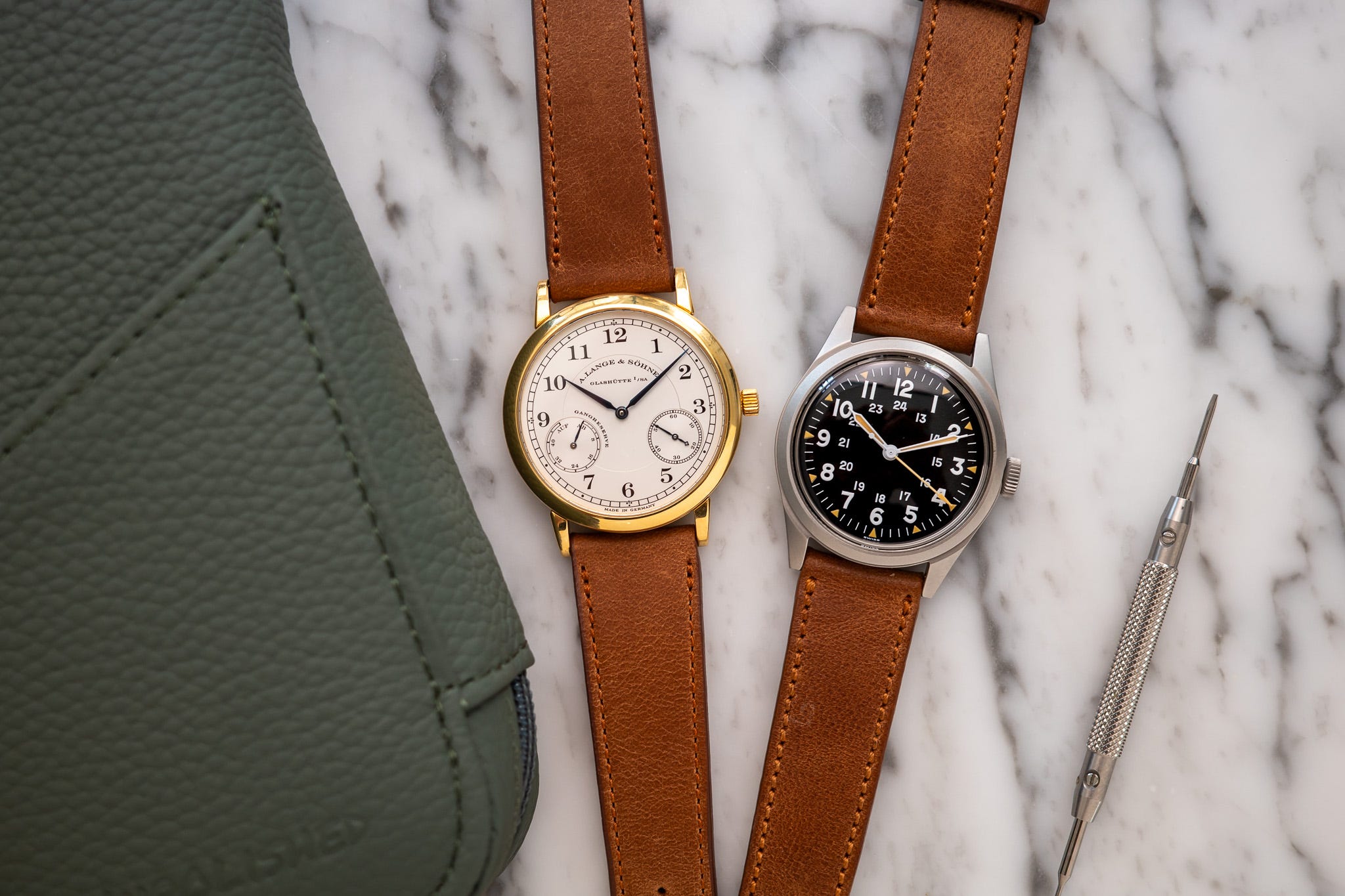
Here’s why the Matte Calfskin is my favorite leather strap: Looks good on Lange, looks good on Benrus. Available in Chestnut, Slate Blue, and Stone Grey:
PRESENTED BY THE COCONUT GROVE WATCH & JEWELRY SHOW
The Coconut Grove Jewelry & Watch Show is back for its second year, November 13–15 at The Hangar at Regatta Harbor. Same team behind the Original Miami Beach Antique Show—one of my favorite vintage shows every year—with a global roster of antique, vintage, and estate dealers.
Tickets are free when you use promo code UNPOLISHED at checkout:
Real Review: H. Moser Streamliner 34
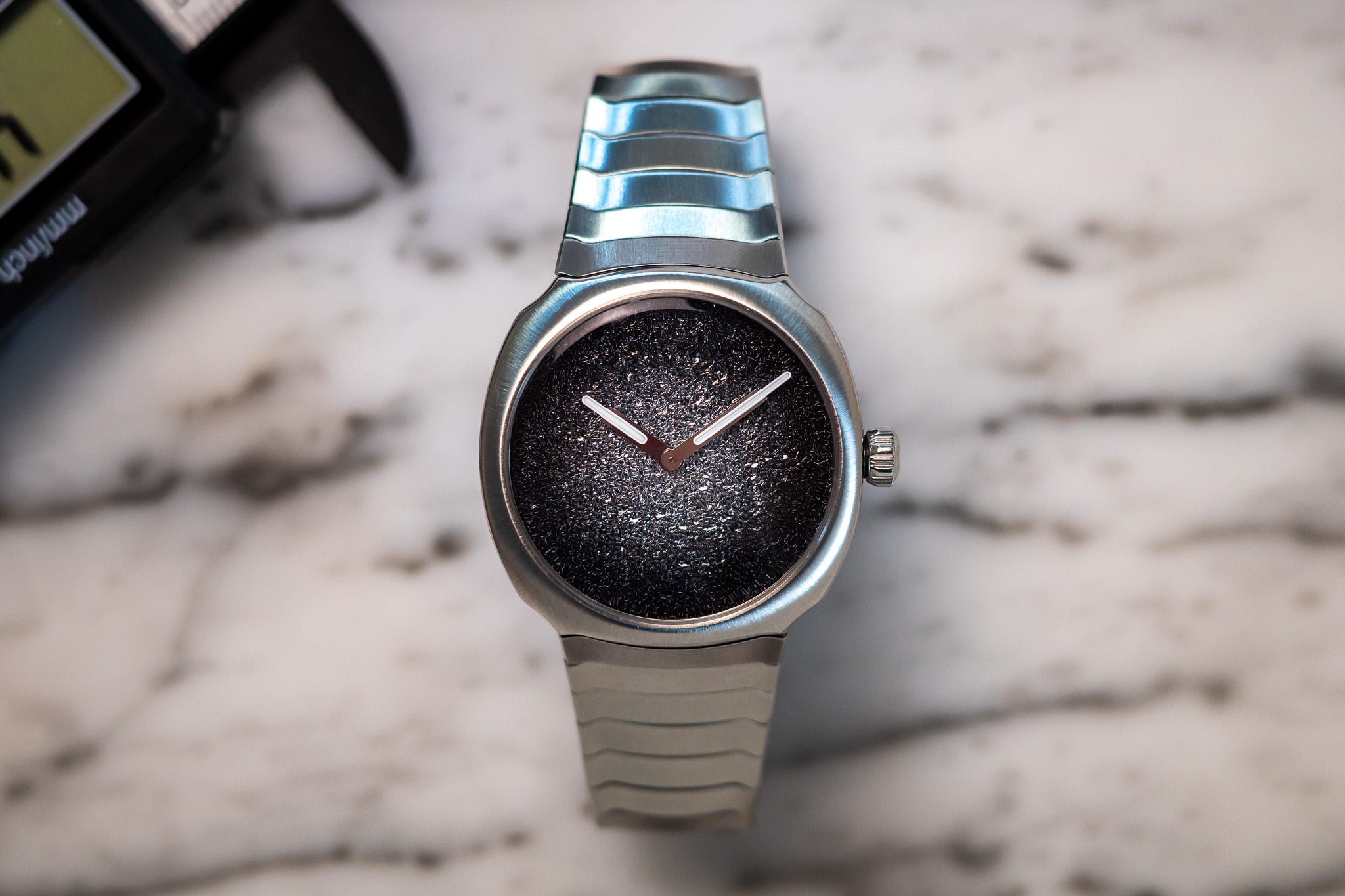
The new H. Moser Streamliner 34 impressed when I compared its movement to other sized-down integrated bracelet watches. Many brands put lesser movements in their smaller watches. But not Moser.
Calibers are important, but they’re hardly everything. As one commenter noted on that piece:
“I know you’re focusing narrowly on the movements but it’s frustrating to me, as someone who wants to want them, how often the midsize watches are also aesthetically compromised. The VC, the Ingenieur, and the Parmigiani are all awkwardly proportioned in the midsize versions. The bezels and bracelets are too wide (IWC and VC), or the diameter/thickness ratio is messed up….”
Totally agree!
When visiting New York shortly after that article, I picked up a sample Streamliner 34, introduced in April, and spent a week wearing it around.
The entire package lives up to the movement inside, even though I’m hoping for a few changes in future evolutions.
Armadillo mode
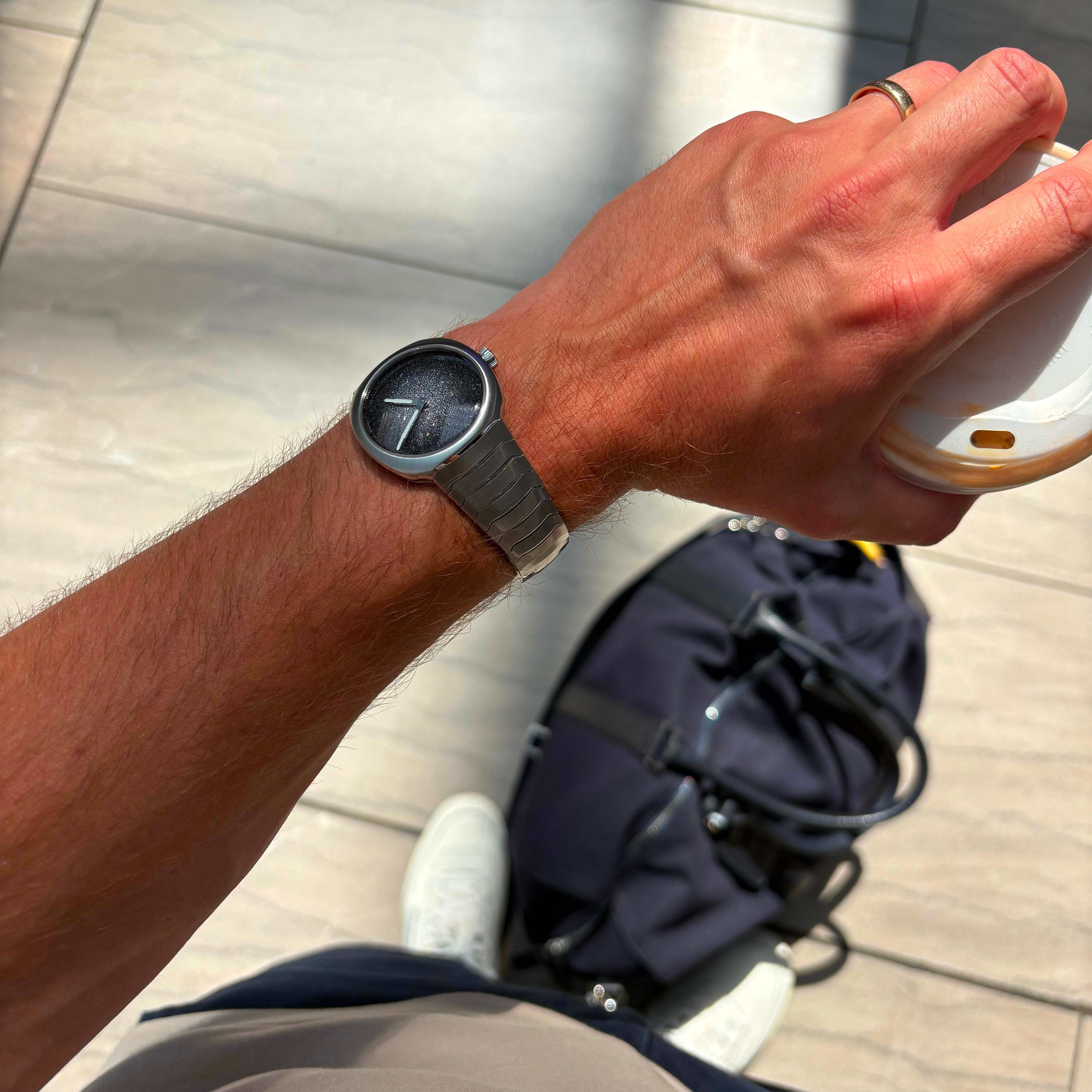
The Streamliner Two Hands is 34x9.7mm. The case is as tall as it is wide, but the effective lug-to-lug is ~41mm since the first lug doesn’t articulate. It wears on the smaller side on my 6.3-in wrist, but that’s how I like these bracelet watches to wear. Too big and they feel too conspicuous.1
I often hear that the Streamliner’s bracelet is one of the best in the game. I’ve understood this intellectually—words like articulation and finish are peppered throughout most reviews. But I hadn’t been able to really experience it on my wrist, since previous Streamliners simply felt too big for me.
More than some of the other integrated bracelet watches, the Streamliner works at a smaller size. Those original “Jumbo” Gérald Genta designs of the 70s are meant to be audaciously big and surprisingly thin.
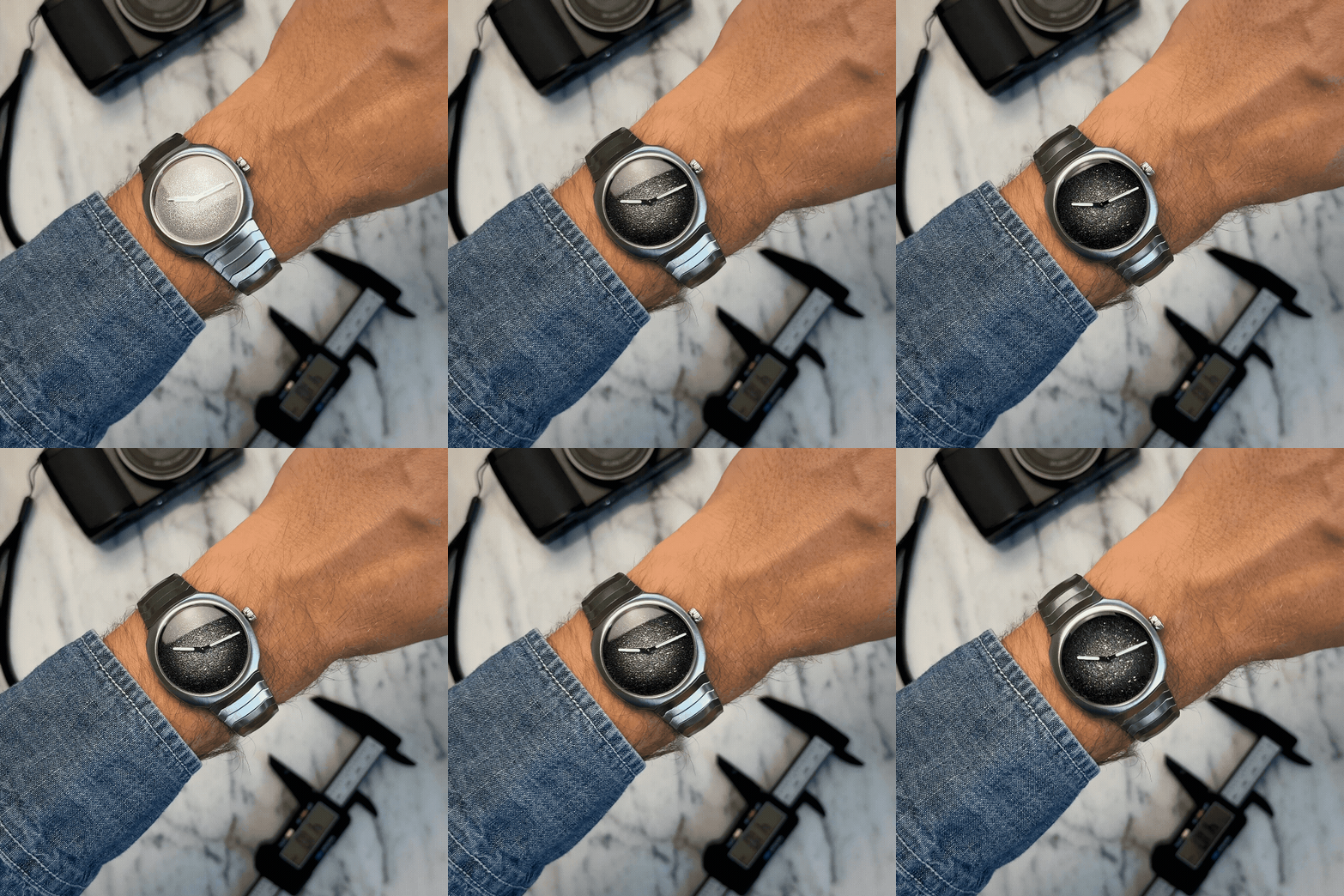
The Streamliner has a more organic, bulbous case and bracelet design, with a more flowing shape than its comps.
Justin Hast has noted that a former IWC designer now works across town at Moser Schaffhausen. I see echoes of IWC / Porsche Design’s epic bracelets in the Streamliner, perhaps with a sprinkle of the Ebel Wave. Check it out next to the Ocean 2000, one of my favorite neo-vintage tool watches. Both very armadillo-like:
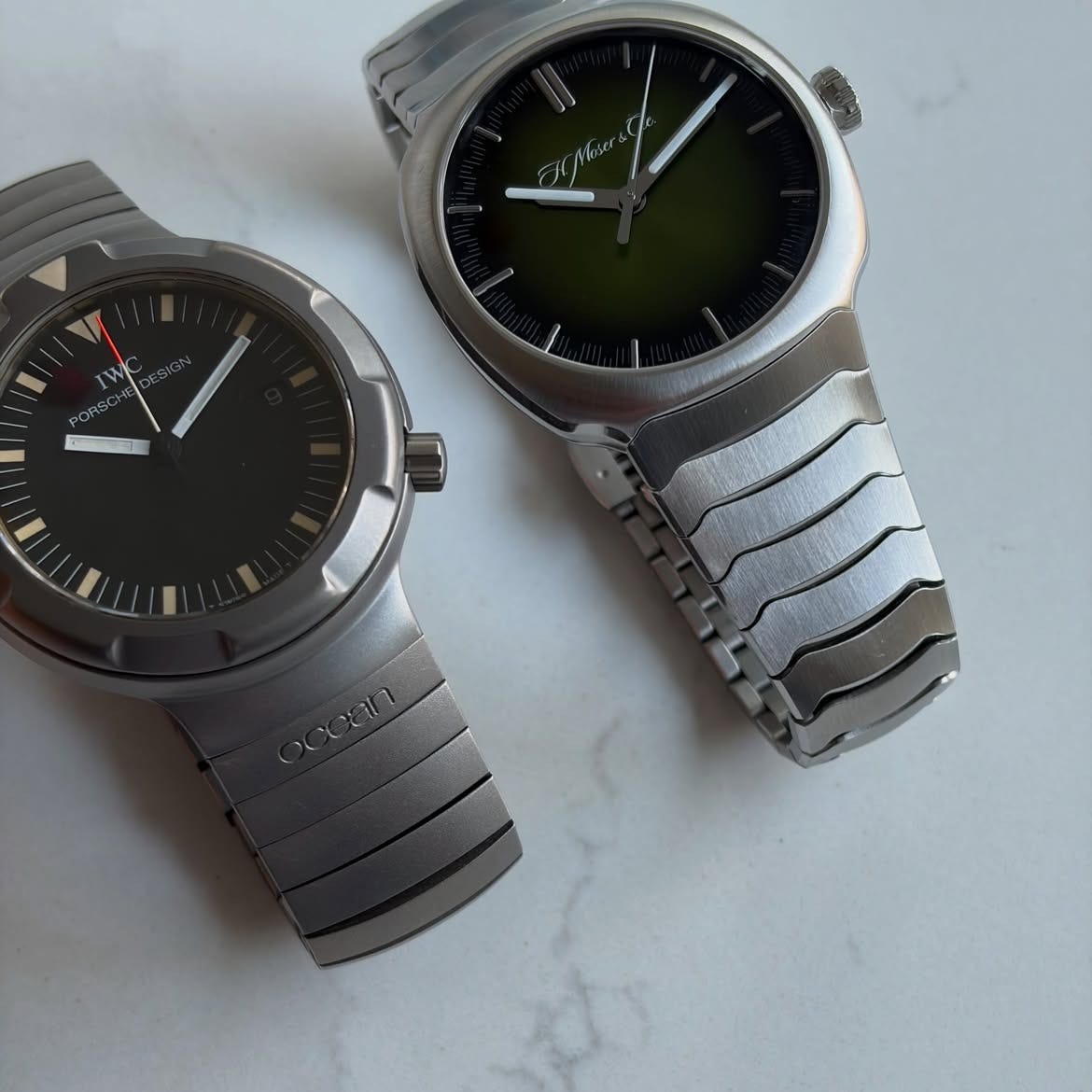
The bezel is radially brushed, the bracelet vertically brushed, and the bevels on the curved links are polished, which seem to reflect light into its grooves as it moves. This gives the bracelet a natural, ripple-like effect.
One miss: Moser also offers a quick-adjust clasp for the larger Streamliner, an add-on instead of the standard butterfly clasp. To my knowledge, this isn’t offered for the Streamliner 28 or 34, at least not yet. I’d wear the Streamliner slightly large in the morning, but it fit perfectly by about 12:15pm.
Other specs: The Streamliner 34 still has a screw-down crown and 120m of water resistance. Luminous hands but no markers. It’s a funny mix of refusing to compromise on certain aspects of a “sports watch” (screw-down crown, lume), while totally doing away with others, e.g., the lack of a seconds hand or markers means you can’t tell time to the second.


Dial: It’s got all of Moser’s classic cues: fumé sunburst, no branding, no markers, which all make sense for a smaller Streamliner. It’s nicely executed, but the dial felt mismatched to me. The texture feels too rough for the Streamliner’s organic shape, especially at the smaller size. The silver fumé pattern can reflect light in all kinds of different directions, but the monochromatic treatment is just kinda boring. I like the burgundy fumé of the 28 more.
Moser has made so many good dials—it does a nice enamel, and I even like its stone dials more than others—so no doubt there’ll be variations soon enough. The smaller Streamliners are also natural candidates for gem-setting, which Moser’s done in the larger Streamliner.
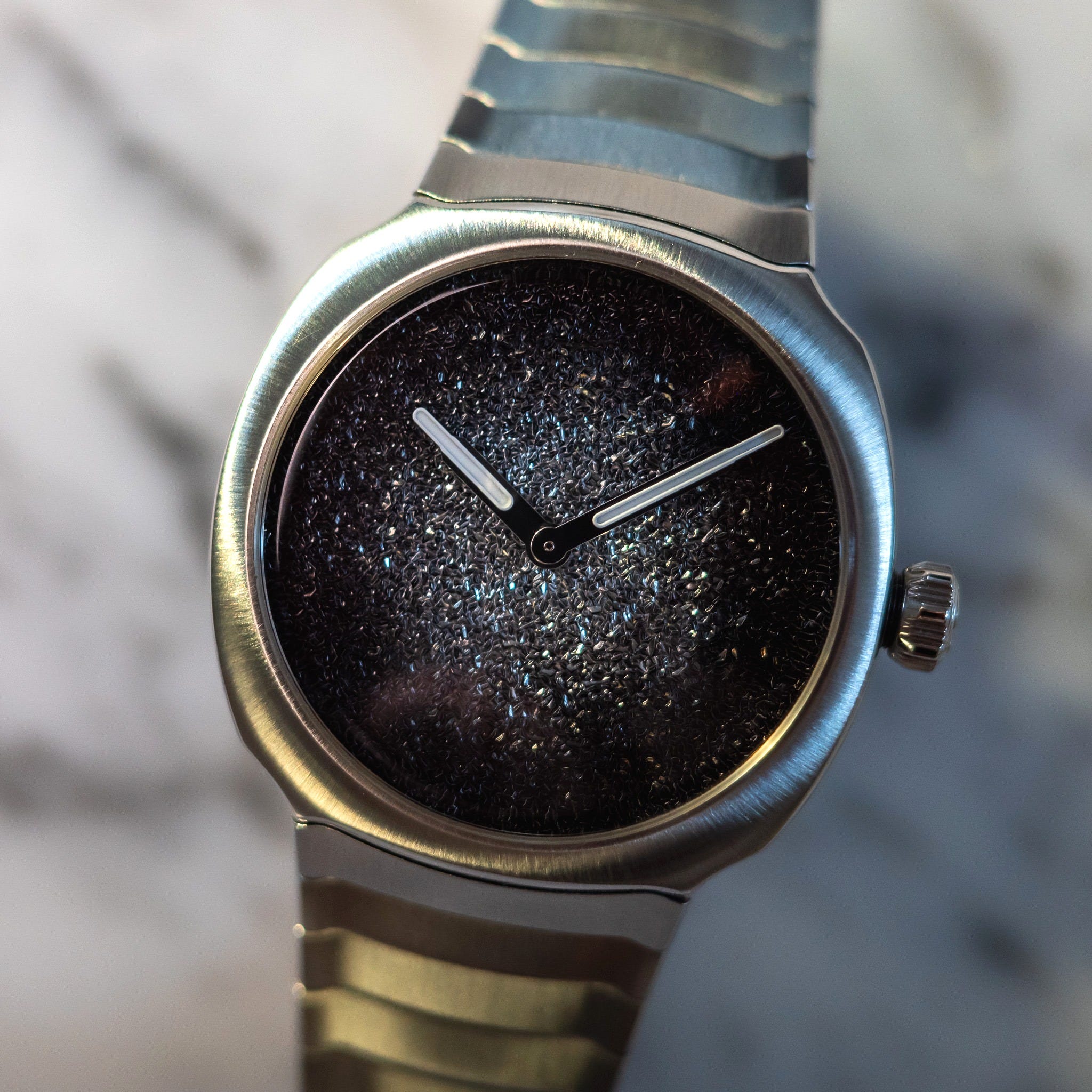
Movement: Moser made its own in-house movements for both the Streamliner 34 (HMC 400) and 28 (HMC 410). Most brands are using off-the-shelf suppliers or existing movements for these smaller watches. It means they can react to the “trend” more quickly, but the watches can also feel half-baked.2
It’s not the outsourcing that bothers me—there are plenty of great third-party movements—but what it says about where effort goes. Brands can talk at length about offering more sizes for more wrists, but R&D and new movements are still for Big Watches.
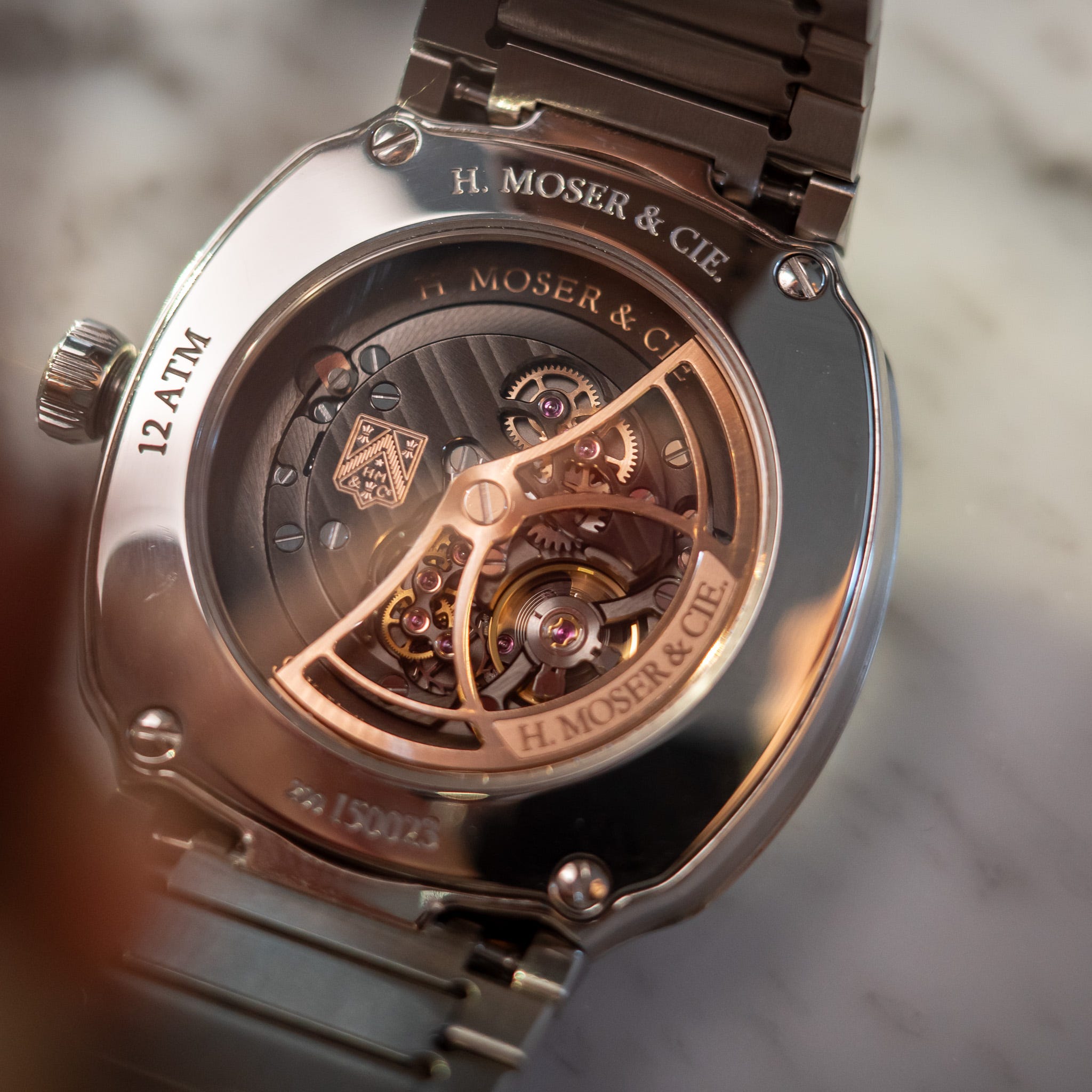
Moser took the time to build the new HMC 400 like its other movements: its double stripes, gold rotor, skeletonization, freesprung balance.
Price: You pay for these privileges. The Streamliner 34 is $27,600. Right between a Royal Oak 34 ($29,200) and the Overseas 34.5 ($26,600), both of which use customized, outsourced movements (AP’s is fine; Vacheron’s is disappointing).
It’s the exact same price as a Streamliner 40, and I respect Moser’s confidence to communicate that you’re getting the same quality watch, just smaller. Too many brands price their small watch at 90% of the price, but you get like 60% of the specs.
Part of Moser’s appeal has been its pricing below those traditional names. No longer. The mechanics earn it, though I couldn’t help but think that this watch would be a screaming value at $20k. Still, I felt cool every time I put on the Streamliner 34, and it’s hard to put a dollar amount on that.
I’ve just started seeing them pop up on the pre-owned market, usually about 10% below retail. Moser’s young enough that its secondary market is still developing, and it’s currently navigating the jump from an indie with a lovably subversive sense of humor to a full-blown brand.
Late but right
Shrinking down a sports watch isn’t easy. A lot of brands compromise on movement. Most of the others get the proportions wrong.
It took Moser a few years to hop on the small watch trend. But by taking their time to develop a new movement for the Streamliner 34, Moser has made something that doesn’t feel like it’s trend-chasing.
More Moser:


It’s been a big year for Moser. Releases in all kinds of directions, its first Watches & Wonders moving from the indie hall to having a standalone booth. Let me know what you think of its growth in the comments.
—Tony
P.S., the new ana-digi Off-Grid Moser released yesterday looks kinda cool!
It is funny to me how many of these brands seem to jump from a 34–35mm midsize option to the “standard” 40–41mm option, completely skipping over what I think of as the Goldilocks zone for many of us.
Bulgari is the other notable exception that developed an impressive movement for the new Octo Finissimo 37.
Gift link isn’t working. Also, the Hitler watch 🙁🤮
I'd have bet on that being your answer ref engravings :)
Also very surprised to learn you found that dial boring... but I've not seen that one in the flesh, so now I'm curious.