


Happy holidays. I’m back in Chicago, which means:
📪 Straps are shipping again. Get free U.S. shipping until the end of 2025, and grab the Matte Calfskin straps for $100 before prices increase in 2026. Shop the Unpolished Store.
🎁 Holiday Giveaway: Remember to become a paid subscriber or renew by Jan. 7, 2026 to enter a giveaway. Winners will get: (a) an Unpolished/Veblenist Valet Tray, (b) 2 Farr + Swit Retro digital Watches, (c) 2 Unpolished hats, and (d) 6 straps, one of each color and lug width for the Canvas and Calfskin offered in the Store.1
Subscribe or manage your account here.
In today’s newsletter: A favorite obtainable release of 2025, how to start collecting vintage Cartier, and how will we collect watches in 50 years?
👑 Rolex price increases for 2025 are here. In general, Rolex’s steel watches have seen lower price increases than the rest of the industry, while prices for its gold watches have risen more steeply to keep pace with material costs. A steel Daytona will cost $16,900, up from $15,100 when the new version was released in 2023. I’ve got the whole U.S. price list if you’re curious about any specific watches…
📚 An oral history of Patek Philippe from Alan Banberry, who helped shape much of that history. (Collectability)

My favorite 2025 release you can actually get.
When thinking about watches that defined the year, I try to find a few that are obtainable, in terms of accessibility and price. For example, the Vacheron Constantin Solaria or that clock might be the most impressive releases of 2025, but neither is likely to be bought by you or me anytime soon.
These were part of a broader theme: 2025 was mostly a year for watches that were expensive, complicated, or both. Brands are catering towards the super-rich, something of a broader trend. There’s the good of that: We’ve seen some crazy complications and exciting innovations. But there’s also the bad: You can’t keep selling to these same VVICs.
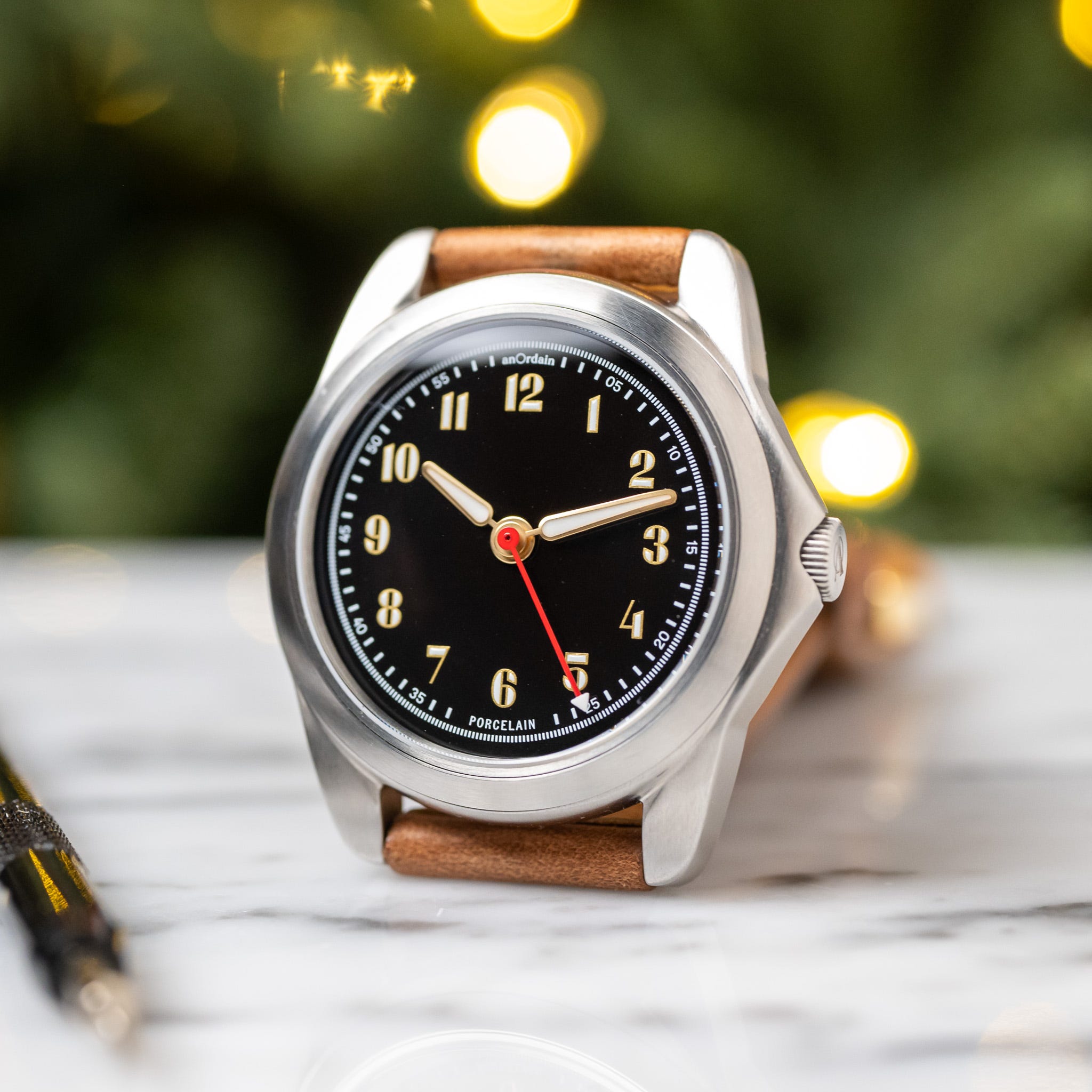
Recently, I spent a couple of weeks with the new AnOrdain Model 2 Porcelain. It turned out to be one of my favorite obtainable releases of 2025.
Scottish brand AnOrdain was founded in 2015 and has become known for its enamel dials. When I interviewed founder Lewis Heath in 2024, he said AnOrdain was producing 45-50 watches per month, entirely constrained by their ability to make those handmade enamel dials.
But demand is much higher, which means a waitlist that stretches out for years. I’m on the list for an AnOrdain enamel that’ll arrive, I think, sometime in 2027.
That’s where porcelain comes in. While it’s still a traditional craft, AnOrdain says porcelain dials are made in batches, allowing for higher production. For perspective, AnOrdain says it’s making 35-40 porcelain dials per month to start, but that’s all from one artisan; back when Heath told me they were producing 45-50 enamel dials per month, they had seven enamelers.
As for the porcelain dial itself: The glaze gives it a deep, glossy black. The richness reminds me of an old glossy-gilt dial. Only up close and at certain angles can you see the texture of the porcelain. The applied numerals use a custom font that’s filled with lume—it’s this look that’s a balance of Art Deco and modern. While I was wearing the Model 2 around, someone told me that it “kinda looks like those Bubblebacks you like,” which makes some sense.
The Model 2 case has a distinctive, chunky shape. Not truly round, but it works for AnOrdain and its “new hands, old crafts.”
There’s not much else on the dial. Even the “AnOrdain” wordmark is hidden in the minute track above 12 o’clock. I wish more brands had the self-confidence to eliminate unnecessary text.


The new AnOrdain Model 2 Porcelain is ~$2,600 on AnOrdain’s website. It’s right around where I’d also recommend looking at Nomos, and just below watches from bigger Swiss brands like Longines or Tudor. It’s hard to think of a watch at this price with more character.
As I wrote last week, an emphasis on “craft” was one of 2025’s themes. AnOrdain is proving this doesn’t have to be synonymous with expensive—something I hope we see more of in 2026.
Further reading:
My 2024 interview with AnOrdain founder Lewis Heath
WHAT PAID SUBSCRIBERS ARE READING: UNPOLISHED INDEX 2025
Watch reviews that actually rate watches:


Q&A: How to start collecting Cartier; how will we collect today’s watches
There were a lot of good questions in the December Q&A, a few deserved longer answers in this year-end mailbag:

Q: If I wanted to explore neo-vintage or vintage Cartier, what’s the best place to start without breaking the bank? Let’s say sub $15k ideally? –Marc
A: It’s a good budget to get started in Cartier. Enough to get a real watch (none of that Must de Cartier stuff), but not so much that you’re gonna make a big mistake, which you certainly can in Cartier. Two eras to look at:
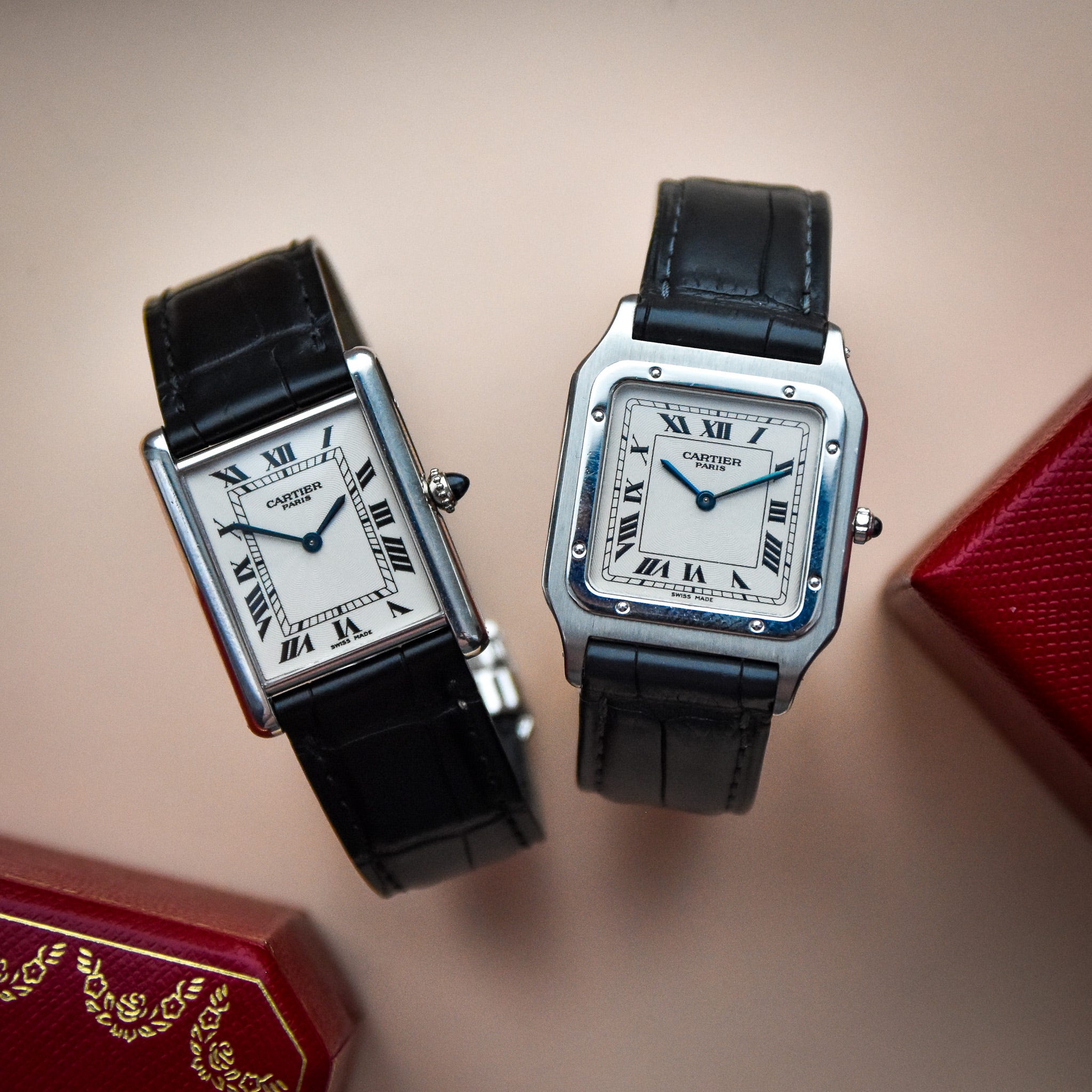
CPCP. First, the neo-vintage CPCP (Collection Privée Cartier Paris), made from 1998-2008. It’s where I started, and these watches simply feel higher quality than the 1970s watches I’ll discuss below. You typically get a guilloche dial, ultra-thin F. Piguet movement, and there’s tons of variety. This ACM article provides a solid intro to the CPCP era. Throughout the 1980s, Cartier had become known for quartz, fashion, and the Must de Cartier line. The CPCP was a refocus on its historic designs that had been left behind, using high-quality movements from Piguet, Jaeger-LeCoultre, and even complications from new independent makers like THA (Journe’s old company). It’s an important moment for Cartier watchmaking. Under that budget, look for classic shapes like the Tank Louis (refs. 1600, 1601) or Santos-Dumont (ref. 1575). Some are numbered limited editions, while others are numbered but not explicitly limited. You’ll find two varieties:
Pre-CPCP: Technically, some of these references came along before the CPCP program began
CPCP: Most easily distinguished by the Paris signature below Cartier at 12 o’clock
1970s. In 1973, Cartier introduced the Louis Cartier collection, which started as a collection of 12 watches bringing designs from Cartier’s golden years into serial production, while also introducing new designs. Most 1970s Cartiers in yellow gold are < $15k. I’d recommend the Tank Louis ref. 78086 (the classic Tank), which you can find all day long for ~$10k. Poke around Pushers and you’ll find these from guys like Wes (Collector’s Corner NY), Rawad (Huntington Company), Keystone, or others. Many of the other 1970s Louis Cartier collection watches are also under this price (Ceinture, Baignoire, Tortue), though often harder to find, which can also mean harder to sell. My 1970s Cartier Guide on the Mothership is a good place to start. Look for cases where hallmarks are still visible, and the white enamel dial doesn’t have cracks.
I put the question to dealer Mike Nouveau, and he agreed: “70s Tank Louis, or a 70s-80s Normale if you can find one.” A good Tank Normale ref. 78092 probably comes in right around $15k.
Finally, find an opportunity to try these on if you haven’t, because they are small and thin. If you can’t, go to a modern boutique and imagine them about 20% smaller. For example, the modern Medium Tank Louis is 34x25, compared to the traditional 30x23mm.
Where not to start: I would not start with pre-1970s Cartier because (1) $15k doesn’t get you much, and (2) it gets tricky and easy to make mistakes.
Q: In vintage, the endless rabbit hole of research and discovery in reference marks and dial/bezel/hand variants are so motivating for collectors. What do you think could be the motivators for collecting this current generation of watches in 50 years? –Mason
A: This era may come to be looked at as a time when watches found a new identity. Luxury became more industrialized after the 1990s and early 2000s, when conglomerates acquired brands, bought suppliers, and got bigger. It’s post-digital, post-Apple Watch, and long since recovered from the Quartz Crisis. I have a broader belief that we’ll continue to place greater value on analog, on physical things that exist in the real world.
Collectors will want to own a piece of the era when mechanical watches became a new kind of cultural object in that lane. We have a fetish for firsts, which typically places a premium on a brand’s early era. It’s happening in the neo-vintage era right now:
Collectors don’t want any Lange 1, they look for an early, closed caseback Lange 1.
Breguet buyers place a premium on “pre-series” watches from before it was acquired by Investcorp.
This could manifest in a few ways in the current era:
Early mechanical and material innovations: Silicon, new escapements, and material experimentation.
Second wave of indies: Not only Rexhepi, Brette, or Berneron, but the audacious indies that don’t get as many headlines: Gauthier, Chaykin, Greubel Forsey. Specifically, from their early years, before production scales up.
Collaborations that actually say something about this era, like the MB&F LM-101 for Hodinkee.
Many vintage rabbit holes are the result of unintended variation and rarity. Nowadays, rarity is often manufactured with limited editions or artificial scarcity. Part of the appeal of collecting is that it rewards the discovery of this unintended variety, which I assume will continue. For example, in 50 years, will the unloved Tudor P01 become more “collectible” than the hyped-up pink Black Bay Chrono?
In that sense, future collectability may hinge less on perfection than on authorship—watches that clearly reflect the taste, limitations, or stubbornness of a single person rather than the smoothing hand of a committee. In an era defined by optimization and scale, the slightly awkward, underdeveloped, or misunderstood watch may end up feeling the most real.
The paradox of modern collecting is that there’s more information than ever, yet we’re still chasing the unknown. In 50 years, collectors will be doing what they’ve always done—trying to find the watches the rest of us ignored.
END NOTES
📢 Thanks to Zach from Worn & Wound for the shout in his piece about “the changing shape of watch media.”
🎧 The most popular Unpolished podcast of 2025. After last week’s year in review, both Apple & Spotify told me the most listened to Unpolished podcast of the year was “How to Collect Neo-Vintage Watches” with Ben from Watch Brothers London. I liked the “How to Collect” format—it’s similar to this Calatrava episode I did with the Mothership—and it’ll return in 2026. Check out the episode below or follow the feed on Spotify / Apple / RSS:

How to support Unpolished: If you’re enjoying the newsletter, tap the ❤️ on your way out, leave a comment, or buy a strap from the Unpolished Store.
All current and new paid subscribers will be entered to win. Unpolished launched on Jan. 6, 2025, so if you subscribed then and auto-renew, you’ll be automatically entered to win.
I agree with everyone that it’s impossible to truly predict what will become collectible. I believe the broader history of an era will play a significant role. For instance, the year 2020, marked by the COVID-19 pandemic and the surge in social media hype, would undoubtedly be fascinating in 50 years, as it would have spawned watches designed to capitalize on that trend. From the Eric Wind site in 50 years: “honest condition Moonswatch in desirable Neptune theme. Bioceramic appears unpolished. Comes with original hook-and-loop fastener strap. We do not know its service history but it is running well”
I read that although Pre-1970’s vintage Cartier were bespoke and handmade, that these watch cases have hollow air gaps (so as to save on gold) are more fragile to dents and knocks, most movements don’t have shock-protection, albeit that these watches and movements were finished with a little more quality.
Although the watch nerd in me might find pre-1970’s Cartier romantic, personally I think a 70’s Tank LC collection (and any mechanical Cartier up to around ~2000) scratches the itch without me having to worry about paying a premium for what is essentially an museum artifact that is even more susceptible to humidity, shock and damage, and keeps poor time (Auro Montanari said he doesn’t even wear his old Cartier because of this reason).
The Cartier 78-1 (ETA 2512 movement) might seem “cheap” or “lower quality” on paper, but they keep good time at 21,600 bpm, have shock protection, and are easily serviceable with parts readily available so you don’t need to have your watchmaker on speed dial…
At the end of the day, while Cartier watches certainly aren’t sports Rolex, I want to actually wear my vintage watches without worrying too much, and without having to become a museum curator.
Just my two cents…